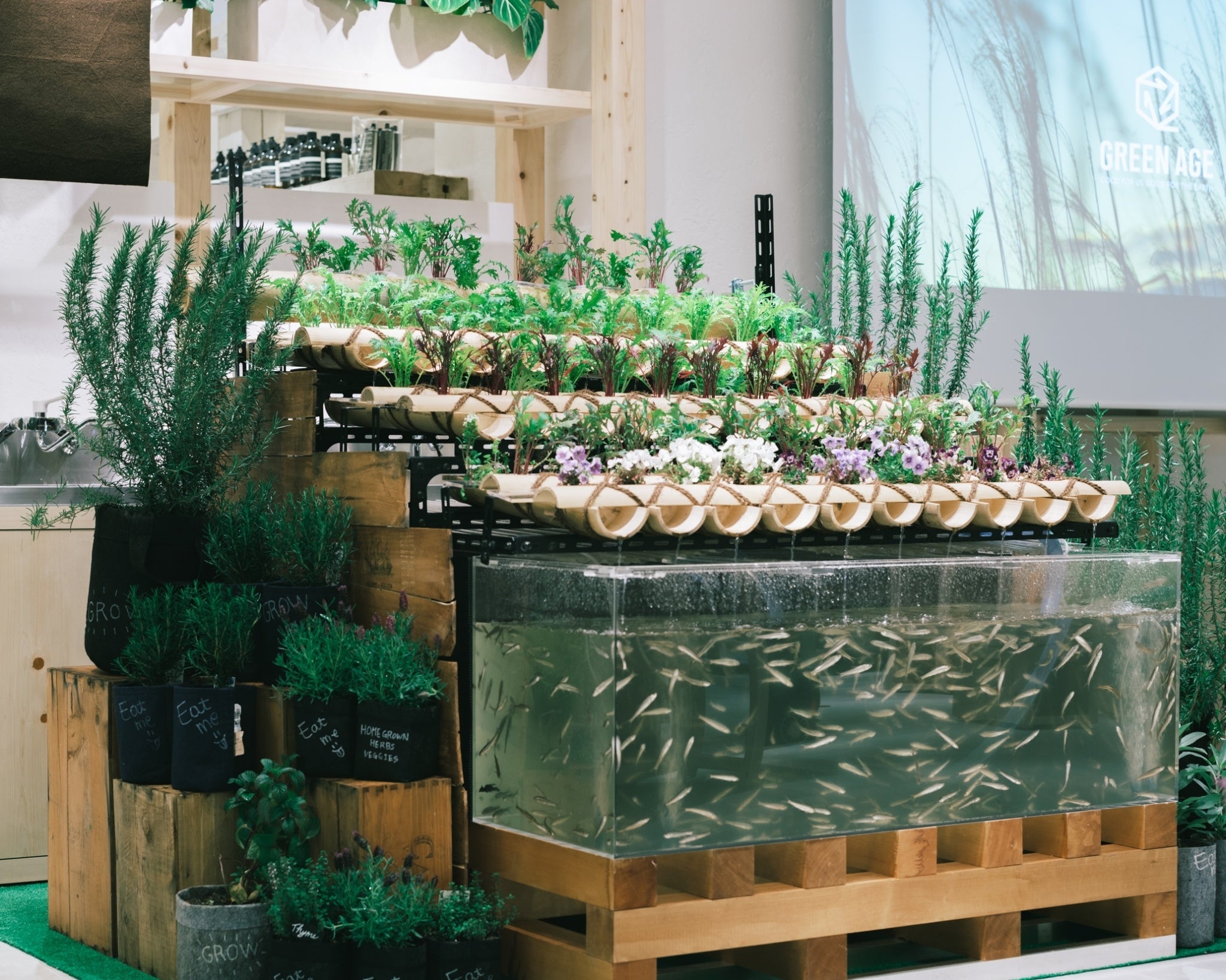
In August 2026, a slightly mysterious yet heartwarming new scene of 'coexistence' will emerge on the rooftop of the Kanagawa Prefectural Office.
AGRIKO Inc. (Headquarters: Shibuya-ku, Tokyo; CEO: Ryoko Kobayashi) announces that it has been commissioned by Kanagawa Prefecture to open a symbiotic community farm called 'Tomoi Farm' on the 11th-floor terrace of the Kanagawa Prefectural Office East Building (5-1 Nippon Odori, Naka Ward, Yokohama, Kanagawa Prefecture) in August 2026.
This project, developed by Kanagawa Prefecture together with its citizens, centers on 'aquaponics'—a circular farming method where fish and vegetables coexist—and aims to integrate food education, farm-welfare collaboration, and community development. From the symbolic public space of the government building rooftop, the vision of the 'Kanagawa Charter for a Society Where We Live Together' will be nurtured as part of everyday life.
Why 'Tomoi Farm' Now?
—The Need for a Space That Softly Reconnects People and Nature—
Ahead of the International Horticultural Exposition (GREEN×EXPO 2027) in 2027, the theme of 'coexistence between people, plants, and nature' is attracting unprecedented social attention. Yet in real urban life, the distances between people and nature, people and food, and people and their communities continue to widen. The sight of swimming fish, soil nurturing vegetables, and the changing seasons—these have long faded from daily urban life. 'Tomoi Farm' is born as a place to gently untangle these divisions. The aquaponics cycle, where fish and plants grow together, serves as a small yet powerful model of the 'living together' relationship between people and nature.
What is 'Tomoi Farm'?
—A New Public Space for Growing Together, Starting from the Government Rooftop—
'Tomoi Farm' is a symbiotic platform where agriculture, education, and welfare intersect, with aquaponics at its core.
On the rooftop of the government building—a space historically distant from everyday farming—this project creates a soft connection between food production, welfare, and the local community. It represents a new urban practice of public space utilization, addressing multiple social issues from a single location.
After opening, the farm will sequentially launch initiatives including food production via aquaponics, raising regional wages through farm-welfare collaboration, creating opportunities for children to observe and experience the cycle of nature, and developing processed goods using harvested produce.
Through the 'visible cycle' of aquaponics, the farm aims to deepen citizens’ engagement with local agriculture and food in diverse ways, fostering interest and connection to local industries and communities.
1|'A Small Earth' Where Fish Grow Vegetables
—Aquaponics—
Fish waste is broken down by microorganisms, providing nutrients for vegetables to grow; the purified water then returns to the fish—this closed-loop system, known as 'a small Earth,' miniaturizes natural cycles. Aquaponics combines aquaculture and hydroponics to simultaneously produce edible herbs, vegetables, and fish, offering a sustainable urban food production model. In AGRIKO’s original 'bamboo-hazard mitigation type' aquaponics system, bamboo from overgrown forests is used for cultivation trays, and damaged or knotty wood unsuitable for construction serves as the base structure. At 'Tomoi Farm,' this system will be implemented on the government rooftop, creating an environment where urban dwellers can experience the human-nature cycle in daily life.
2|Growing Together, Building Community Together
—Farm-Welfare Collaboration, Regional Wage Improvement, and a New Form of Coexistence—
The operation of 'Tomoi Farm' will involve participants from local facilities for people with disabilities as core contributors.
By creating sustainable employment opportunities across diverse processes—from sowing and germination to seedling cultivation, farming tasks, harvesting, and daily management—the project aims to build a sustainable system that contributes to raising regional wages.
Moving beyond one-directional 'supporting' or 'being supported' relationships, this model allows everyone to take on roles, grow together, and build community together.
From the public space of the government rooftop, we will nurture relationships where diverse people—regardless of age, gender, nationality, or disability—naturally engage with nature and grow together.
Facility Overview
Facility Name: Tomoi Farm
Opening Date: August 2026
Location: 11th-floor terrace, Kanagawa Prefectural Office East Building (5-1 Nippon Odori, Naka Ward, Yokohama, Kanagawa Prefecture)
Opening Hours: Weekdays (in line with government office hours) / Weekends and holidays (open only during events)
Operator: AGRIKO
Commissioning Organization: Kanagawa Prefecture (Department of Social Inclusion Promotion, Bureau of Welfare and Children’s Future)
About AGRIKO
AGRIKO is a social tech company tackling social challenges through agriculture, centered on aquaponics. We aim for a future where everyone—regardless of age, gender, nationality, or disability—can enjoy delicious food and work with joy and purpose.
Our main business activities include:
【Business Areas】
1. AgriTech & Green Infrastructure - Design, installation, and construction of aquaponics-based farms - Support for introducing 'Foodjoy,' an urban-rural exchange package for corporations, municipalities, and government agencies
2. Society & Well-being - Business planning and hands-on operational support leveraging corporate employment of people with disabilities - Corporate space coordination using art subscription services - Stress and immune system measurement and improvement using agril healing (Co-created with Professor Chiba, Palliative Care Research Lab, Juntendo University)
3. Education & Experience Content - Planning, development, and operation of experiential content focused on agriculture and food - Planning, development, and operation of educational curricula using agriculture for children from preschool to high school (Co-created with Professor Tanaka, Keio University, and Kango Gakuen High School)
4. Regional Co-creation & Business Development Consulting - Consulting for city planning where agriculture and food circulate - Product planning, production, and packaging design for local specialties - Joint business research with corporations and universities
Official Website: https://www.agriko.net/
<Press Contact>
AGRIKO PR Office, Contact: Nakagawa
FACT BOX
- Source: PR TIMES
- Category: Event