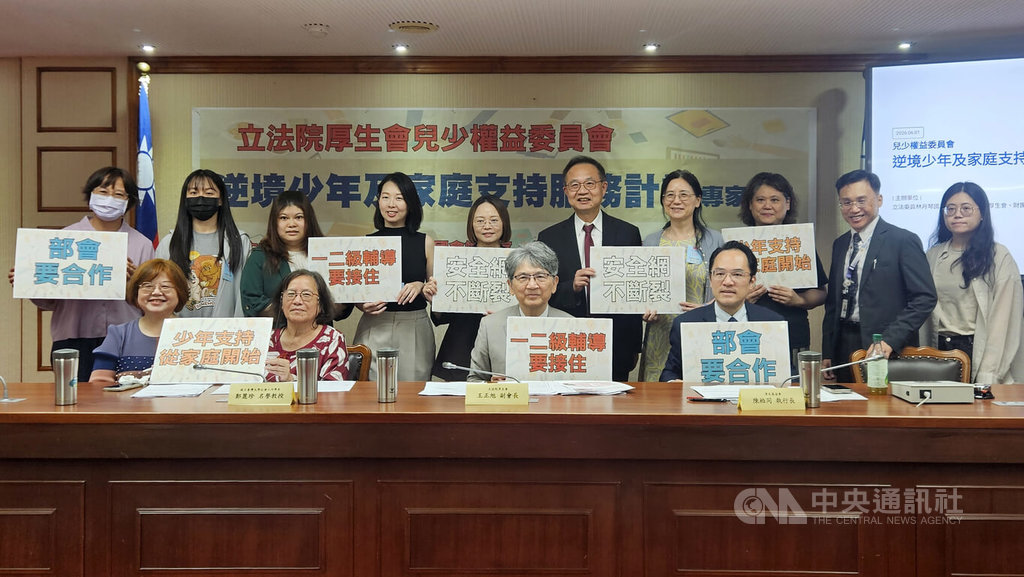
CNA (Taipei, June 1) Regarding judicial correction and at-risk youth, the Ministry of Health and Welfare (MOHW) aims to reduce exposure to criminal environments through the 'Adversity Youth and Family Support Service Plan.' Experts point out that international juvenile crime prevention has shifted toward emphasizing the physical and mental development of children, and services should be delivered with the family as the core. The Legislative Yuan's Health and Welfare Committee and the Health and Welfare Foundation held an expert meeting today to discuss the identification of high-risk youth, the role of lead agencies, and the effectiveness of cross-network information sharing. Professor Emeritus Cheng Li-chen of National Taiwan University noted that as family structures change, families with vulnerabilities—such as substance abuse, unemployment, or conflict—cannot provide sufficient support during crises. Therefore, services must be family-centered. Chang Shu-hui, Honorary Chairperson of the Taiwan Care Management Association, warned that juvenile issues have evolved from simple theft to involvement in fraud rings and online gambling. She emphasized that developmental risk is the core issue, often accompanied by mental health problems. The meeting concluded with recommendations to establish a lead agency for early warning mechanisms, strengthen family-centered work, and explore the feasibility of using AI for risk assessment while protecting personal data.
FACT BOX
- Source: CNA (Central News Agency)
- Category: policy_analysis