German media reports that Chinese automakers are entering the European market by partnering with European car manufacturers and using idle European factories for vehicle production. German experts warn that while this move may temporarily alleviate the overcapacity problem for European manufacturers, in the long term it could allow Chinese competitors to establish a firm foothold in Europe, acting like a 'Trojan Horse.'
The European Union last year imposed punitive tariffs of up to 45% on Chinese electric vehicles (EVs) in an attempt to curb the expansion of Chinese automakers' market share in Europe, which is supported by government subsidies. However, Chinese auto brands are opening another path into the European market through cooperation with European manufacturers and local production.
According to the German business daily Handelsblatt, Chinese automakers including Leapmotor, Dongfeng, and Chery are accelerating cooperation with European car manufacturers, using existing factories to produce vehicles to reduce the cost pressure from tariffs while getting closer to the European market.
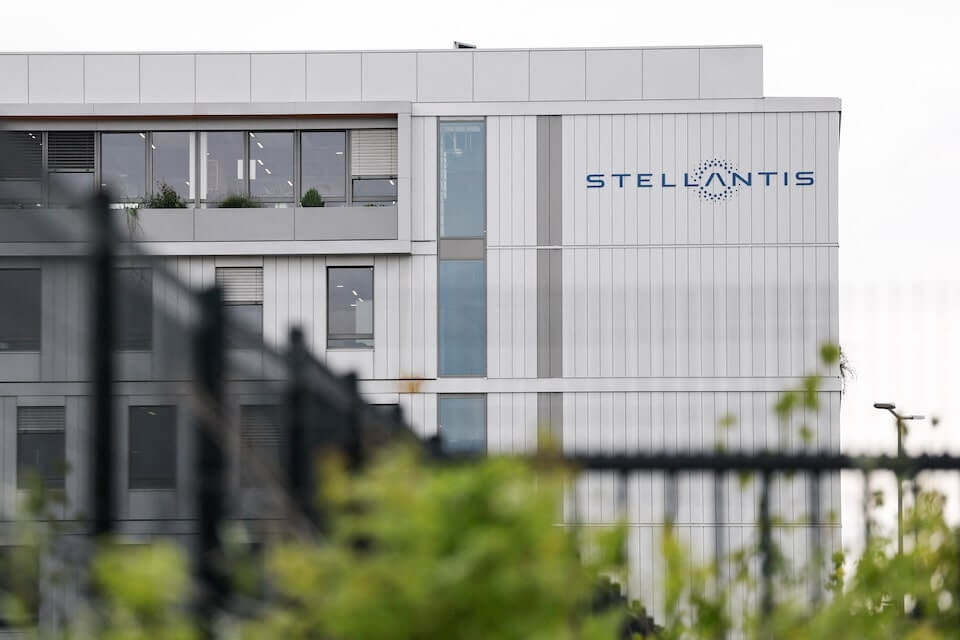
For example, in the case of the new Opel SUV that Stellantis plans to produce at its Madrid plant in Spain, the vehicle's core technology—including the powertrain, battery, and software platform—will come from China's Leapmotor. European engineers will be primarily responsible for exterior design, seats, and chassis tuning.
In addition to Stellantis, Volkswagen's management has in recent years discussed the possibility of opening German factories for joint production with Chinese partners. Handelsblatt reported that during labor negotiations in 2024, Volkswagen discussed a cooperation plan with Chinese state-owned automaker SAIC Motor to utilize German factory capacity, but the plan ultimately did not materialize.
Handelsblatt analyzes that the main considerations for European manufacturers cooperating with Chinese automakers are to increase factory utilization rates, reduce fixed costs, and preserve jobs. According to data from Bank of America (BoA), some European manufacturers are facing underutilization of production capacity. For instance, Stellantis' factory utilization rate in the EU is only about 51%, far below the automotive industry average of around 70%.
On the other hand, for Chinese automakers, the importance of the European market is rapidly increasing. China's domestic auto market is mired in fierce price competition, and with the gradual phase-out of government subsidies, demand growth is slowing. In contrast, some vehicle models can sell for twice the price in Europe compared to the Chinese market, making Europe the most important overseas market for Chinese automakers.
Handelsblatt believes that the overcapacity of European manufacturers and the aggressive overseas expansion of Chinese automakers are fostering a new cooperative relationship between the two sides. However, whether this cooperation can maintain a long-term balance remains uncertain.
Ingo Speich, an expert at German investment firm Deka Investment, warned that while European manufacturers might temporarily alleviate overcapacity issues by cooperating with Chinese automakers, in the long term, they are essentially bringing competitors into their own factories.
Speich said that for the European auto industry, this model is like a 'Trojan Horse,' and European manufacturers risk using their own factories, supply chains, and market channels to continuously cultivate their most powerful competitors.
FACT BOX
- Source: CNA (Central News Agency)
- Category: 產業
- Organizations: Deka Investment