(CNA, Pingtung County, June 8, by reporter Huang Yu-ching) With only two remaining preservers of the traditional Paiwan slate house building technique in Majia Township, there are hopes for government resources to promote a transmission project. Legislator Wu Li-hua today invited Minister of Culture Lee Yuan to Pingtung for an inspection, and Lee stated that support will be provided through relevant future projects.
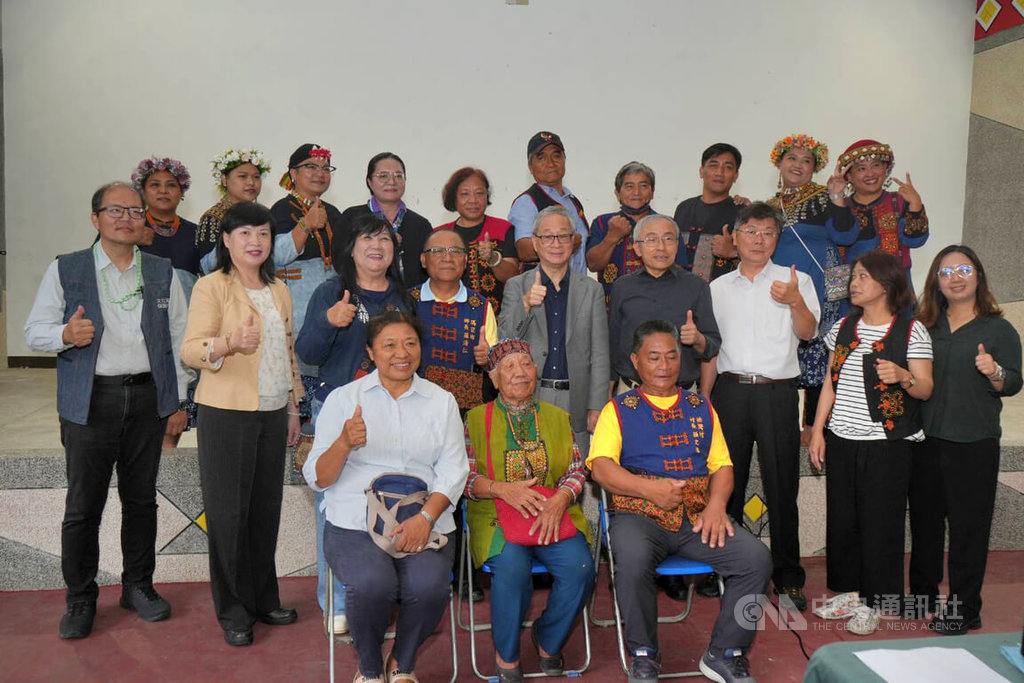
DPP Indigenous Legislator Wu Li-hua today arranged for the Education and Culture Committee of the Legislative Yuan to conduct an inspection in Pingtung. She invited Lee Yuan to visit the Paiwan tribe's slate house restoration and transmission project, the Stone House Park, 'Rukai folk songs' preserver Peng Shui-kuang, and 'qata glass bead' preserver Chiang Ya-lei, to understand the current state and needs of the tribe's cultural revitalization. The first stop was the Paiwan tribe's cultural gathering hall.
During her presentation, Pan Ya-li (Qaruwai Maledep), secretary-general of the Pingtung County Majia Township Paiwan Community Development Association, shed tears. She stated that there are only two preservers of the traditional Paiwan slate house building technique. One, Chang Cheng-sheng, is nearly 80 and in poor health recently, while the other, Chin Tien-kuang, is already 63. 'Cultural transmission is a race against time,' she said, hoping for government resources to help the tribe promote the slate house restoration and transmission project.
Pan Ya-li said that it has been 51 years since the Paiwan tribe relocated. In the old tribal settlement, only 16 slate houses are habitable, 12 of which were restored with government subsidies, and there are another 156 damaged ruins. The old settlement is about a 40-minute drive from the new one, making it difficult for young children to independently participate in the restoration process. Therefore, they hope to build a slate house above the new village's gathering hall, a place residents can reach on foot. This would allow the tribe's youth to learn the building process, and children could also participate by observing. 'The only thing we can give the children of the tribe is culture. We hope to build their sense of cultural identity,' she said.
Minister of Culture Lee Yuan stated that Taiwan is a small island, and what best distinguishes it from others is its biodiversity and cultural diversity. In terms of cultural diversity, Taiwan relies heavily on its indigenous peoples.
He said that the gradual disappearance of slate houses and the declining number of technique preservers indeed present an urgent issue from a cultural perspective. The Ministry of Culture's Bureau of Cultural Heritage and Department of Cultural Resources were both present for this inspection. The former manages the preservation of cultural assets, while the latter encourages the development and documentation of cultural activities. He stated that future support for the Paiwan tribe's slate house restoration and transmission project will be provided through the 'Youth Village Culture Action Plan' and the 'Indigenous Village Culture Development Plan.'
Wu Li-hua stated that sovereign AI has become an important current issue, and indigenous culture is an indispensable and important cultural resource in the 'Taiwan Sovereign AI Corpus Database' promoted by the National Science and Technology Council. The transmission of indigenous culture is a race against time, with both tribal elders and the younger generation dedicated to cultural revitalization.
She said that from the preservation of slate houses to private local museums for wood carving, stone houses, and glass beads, all rely on individual efforts and often face the dilemma of aging preservers with no successors. She hopes the Ministry of Culture and the Council of Indigenous Peoples can provide more resources and support to help cultural revitalization work continue to advance and allow cultural transmission to be well-developed.
FACT BOX
- Source: CNA (Central News Agency)
- Category: 政策