(Central News Agency, Prague, 10th – Special Report) Chinese battery giant CATL is facing an investigation by Hungary's new government following a 'green liquid' spill at its battery factory in Hungary. Experts analyze that CATL may face stricter environmental regulations in Hungary, and the new Hungarian government may adopt a more cautious approach to future Chinese investment projects.
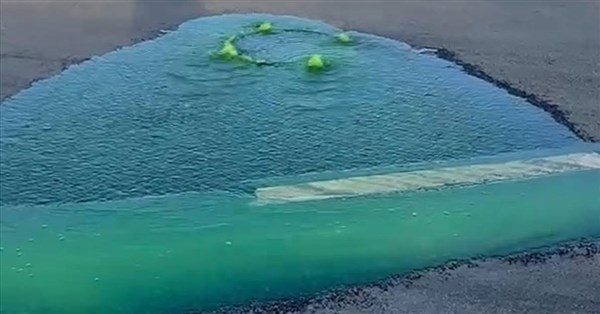
According to a report by Hungary Today, on the evening of May 5, CATL's factory in Debrecen, Hungary's second-largest city, discharged 'green liquid waste' into the local sewage system. Hungary's Minister of Regional and Rural Development, Viktória Lőrincz, has ordered a special investigation into the incident.
Currently, the Hungarian water and environmental protection authorities have revoked CATL's industrial wastewater pretreatment permit. CATL has also been legally required to clean up the affected municipal sewage network and stormwater drainage system. Although CATL completed the remediation within the specified period, the government imposed a fine for the violation.
The report states that CATL's Debrecen branch expressed its full willingness to cooperate with the official investigation, explaining that on May 5, a contractor was conducting a tank leak test using a green dye. Due to a pipe blockage, the mixture backed up and overflowed onto the road surface. The company claims the dye is non-toxic and harmless to humans and the environment.
Local Hungarian authorities collected wastewater and surface water samples from multiple locations on the night of the incident. They stated that current test results have not detected harmful pollution but have re-initiated necessary inspections and will announce subsequent results.
Founded in 2011, CATL is a global leader in the electric vehicle battery market. In 2025, CATL's global market share reached 39.29%. The company has 13 production bases and 6 R&D centers, possessing extensive industry experience.
The think tank 'Central European Asia Research Institute (CEIAS)' analyzed the incident, pointing out that the new government led by Péter Magyar may adopt a more cautious approach to new Chinese investment projects and more strictly supervise existing projects.
Péter Magyar's 'Respect and Freedom Party (Tisza)' won a landslide victory in the April parliamentary elections and was sworn in as Prime Minister of Hungary on May 9. Magyar has pledged to review irregularities in the regulatory procedures for Chinese investment projects and assess their environmental and social impact on local communities.
CEIAS noted that Chinese companies have reduced new investments in Europe in recent years, particularly greenfield investments, shifting focus more towards export business. For Hungary, there is currently a lack of large-scale and viable alternative investment sources. 'Even with stricter regulations, the Magyar government may still view Chinese investment as an important part of driving Hungary's economic development,' the analysis stated. (Editor: Zhang Zhixuan) 1150610
FACT BOX
- Source: CNA (Central News Agency)
- Category: Survey