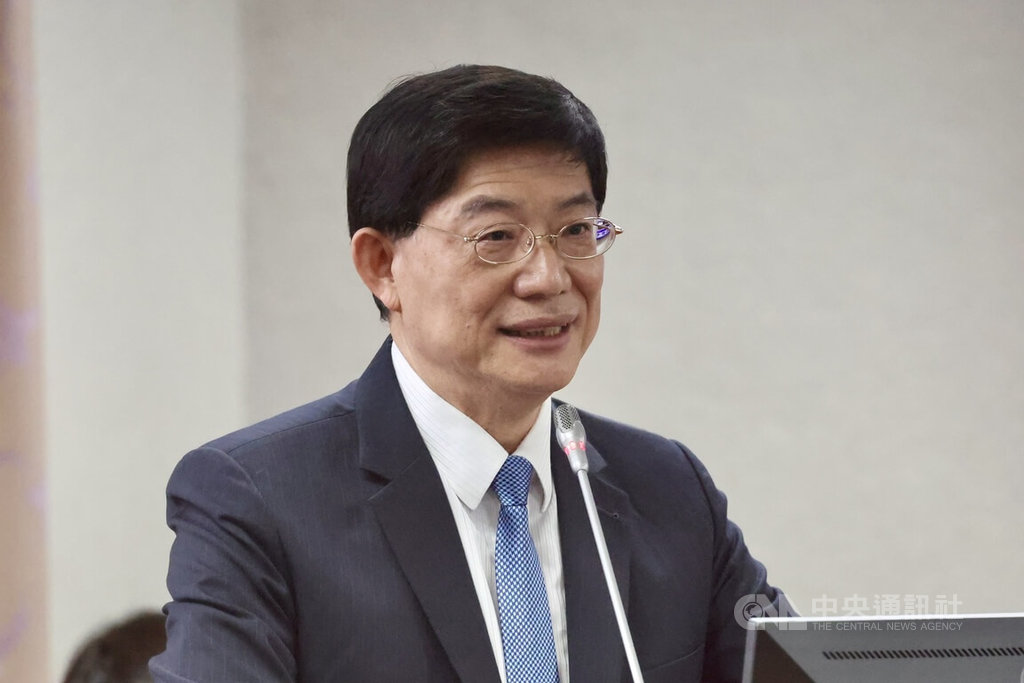
(Central News Agency reporter Wang Yangyu, Taipei, 10th) The Judiciary and Organic Laws and Statutes Committee of the Legislative Yuan today reviewed a draft regulation proposed by opposition parties concerning the legalization of salary adjustments for military personnel, civil servants, and teachers (軍公教人員待遇調整條例草案). The Directorate-General of Personnel Administration (DGPA) stated that it has already drafted a related bill and submitted it to the Executive Yuan. It is currently awaiting the Executive Yuan to schedule it for a cabinet meeting discussion and approval, after which it will be sent to the Legislative Yuan for review according to procedure.
The Judiciary and Organic Laws and Statutes Committee today jointly reviewed draft regulations submitted by the Taiwan People's Party caucus and 16 legislators including KMT Legislator Weng Hsiao-ling. Today's agenda only included question-and-answer sessions.
According to a written report from the DGPA, the DGPA serves as the staff agency for adjusting the pay of military, civil service, and teaching personnel. It annually collects and comprehensively evaluates data on relevant indicators such as economic growth rate, average per capita national income, changes in the Consumer Price Index, private sector wage levels, and government fiscal conditions. In coordination with the schedule for drafting the central government's total budget proposal, it formulates analysis plans and submits them to the Pay Review Committee for military, civil service, and teaching personnel for deliberation and recommendations.
The DGPA stated that before convening the Pay Review Committee, the Ministry of Education and the DGPA jointly invite relevant public service groups to hold symposiums for opinion exchange. The opinions raised are then presented and explained by the Ministry of Education and the DGPA during the Pay Review Committee meetings. Subsequently, the matter is sent to the Executive Yuan for policy decisions, and then follows the review procedure for the central government's total budget proposal, which requires approval by the Legislative Yuan and promulgation by the President before taking effect.
The DGPA pointed out that to strengthen the pay adjustment mechanism for military, civil service, and teaching personnel, it has drafted the Regulation on Pay Adjustment for Military, Civil Service, and Teaching Personnel. The key planning points include the conditions for annual general pay adjustments, factors for consideration, adjustment procedures, the composition of an advisory committee, the process for selecting committee members, and personnel subject to the regulation and their pay or compensation matters.
The DGPA also stated that matters of concern raised during this joint review by the Legislative Yuan, such as adjustment items, adjustment conditions, and representation of public service groups, have been incorporated into the draft regulation's provisions. Relevant evaluations have been completed according to legal drafting procedures, and the draft has been submitted to the Executive Yuan, currently awaiting scheduling for a cabinet meeting discussion and approval before being sent to the Legislative Yuan for review.
A written report from the National Development Council (NDC) indicated that enacting the Regulation on Pay Adjustment for Military, Civil Service, and Teaching Personnel aims to improve the pay adjustment mechanism for these personnel, clearly regulate annual general pay adjustment matters, help the government attract and retain talent, and enhance the quality of public services and national competitiveness.
The NDC noted that since pay adjustments for military, civil service, and teaching personnel involve the national fiscal burden and the allocation of total budget resources, it recommends comprehensive consideration of economic growth, private sector wages, and government fiscal conditions to balance personnel rights, talent retention, and fiscal sustainability. (Editor: Hsieh Chia-chen) 1150610
FACT BOX
- Source: CNA (Central News Agency)
- Category: Taiwan