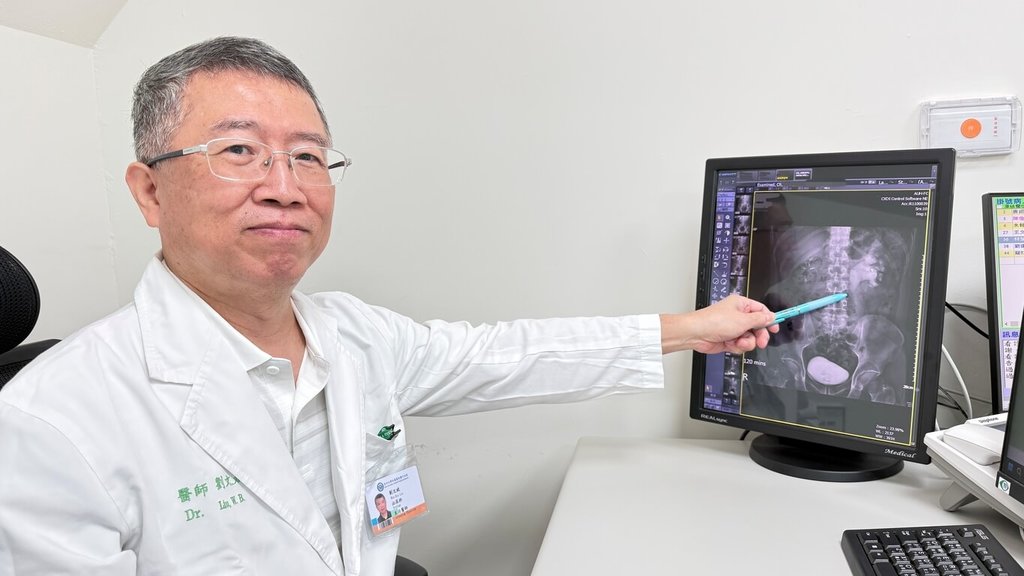
(Central News Agency, reporter Zhao Liyan, Taichung, 10th) A 32-year-old chef surnamed Wang, who regularly enjoyed bubble tea and black tea, consuming these beverages as if they were water, recently sought medical attention due to severe lower back pain. Examinations revealed hematuria and acute hydronephrosis, with a stone lodged in his ureter. He underwent extracorporeal shock wave lithotripsy and successfully passed the stone the following day.
Asia University Hospital Fengyuan Branch issued a press release today. Urologist Dr. Liu Wenbin stated that the patient had a history of kidney stones since high school, when he started drinking hand-shaken beverages as water due to his love for outdoor activities and high daily perspiration. Recently, the patient experienced sudden severe lower back pain, broke out in a cold sweat, and felt unsteady on his feet, prompting him to seek immediate medical attention.
Doctors performed urine and X-ray examinations, which revealed a stone measuring approximately 5 mm by 7 mm lodged in the upper section of the patient's left ureter, blocking urine flow. This caused not only ureteral swelling but also acute hydronephrosis in the kidney, along with hematuria. The patient underwent "extracorporeal shock wave lithotripsy," which successfully fragmented the stone in under an hour. The fragments were passed naturally the next day, and the swollen kidney returned to normal within a week.
Upon questioning, the patient admitted to regularly consuming hand-shaken beverages like bubble tea and black tea, "drinking them as if they were water every day." Combined with the high perspiration from his kitchen work and lack of time to replenish fluids, this led to the recurrence of kidney stones.
Dr. Liu pointed out that although the stone was not large, the ureter is very narrow. Once a stone becomes lodged, it can easily cause severe pain and lead to hydronephrosis. The non-invasive extracorporeal shock wave lithotripsy treatment was completed without any wounds, with the procedure lasting approximately 40 to 60 minutes.
Dr. Liu warned that individuals working in high-temperature environments for extended periods, such as chefs, construction workers, and delivery drivers, are at risk. If they sweat excessively without timely fluid replenishment, their urine becomes overly concentrated, leading to the gradual deposition of substances like calcium, oxalate, and uric acid in the kidneys. Furthermore, beverages like hand-shaken drinks, strong tea, and coffee contain high levels of oxalate and sugar, which can increase the risk of calcium oxalate stones.
Dr. Liu recommends that adults consume at least 2000 to 3000 cc of plain water daily, aiming for urine that is light yellow or clear. Those who sweat easily should increase their fluid intake. Diet should avoid excessive salt and reduce the intake of high-oxalate foods such as spinach, chocolate, nuts, and strong tea. Maintaining a balanced calcium intake can help reduce oxalate absorption. If symptoms such as sudden severe lower back pain, hematuria, nausea, vomiting, or painful urination occur, seek medical attention promptly. (Editor: Li Xizhang) 1150610
FACT BOX
- Source: CNA (Central News Agency)
- Category: Taiwan