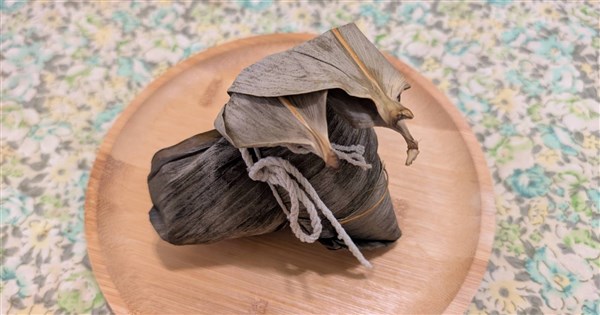
Every year, the Dragon Boat Festival reignites the so-called 'north vs. south zongzi debate,' but from a dietitian’s perspective, neither side truly wins—both types are calorie-dense. Northern-style zongzi are made by stir-frying glutinous rice with fillings and seasonings before steaming, resulting in a fragrant, distinctively textured bite. One serving contains approximately 500 to 600 kcal.
Southern-style zongzi, on the other hand, use raw glutinous rice wrapped with braised fillings and then boiled, yielding a softer, chewier texture. One piece contains about 400 to 500 kcal. According to dietitian Hsu Pei-yu from the Cancer Care Foundation, this is equivalent to 1.5 to 2 bowls of white rice. Adding sauces like soy paste, peanut powder, or sweet chili sauce further increases calorie and sodium intake.
Hsu specifically highlights the lesser-known Hakka guo zong (also known as ban zong), which she considers a lower-burden option. The outer layer is made from a slurry of glutinous rice and Ponlai rice, resulting in a smooth, translucent, and chewy texture without visible rice grains. Common fillings include fried shallots, preserved radish (caipu), dried tofu, dried shrimp, pork, and mushrooms.
One Hakka guo zong contains only about 180 to 300 kcal—significantly lower than most northern and southern versions. While easier to digest and lighter in caloric load, Hsu cautions that it’s not a free-for-all. Fillings like preserved radish, dried shrimp, and seasonings still contribute high sodium levels, so individuals with hypertension or those managing blood pressure should still monitor portion sizes.
Sweet zongzi also require caution. A plain alkaline zongzi (jian zong) contains about 100 to 200 kcal—seemingly low—but many people add sugar, brown sugar powder, honey, syrup, or peanut powder. Just one tablespoon of dipping sauce can add 45 to 71 kcal.
For sweet varieties like red bean paste zongzi or crystal zongzi, refined sugar content is especially concerning. One red bean zongzi contains about 35 grams of sugar, while a crystal zongzi has about 25 grams. Adding a spoonful of sugar adds another 15 grams. For those managing blood sugar, both sweet zongzi and sugary condiments require careful attention.
Hsu warns that sweet zongzi may seem small and harmless, but eating multiple pieces or overusing sauces can easily lead to excessive sugar intake. She recommends following the principles: 'one zongzi per day, replace a staple food, pair with vegetables and protein, chew slowly, and use minimal sauce'—to enjoy the festival flavors safely.
FACT BOX
- Source: CNA (Central News Agency)
- Category: Taiwan