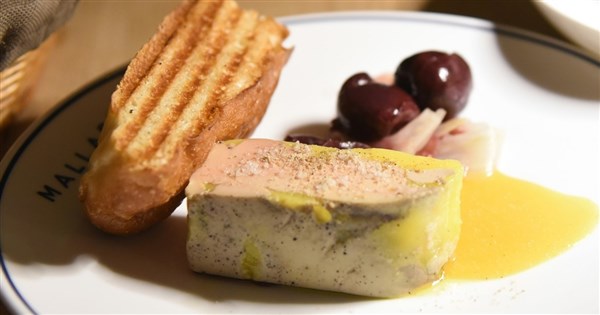
(Taipei, June 21) The market anticipates that China's annual foie gras production will officially surpass France's as early as this year or next, making it the world's largest producer, and is attempting to export its products. This industry, traditionally considered a top French luxury delicacy, is undergoing a dramatic transformation.
According to a Deutsche Welle Chinese report, preliminary estimates from five Chinese industry analysts, previously undisclosed, suggest that China's foie gras production could reach 14,000 tons in 2025, an increase of about 30% from 2024. This is a significant jump from estimates of only around 2,000 tons a decade ago. In contrast, France, the world's leading foie gras producer, is projected to see its production decline by 3% to approximately 15,000 tons in 2025.
Fabien Chevalier, president of the French interprofessional committee for foie gras (CIFOG), expressed concern, stating, "They are developing so rapidly, it's worrying," and "We did not expect them to rise so quickly."
The report indicates that the combined foie gras production of France and China accounts for over 80% of the global total.
According to customs data and analyst estimates, less than 5% of China's foie gras production in 2025 is intended for export. Strict regulations imposed by Chinese customs, requiring farm owners to prove that poultry is free of approximately 300 chemical substances after vaccination, make foie gras exports a challenging task.
However, Chinese producers are eager to enter the market, as attractive profit margins await them overseas once they overcome regulatory hurdles.
Min Wei, a senior executive at Jilin Zhengfang Animal Husbandry Co., China's largest duck foie gras producer, stated that the company is preparing to export foie gras to Southeast Asia and Europe this year. Additionally, Shandong Chungan Food Co., a major goose foie gras producer, announced in May to official media that it had just signed a contract for exports to South Korea and is collaborating with companies in Japan, Russia, and Southeast Asia to supply those markets.
Zhou Menghan (phonetic), an analyst for poultry at Beijing Orient Agribusiness Consulting Co., said that China is bound to become a strong competitor to French foie gras in certain overseas markets, especially in emerging foie gras markets like Southeast Asia and the Middle East.
Chevalier further noted that a few Chinese producers have begun appearing at international trade shows, and their products may find a market in Southeast Asia.
The report points out that foie gras has long been controversial, with animal welfare activists opposing the practice of force-feeding geese and ducks in cages. However, Chinese foie gras producers are dismissive of animal welfare concerns. They believe there is little opposition domestically, and global demand for foie gras continues to grow.
Four sources, who requested anonymity, stated that a significant amount of Chinese foie gras is smuggled to other countries via Shenzhen and Hong Kong to circumvent Chinese customs regulations. These smuggled foie gras, disguised as or mixed with other products, can amount to up to 10 tons per month. (Editor: Lu Jia-rong / Chiu Kuo-chiang) 1150621
Stand with facts, your every donation is a force to protect the power of journalism
Download the CNA "One-Stop News" APP for real-time updates
The text, images, and audio on this website may not be reproduced, publicly broadcast, publicly transmitted, or used without authorization.
FACT BOX
- Source: CNA (Central News Agency)
- Category: 商业