AI Net-Zero Special Report (300 articles total)
Digital transformation is already underway in industries, with artificial intelligence and net-zero carbon emissions being the two major challenges facing the government and businesses, crucial for Taiwan's future competitiveness. CNA's frontline reporting team delves into how the government and various industries are using AI to optimize production processes and drive green innovation, witnessing Taiwan's industries ascend once again.
TAIPEI, July 7 (CNA) The Small and Medium Enterprise Administration (SMEA) of the Ministry of Economic Affairs announced today that in the first half of this year, it promoted over 40 carbon reduction assistance clusters, unlocking a potential electricity saving of 22.06 million kilowatt-hours. On average, each participating enterprise can save approximately NT$180,000 in electricity costs through energy conservation, and it has facilitated over NT$10 million in international orders. The agency plans to further support SMEs in accelerating their green transformation by delving into industrial clusters in northern, central, southern, and eastern Taiwan.
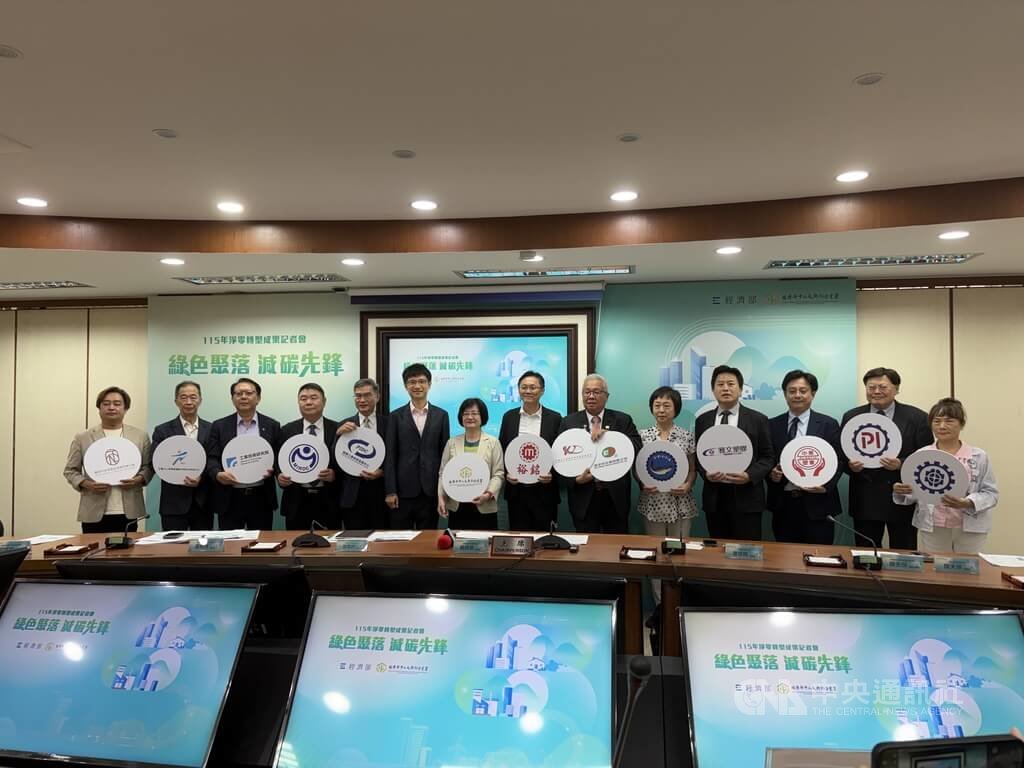
The Small and Medium Enterprise Administration (SMEA) of the Ministry of Economic Affairs held a press conference today on the results of its net-zero transition initiatives, titled "Green Clusters, Carbon Reduction Pioneers." The SMEA stated that in the face of the European Union's Carbon Border Adjustment Mechanism (CBAM), brand manufacturers' carbon reduction requirements, and the trend of Taiwanese listed companies aligning with IFRS Sustainability Disclosure Standards, SMEs are often limited by technical, human, and financial resources, making independent transformation difficult. Through cluster-based assistance that integrates enterprises, technical services, and support resources, the SMEA effectively reduces trial-and-error costs and drives collective transformation among SMEs.
The SMEA explained that the scope of assistance has expanded from individual enterprises to focus on industrial clusters with geographical proximity and close industrial chain connections. Collaborating with key cluster manufacturers, industry associations, and county/city industrial and commercial associations, expert guidance teams visit industrial clusters to provide services such as energy-saving diagnostics, technical support, and cluster matchmaking. This helps SMEs adopt energy management, low-carbon manufacturing processes, circular economy principles, and intelligent applications, thereby enhancing their sustainable competitiveness.
Regarding energy-saving and carbon reduction achievements, the SMEA reported that in the first half of this year, over 40 carbon reduction assistance clusters were promoted in the manufacturing and service industries, involving 504 SMEs. This has unlocked a potential electricity saving of 22.06 million kilowatt-hours, with each enterprise saving an average of over NT$180,000 in electricity costs. Furthermore, over 10,000 tons of CO2e (carbon dioxide equivalent) have been reduced, which is equivalent to the carbon absorption capacity of more than 26 Daan Forest Parks.
Several companies also shared their actual carbon reduction achievements at the event. Among them, Chen Bing-feng, General Manager of Ya Wen Plastic Co., said that it is currently difficult to hire skilled workers. However, by introducing AI for collaborative plastic mold trial and adjustment, the number of mold trials can be reduced. They can also obtain molding parameters during the R&D phase, shortening trial times and avoiding production delays, thus solving problems like labor and material shortages.
The SMEA stated that in the second half of this year, it will continue to create demonstration cases for clusters and maintain close contact with industry and business representative organizations, adjusting policies dynamically based on industry needs. It will also continue to promote the "Act for the Development of Small and Medium Enterprises and Startups," increasing efforts and support for more SMEs and clusters to accelerate their green transformation.
Dai Wan-jung, Deputy Director of the SMEA, said that in the future, the SMEA will delve into industrial clusters in northern, central, southern, and eastern Taiwan to promote these initiatives, expanding from "points" to "surfaces" and assisting SMEs in operating sustainably. (Editor: Chang Liang-chih) 1150707
Stand with facts, your every donation is a force to protect press freedom
Download the CNA "First-Hand News" APP for real-time updates
The text, images, and videos on this website may not be reproduced, publicly broadcast, publicly transmitted, or used without authorization.
FACT BOX
- Source: CNA (Central News Agency)
- Category: 政策