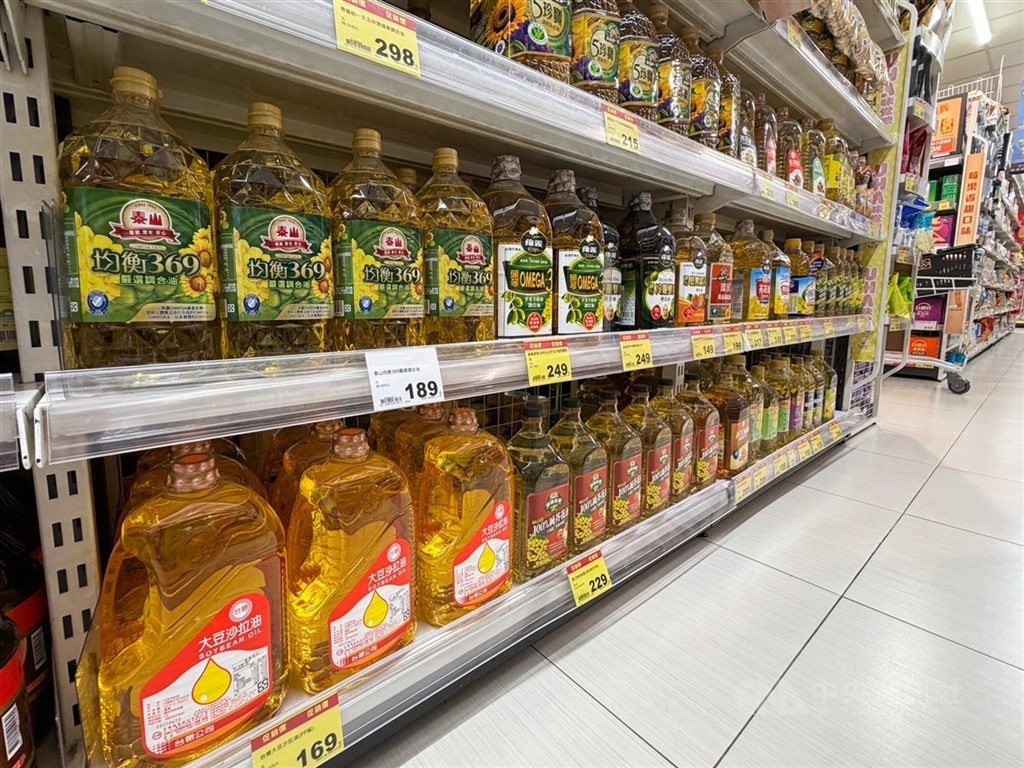
(Central News Agency, Reporter Lin Jingyin, Taipei, 8th) The food safety controversy arising from excessive carcinogens in edible oil from the Central Oil Company has led to a policy change. Minister of Health and Welfare Hsueh-Jung Shih announced yesterday that companies using less than 20% of the suspect oil must complete a precautionary recall by midnight tonight. The Democratic Progressive Party (DPP) legislative caucus stated that although this will cause confusion and inconvenience for downstream manufacturers, from the perspective of a legislative body, "this policy reversal is the right thing to do." Protecting the health of the people, such a change is inevitable.
Central Oil Company's 1,300 metric tons of soybean salad oil were found to contain benzo[a]pyrene four times the legal limit. The products were distributed to three brands: Tai Shan, Fu Shou, and Fu Mao. The Food and Drug Administration (FDA) of the Ministry of Health and Welfare initially determined that finished food products made with the suspect oil did not need to be recalled. Later, the policy was changed to require businesses using 20% of the carcinogenic oil to conduct a precautionary recall. Yesterday, it was announced again that those using less than 20% must complete the precautionary recall by midnight on the 8th.
DPP caucus whip Chuang Jui-hsiung stated at a press conference this morning that the public will certainly criticize the change in standards as a policy reversal and that it will cause confusion and significant inconvenience for downstream manufacturers. However, from the perspective of a legislative body, this policy reversal is the right thing to do.
Chuang Jui-hsiung said that from the standpoint of protecting people's health, the implications of carcinogenic substances being mixed into food are extremely serious. The caucus expresses its support for a stricter policy. While the back-and-forth process and policy reversals will undoubtedly draw criticism, especially causing chaos in distribution channels, the caucus believes this change is inevitable for the sake of protecting people's health.
Chuang Jui-hsiung pointed out that whenever there is a food safety incident, society pays close attention. Compared to the past, during former President Ma Ying-jeou's administration, there was also a waste oil incident. That involved black-hearted, substandard waste oil that unscrupulous businesses reprocessed and sold. This time, the manufacturers produced it legally, and it was found to contain carcinogenic substances.
Chuang Jui-hsiung stated that compared to the past, the system has greatly improved. Businesses conduct self-testing, and government agencies immediately implement precautionary recalls and issue data. Accountability will follow. The primary task for the executive branch now is to manage the aftermath, ensure public food safety, and bring the matter to light as quickly as possible. Regarding demands for political responsibility from the executive branch, the Executive Yuan will ultimately make a decision. (Editor: Wan Shu-chang) 1150708
Stand with the facts. Your sponsorship empowers the protection of press freedom.
Download the CNA "First News" APP for real-time updates.
This website's text, images, and videos may not be reproduced, publicly broadcast, or publicly transmitted and used without authorization.
FACT BOX
- Source: CNA (Central News Agency)
- Category: 政策