Key News on the US-Iran War
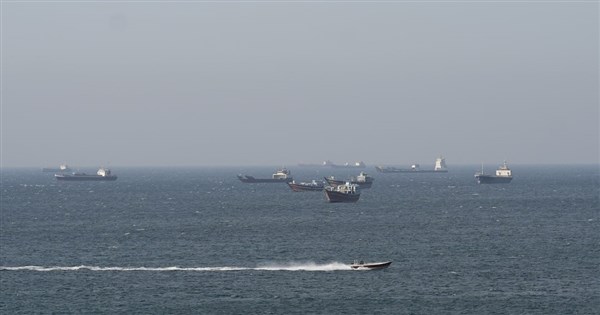
(CNA Singapore, July 8) Ship tracking data shows that at least four oil tankers and liquefied natural gas (LNG) carriers have turned back after attempting to transit the Strait of Hormuz, as further attacks on vessels in the crucial waterway have heightened concerns over navigation safety.
Reuters reported that after news emerged of Iran firing missiles at vessels in the Strait of Hormuz, a Qatari LNG carrier and a crude oil tanker flying the Saudi Arabian flag were damaged near the strait yesterday. This prompted maritime authorities to raise the threat risk for passing vessels to "severe," after which ships began to reroute.
Data from analytics firm Kpler and the London Stock Exchange Group (LSEG) shows that LNG carriers including the Al Ghariya, Duhail, and Al Ruwais, which were slowly heading west towards the Strait of Hormuz, changed course last night. All three tankers, controlled by QatarEnergy, were empty and en route to the Ras Laffan export facility in Qatar to load cargo.
Meanwhile, data from LSEG and Kpler also shows that an oil tanker flying the Indian flag, carrying 2 million barrels of crude oil loaded last weekend from Kuwait, turned back today off the coast of Oman in the Strait of Hormuz.
Since the conflict erupted at the end of February, at least 16 LNG cargoes from Ras Laffan and 10 LNG cargoes from the Das Island terminal of the Abu Dhabi National Oil Company (ADNOC) in the United Arab Emirates have departed the Strait of Hormuz. These cargoes represent only a small portion of the approximately 7 million metric tons of cargo that are exported monthly from the two export hubs.
Analysts at Vortexa, an energy freight market data company, noted an increase in ballast or empty vessels waiting to load at Ras Laffan, with over 10 accumulating by early July.
Vortexa added that more than 50 ballast vessels controlled by QatarEnergy and ADNOC are currently deployed in the Persian Gulf, India, and near the Strait of Malacca, with some vessels having their Automatic Identification System (AIS) signals turned off for over 10 days.
However, at least two crude oil tankers successfully transited the Strait of Hormuz. The very large crude carrier (VLCC) Tenjun, managed by Nippon Yusen KK, which loaded 2 million barrels of Qatari crude oil at the end of February, passed through the Strait of Hormuz last night.
Ship data shows that the VLCC Pertamina Pride, managed by Indonesia's state-owned oil company Pertamina, also departed the Strait of Hormuz yesterday with its transponder off. The vessel was carrying 2 million barrels of Saudi Arabian crude oil loaded in early March. (Compiled by Chang Hsiao-wen) 1150708
Stand with facts, your every donation is a force to protect press freedom.
Download the CNA "First News" APP to get the latest news in real-time.
Text, images, and videos on this website may not be reproduced, publicly broadcast, publicly transmitted, or used without authorization.
FACT BOX
- Source: CNA (Central News Agency)
- Category: 國際新聞