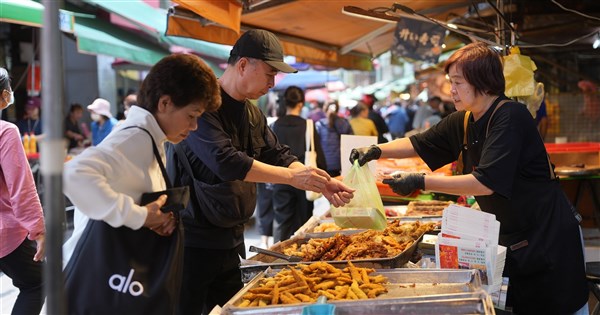
The Economic Research Institute of Academia Sinica today released the results of its 'Taiwan Consumer Expectations and Policy Response Survey,' indicating that the outbreak of the U.S.-Iran conflict has driven up international energy prices, leading to heightened inflation expectations among the public. The March 2026 survey shows that 63.17% of consumers expect living costs to rise one year from now, with an average expected increase of 8.77%.
The Economic Research Institute of Academia Sinica has been piloting the 'Taiwan Consumer Expectations and Policy Response Survey' since October 2023. One of its key components is inflation expectations. Given the gap between changes in the Consumer Price Index (CPI) and consumers' actual perceptions, the survey measures both CPI and expected changes in living costs.
Starting in 2026, the survey shifted from biannual to quarterly, conducted in March, June, September, and December each year. The sample is drawn from the Academia Sinica's Research Center for Humanities and Social Sciences online survey panel, with sampling, weighting, and statistical testing ensuring representativeness across gender, age, and region.
The institute notes that since March 2026, the U.S.-Iran conflict has driven up international energy prices with significant volatility, increasing transportation and oil-related raw material costs, thereby exerting upward pressure on domestic prices. Although the government has significantly mitigated the pass-through of international energy prices to domestic energy prices, CPI has risen since March, exceeding the 2% inflation alert threshold in May and June, with the increase continuing to widen. The year-on-year increase in the import price index, denominated in New Taiwan Dollars, reached 23.07% in June, indicating clear upward pressure on domestic inflation from external cost shocks.
The survey was conducted from March 11 to March 29, 2026, with an effective sample size of 2,324. Results show that 63.17% of consumers expect living costs to rise one year from now, with an average expected increase of 8.77%. Expected increases in transportation and energy expenses, and food expenses (including dining out), averaged 15.87% and 12.54%, respectively.
Dr. Shu-Chun Yang, a researcher at Academia Sinica's Economic Research Institute, pointed out that the CPI year-on-year increase in March remained at a relatively low 1.20%, similar to the 1.23% average in January and February. However, the survey results indicate that public inflation expectations have already warmed up, leading ahead of the subsequent actual rise in CPI.
Regarding housing price expectations, 30.65% of consumers expect prices to remain roughly unchanged in six months, while 53.11% expect prices to be higher than at the time of the March survey. Despite the housing market cooling significantly after the seventh round of credit controls, with transaction volumes sharply shrinking and prices correcting, over half of consumers still expect housing prices to rise, though the average expected increase has narrowed to 2.04%.
The March policy survey focused on the use of the NT$10,000 cash disbursement, with a preliminary estimate of the marginal propensity to consume (MPC) at 0.29. A concurrent landline and mobile phone survey (effective sample size: 2,216) estimated MPC at 0.15, similar to the 0.16 found in the October 2023 survey on the NT$6,000 disbursement. Overall, the MPC for both cash disbursements was far below 1, suggesting limited effectiveness in stimulating consumption or expanding domestic demand.
Dr. Yang noted that while cash disbursements are not ineffective per se, to enhance their impact, conditions must be imposed rather than adopting a universal 'blanket disbursement' strategy.
The institute's June 2026 policy survey also examined public willingness to have and raise children. Preliminary unweighted results show the top three reasons for unwillingness are: 'high child-rearing costs or low wages, making it financially unaffordable,' 'housing prices too high,' and 'concerns about disruption to existing lifestyle.'
The results indicate that in addition to high child-rearing costs and low wages, high housing prices are also a significant factor discouraging parenthood. When formulating policies to address low birth rates, the government should simultaneously consider long-term measures to stabilize housing prices. Additionally, 12% of consumers believe that a monthly subsidy of NT$5,000 per child until age 18 would incentivize childbearing, while 35% believe even a monthly subsidy of NT$10,000 would not be sufficient incentive. (Edited by Yang Lan-Hsuan) July 13, 2026
FACT BOX
- Source: CNA (Central News Agency)
- Category: Survey