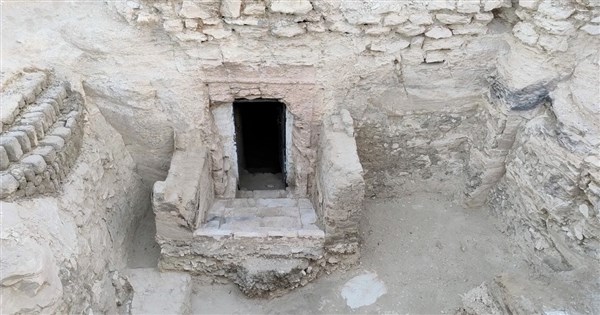
(CNA Cairo, 12th – comprehensive international report) Egyptian authorities announced today that archaeologists have discovered an ancient tomb dating back over 3,000 years near the southern Egyptian city of Luxor. The Egyptian government is actively promoting new archaeological discoveries to support its tourism industry.
According to AFP, the Egyptian Ministry of Tourism and Antiquities stated that the tomb belongs to a man named Paser, unearthed by an archaeological team from Leiden University in the Netherlands at the Sheikh Abd el-Qurna cemetery on the west bank of Luxor.
Experts determined, based on the artistic style of inscriptions within the tomb, that it dates back to the Ramesside period, spanning Egypt’s 19th and 20th dynasties.
The tomb is located to the east of a known burial site and follows the traditional layout of private Theban tombs from the New Kingdom era (1570–1069 BCE).
The tomb structure includes an open courtyard leading to a rock-cut offering hall shaped like an inverted 'T', with burial chambers located beneath ground level.
Archaeologists discovered well-preserved architectural elements in the courtyard, including a mudbrick pedestal used to place funerary stelae, and a staircase with sloped access ramps on both sides leading to the entrance.
Inside the burial chamber, inscriptions bearing Paser’s name depict him worshipping various deities within a shrine, as well as scenes of him seated with his wife before an offering table.
The excavation team stated they will continue documentation and research to confirm the exact identity of the individual buried and to gain deeper insights into the tomb’s historical and archaeological context.
The Egyptian government is currently promoting new archaeological findings to boost tourism, a vital source of foreign revenue for the country. (Compiled by: Zhang Mingxuan) 1150713
FACT BOX
- Source: CNA (Central News Agency)
- Category: Taiwan
- Organizations: Leiden University