Central News Agency Report
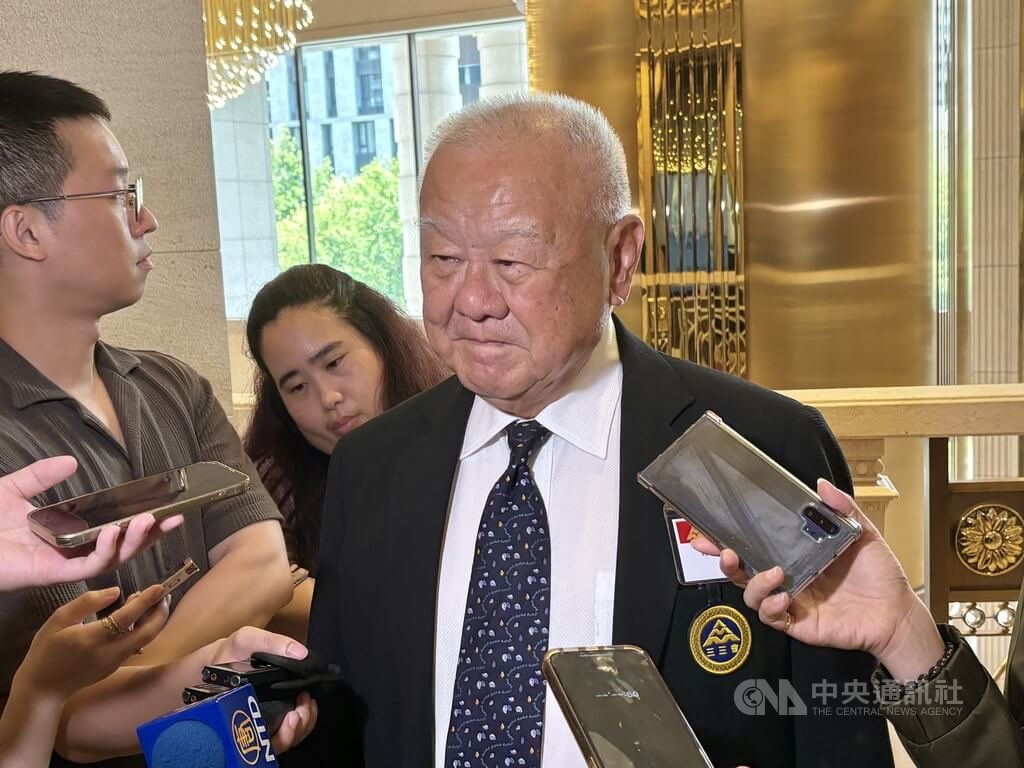
(CNA reporter Tseng Yun-ting, Taipei, 15th) Typhoon Baemi struck Taiwan last week, prompting work and school suspensions in cities including Taipei, New Taipei, Keelung, and Taoyuan, sparking public scrutiny over the criteria for such decisions. Lin Bo-Feng, Chairman of the Sanyi Association, said today in an interview before attending the association's July meeting: "Typhoon-related work suspensions should be based on people's property safety and well-being, not political motives. The central and local governments must strengthen coordination to avoid conflicting responses."
In recent typhoon events, some areas suspended operations despite actual weather conditions being milder than initially forecasted, reigniting debate over the typhoon leave policy. Lin emphasized that meteorological forecasts should be as accurate as possible, incorporating data from neighboring countries to make sound judgments.
Lin further pointed out that decisions on typhoon leave should be evaluated from perspectives such as public safety and happiness index, not political considerations. He also stressed the need for better coordination between central and local authorities, noting that divergent responses are undesirable.
Regarding the Middle East situation and energy supply, Lin stated that the Middle East conflict is complex and difficult to resolve, with future developments depending largely on U.S. policy and Iran's willingness to compromise. Taiwan, he said, should focus on stabilizing power supply and increasing its share of nuclear energy.
Lin noted that natural gas transportation faces bottlenecks due to limitations in shipping and port infrastructure. While Taiwan should continue strengthening oil and gas logistics, it must also rethink its energy supply strategy. He believes Taiwan's nuclear power share should be at least 15%, ideally reaching around 31%—similar to South Korea—to maintain reasonable electricity prices and stable supply. This is especially critical given the rising power demands from Taiwan's growing AI industry.
On the consumer price index (CPI) surpassing the 2% inflation warning line for two consecutive months, Lin said price hikes may be unavoidable amid global conflicts, but the government still has many tools at its disposal. He urged proactive problem assessment and support for businesses, including delaying carbon fee implementation. While Taiwan's AI sector is developing positively, traditional industries face challenges, and he hopes the government will present clear solutions to help enterprises overcome difficulties.
Regarding the ongoing Zhonglian Oils incident, Lin emphasized that the government's top priority should be restoring public confidence in food safety. Since the incident has occurred, he said, the focus should be on reviewing how to prevent recurrence. "Explanations and cover-ups are futile," he added. (Edited by Lin Shu-Yuan) 1150715
Choose to stand with the facts. Your support is a force in defending press freedom.
Download the CNA 'First News' app to stay updated with the latest developments.
Text, images, and videos on this website may not be reproduced, broadcast, publicly transmitted, or utilized without authorization.
FACT BOX
- Source: CNA (Central News Agency)
- Category: Taiwan