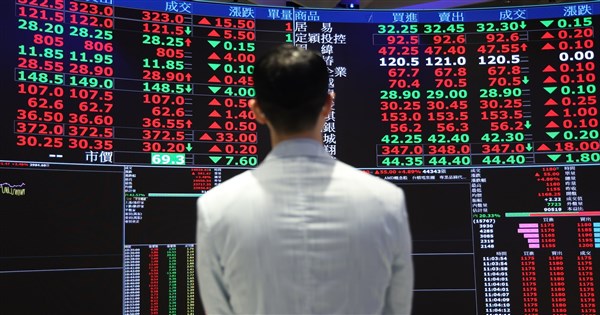
With Taiwan's stock market heating up, many people are experiencing FOMO (Fear of Missing Out) and want to learn financial management but find it intimidating. As a 'beginner investor,' are you afraid of being taken advantage of? Rachel Richards, who started with only $25 in her bank account after college, transformed her financial life by building passive income and became a financial advisor. By age 27, she achieved financial freedom. Her book, 'Make Your Money Work for You,' has become a bestseller, offering practical financial planning advice for young people and beginners on saving, debt repayment, investing, and retirement planning.
Rachel’s journey may sound incredible, but her first financial step was creating a budget—clearly understanding her current financial situation and future goals. She then learned to place her savings where they could earn the highest returns and developed a personalized investment strategy. Here are four investment principles she recommends, shared with permission.
In short: Sell when the market is high, buy when it’s low. Invest only for the long term. Never obsess over daily market movements.
Investing in the stock market doesn’t have to be complicated. Most people fear the market because they don’t understand it. But once they do, they often suffer from decision paralysis due to the overwhelming number of stocks and bonds available—much like standing in a convenience store overwhelmed by drink choices. Here, I aim to simplify your life and provide clear rules to reduce investment fear and anxiety. This will be the easiest part of the book—no need to hold back.
Never sell when the market drops. Historically, the stock market trend is upward. Yes, it has declined before—even for years. Recall past recessions: the 2000 dot-com bubble and the 2008 housing crisis. Recessions hit every 10 to 15 years like clockwork. So, the first rule during a downturn is: don’t panic. Notice I said 'when,' not 'if.' Market declines will happen. And when they do, the worst thing you can do is panic and sell all your stocks. As an investor, selling during a downturn is your biggest mistake.
Remember the scene in 'Jurassic Park' when they part the leaves and see the T-Rex? The protagonist whispers, 'Don’t. Move.' But everyone runs. Because they’re all idiots. Don’t be the idiot who runs. Just remember: stay put.
Why is selling during a downturn so bad? Because once your stocks have dropped, selling locks in the loss. No one says, 'I’ll buy a $20,000 car and sell it for $17,000 a month later when it depreciates.' So why do it with stocks?
Here’s why most people do: pure panic. They catch the emotional wave of others. When the market crashes, they do what everyone else does—sell. They think selling prevents further loss, and you’ll likely catch that hysteria too.
Remember: when you own stocks, losses are only theoretical. You don’t realize an actual loss until you sell. If you don’t want a paper loss to become real, hold on until the market recovers. Please, I beg you—don’t sell when the market drops! The rule is buy low, sell high. Selling during a downturn is the opposite.
When should you avoid buying? You guessed it—don’t buy when the market is rising.
Would you rather pay full price for a swimsuit in May or wait for the September sale? Pay full price for a winter coat or wait for the spring clearance? I personally avoid paying full price for anything—I only buy on sale. You can buy stocks on sale too. How? Buy when the market drops. Stocks go on 'discount.' Buy during or after a crash, sell when the market soars. Buy low, sell high—this is investing 101.
The problem is, when the market is hot, you catch the crowd’s excitement. FOMO is powerful. Acting on emotion leads to poor outcomes. The easiest path to success? Do the opposite of everyone else. Are friends and family panicking and selling during a dip? Great! That’s a clearance sale—your chance to buy. Are colleagues bragging their portfolios hit all-time highs? That’s your signal to sell, not buy. You don’t want to pay full price, do you?
Try this reaction: (when the market drops) 'Yes! Sale time! Everyone, come on!'
Serious warning: What if you’re ready to invest, but the market is already high? Should you wait for a dip or recession? Here’s the truth: there’s never a perfect time. Don’t wait 10 years. Starting now is better than never or late. Never try to time the market. If you can avoid buying at peaks, do so. Generally, stay consistently invested—even when the market is rising. If you’re ready, don’t delay just because a downturn hasn’t happened yet.
Do your best to buy low and sell high. Easier said than done—you’ve been warned. If you follow the first two rules, you’ll likely outperform most people—even if you invest in a 'bird fund.' Remember that. Here are more guidelines.
Rule #3: Hold your investments for at least one year—ideally longer: 5, 10, or 20 years. Again, long-term market trends go up; short-term, they’re volatile. The longer you hold, the more likely you are to succeed.
Confession: I started investing at 18 and have never sold a single share. Guess what? My portfolio has grown significantly. Yearly or monthly returns show big swings and many losses—but those losses made me happy because I knew gains were coming. Over time, my patience, trust, and calm were rewarded with strong growth. Long-term, you’re the queen/king of your investments.
Another reason to avoid selling within a year: short-term capital gains tax. Selling appreciated stocks almost always triggers taxes. To minimize taxes, hold at least one year. For money needed within a year, use high-yield savings accounts, not the stock market.
Short-term gains are taxed at ordinary income rates. Long-term gains (over one year) are taxed at lower rates—typically 15–20%, or 0% for the lowest brackets. So here’s another predictable way to boost returns: hold at least one year to avoid higher taxes. Yes, I’ve got strategies.
Don’t be a control freak. I was the ultimate Type-A control freak, so believe me—I know the struggle. If your plan is to buy a stock and analyze it daily, rethink your strategy. I guarantee daily market checking brings only severe anxiety and regret. How often do I check my portfolio? Twice a year. Seriously. Who stayed calm during every minor downturn over the past nine years? Me. 'Less is more' applies perfectly here. Once you set your strategy and buy, let it ride. Investing should be low-stress—check occasionally, but mostly forget it.
Rule #4 is the best rule: if you follow it, you’ll almost automatically follow Rules #1–3. Perfect. (Edited by Yang Tzu-Ying; book excerpt authorized by Commonwealth Publishing, abridged by Central News Agency)
FACT BOX
- Source: CNA (Central News Agency)
- Category: Taiwan