The war has caused the most severe disruption to global energy supplies in history, with millions of barrels of oil production halted due to Iran's blockade of the Strait of Hormuz. One-fifth of the world's oil and natural gas transportation passes through the Strait of Hormuz.
Georgieva stated that even if the conflict ends quickly, the IMF will still downgrade its world economic growth forecast and upgrade its inflation forecast.
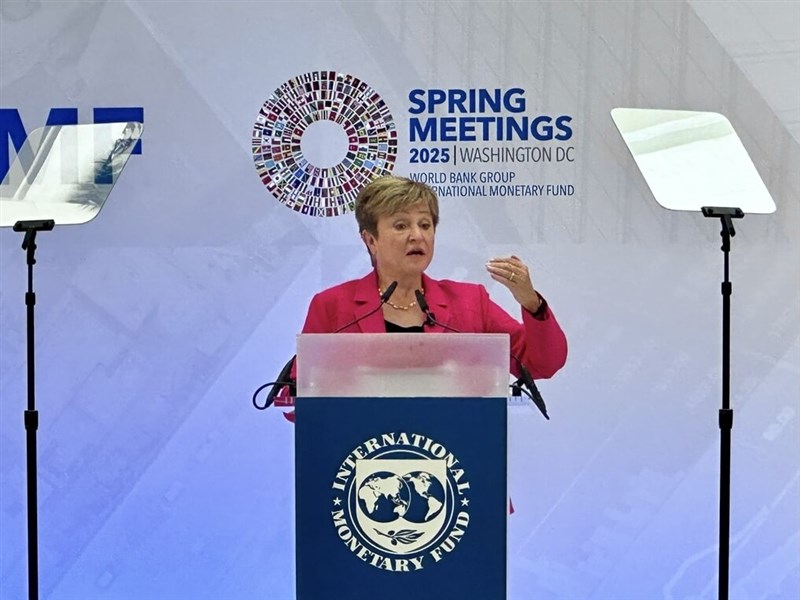
The International Monetary Fund and World Bank (WB) 2026 Spring Meetings are scheduled to be held in Washington D.C. from April 13th to 18th, where global financial officials are expected to focus on war-related issues.
The IMF's latest "World Economic Outlook" is also scheduled to be released on April 14th, which will include a series of scenario forecasts.
The IMF warned in a blog post on March 30th that it might downgrade its economic forecasts due to the impact of the war and tightening financial conditions.
Georgieva pointed out that without the war, the IMF had originally expected global economic growth to be slightly revised upwards to 3.3% in 2026 and 3.2% in 2027, as economies continued to recover from the pandemic.
"Now, all indications point to rising prices and slowing economic growth."
Georgieva is scheduled to deliver her pre-Spring Meetings speech on the 9th. She said that geopolitical tensions, technological advancements, climate shocks, and demographic changes all contribute to a high degree of uncertainty.
She stated that all of this means that after we recover from this shock, we need to pay close attention to the next one.
Georgieva said that the war has led to a 13% reduction in global oil supply, with its impact extending from the oil and natural gas transportation industry to related supply chains such as helium and fertilizers.
She pointed out that even if the war ends quickly and recovery is good, the IMF will still make a "moderately small" downward revision to its global economic growth forecast; inflation forecasts will also be revised upwards. If the war prolongs, the impact on inflation and economic growth will be more severe.
Georgieva also said that poor countries lacking energy reserves will be most affected. Many countries have little fiscal space to help their citizens cope with the soaring prices caused by the war.
She stated that some countries have sought financial assistance from the IMF, but she did not specify which ones.
Reuters reported that the IMF may increase some existing loan programs to meet the needs of various countries. 85% of IMF member countries are energy importers. (Compiled by Chi Chin-ling) 1150407
FACT BOX
- Source: CNA (Central News Agency)
- Category: financial