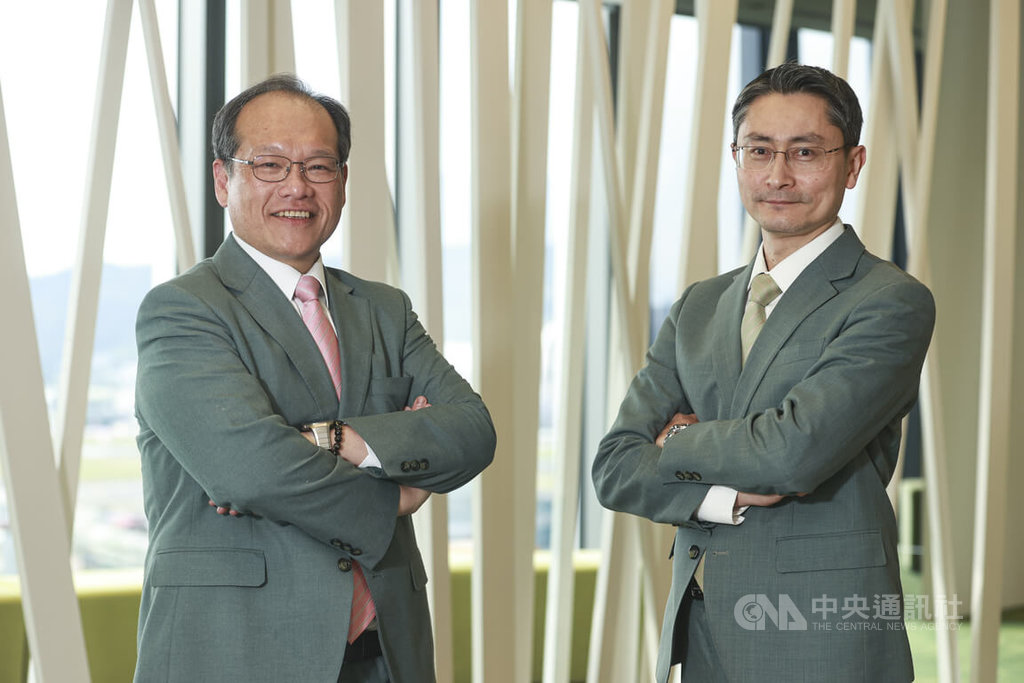
Taiwan's high-net-worth individuals are over 80% business owners. Historically, their overseas assets were mainly in Singapore and Hong Kong. With the AI wave boosting Taiwan's industrial chain value, Taiwan's economy has expanded significantly, leading to rapid wealth accumulation. Taiwan now has the potential to compete with Singapore and Hong Kong in the financial market.
Unlike many banks relying on star salespeople to manage high-net-worth clients, E.Sun Bank employs a differentiated strategy of "no individual performance targets." By emphasizing a team-oriented corporate culture, it has created a "Dual-Core Team" model. Combined with its deep foundation of SME clients, E.Sun Bank has successfully stood out in the wealth management market and become a leader.
E.Sun Bank has long focused on SME-related business, holding the top position among private banks for SME lending. Recognizing the actual needs of many clients, it launched its private banking business 10 years ago, focusing on managing high-net-worth clients.
In 2022, E.Sun Bank launched its "Wealth Management 2.0" high-net-worth business. By June 2025, it ranked first in client numbers and third in Assets Under Management (AUM). In July of the same year, it was the first to establish a presence in the Kaohsiung zone, with a service team comprising private banking consultants, investment portfolio consultants, credit planning personnel, and operations staff. Currently, its AUM has surpassed NT$10 billion.
Zhang Chongci, Deputy General Manager of E.Sun Bank's Personal Banking Business Group, described how many SME owners have strived their whole lives, accumulated wealth, and now face inheritance issues. E.Sun Bank has long accompanied them through their growth, supporting them through their peak and growth phases, laying a very good foundation.
Accompanying SME Owners' Growth: Winning Millions in Trust Through "Not Afraid of Being Scolded"
Despite years of accumulated cooperation, developing wealth management business initially faced many challenges. Zhang Chongci observed that many SME operators have gone through a "hardship-driven" entrepreneurial journey, witnessing the tech bubble and financial crises, making them very cautious and conservative when facing bank wealth management services.
He shared an instance where a chairman was initially displeased due to a significant paper loss from US bond investments. After multiple explanations from private banking consultants, investment experts, and corporate banking RMs about the reasons for short-term fluctuations and the future outlook for the bond market, the chairman's attitude shifted from "resentment" to "willingness to listen." When the market stabilized and the products showed their advantages, the chairman realized that wealth is not judged by short-term gains or losses.
Zhang Chongci admitted that this also shows the bank's value lies in standing with its customers during market volatility, frankly meaning "willing to be scolded and endure it." With this sincerity and professionalism of "preferring to be complained about rather than avoiding it," the bank won the client's trust. Subsequently, this chairman not only increased his investment by tens of millions of US dollars in the Kaohsiung zone but also entrusted his offshore assets to E.Sun Bank for management.
Specialized Zone Products Balance Portfolio Value and Risk, Launching Private Funds
To date, E.Sun Bank has launched products in the Kaohsiung zone, including designated purchases, private funds, financial asset financing, and insurance financing, which have garnered significant market attention. Zhang Chongci analyzed that high-net-worth individuals highly value asset stability. Therefore, the bank does not focus on "short-term profits" with them. Instead, it uses specialized zone products like private funds to preserve and pass down assets while meeting future cash flow plans.
For example, E.Sun Bank has launched three private fund products, including private equity, private infrastructure, and private debt, catering to different aspects, allowing clients to balance relatively stable cash flow with inflation resilience.
According to E.Sun Bank's plans, it will continue to collaborate with internationally renowned asset management institutions this year. Through product planning across different asset classes, it will launch one to two more private fund products with different themes to enrich the asset allocation choices and flexibility for high-net-worth clients.
Zhang Chongci also stated that managing high-net-worth clients cannot solely focus on profit or increasing client numbers. It requires services to verify whether the relationship between the family and the bank can be long-lasting. Through innovation and differentiated products, diverse client needs can be met. Only through such management can deeper client needs be understood.
Bridging Corporate and Retail Banking: "Dual-Core Team" Solves Second-Generation Succession Anxiety
Huang Nan-chou, Chairman of E.Sun Financial Holding Co. and E.Sun Bank, analyzed that over 80% of Taiwan's high-net-worth individuals are business owners. The second category includes tech elites, and the third comprises "landowners" whose wealth comes from inheritance. For the largest group, business owners, the primary concern is how to pass down wealth and their enterprises. In the past, inheritance discussions focused on "tangible assets." However, in recent years, it has been observed that as wealth accumulates to a certain level, they increasingly value how to pass down "intangible assets," such as family philosophy and honor.
To simultaneously meet the needs of corporate finance and family asset allocation, Cai Mu-xun, Senior Vice President of E.Sun Bank's Private Banking Department, mentioned that in the past, clients might have had to approach two different banks for private banking and corporate finance. However, E.Sun Bank has created a unique "Dual-Core Team" service model in the industry. Private banking consultants lead the personal and family asset allocation, tax planning, and inheritance for high-net-worth clients, while corporate banking RMs serve as the business service window, leading corporate finance services, including corporate financing, trade, and cash flow management.
Notably, unlike other industry peers that emphasize individual performance to cultivate "super salespeople," all performance at E.Sun Bank is measured at the team level, emphasizing collaboration. Cai Mu-xun explained that the benefit of this approach is that clients can be referred based on their needs and jointly managed, preventing clients from being siloed under a single individual.
The team jointly visits customers and provides inheritance solutions, making the service more comprehensive. This model is particularly effective in handling "traditional industry transformation" cases. Zhang Chongci shared an example of a first-generation owner of a traditional industry and their US-educated second-generation heir who had a rift due to differing business philosophies, even questioning the heir's succession capabilities. At this point, E.Sun Bank's family office acted as a "communication platform," preventing direct confrontation between the two generations and instead distilling a "seeking common ground while reserving differences" perspective from a professional third-party viewpoint.
Furthermore, for issues often faced by second-generation business owners, such as dual nationality or intergenerational matters, Zhang Chongci added that the family office also assists in formulating a "family charter" to ensure family wealth is passed down through consensus.
Huang Nan-chou stated that many Taiwanese high-net-worth individuals used to keep their money in Singapore and Hong Kong because many business networks were located there, facilitating company fund transfers. In contrast, Taiwan's biggest advantage is its complete industrial chain. In terms of economic scale, its GDP is expected to exceed US$1 trillion this year, representing standard "wealth hidden among the people." How to utilize these funds to develop financial services, such as trusts and family offices, is very important for the future.
Zhang Chongci observed that in the nearly one year since the Kaohsiung zone was launched, it has not only enhanced the professionalism of local financial talent and upgraded financial services but also achieved capital aggregation. If the scale further expands in the future, it can connect with international markets. By linking the Kaohsiung zone with Asian financial centers like Singapore and Hong Kong, the efficiency of corporate international fundraising or personal asset allocation can be significantly improved.
FACT BOX
- Source: CNA (Central News Agency)
- Category: Finance