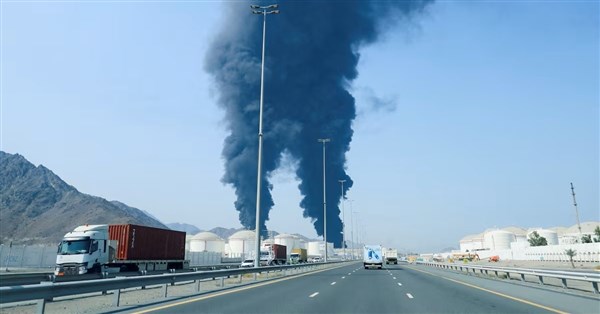
Intense missile and drone attacks on the United Arab Emirates (UAE) by Iran have escalated regional tensions, casting doubt on the fragile US-Iran ceasefire agreement. UAE's Ministry of Foreign Affairs stated that these attacks constitute a dangerous escalation and unacceptable violation, posing a direct threat to national security and stability. The UAE, a close US ally and an important Arab partner for Israel, reported an attack on an energy facility in Fujairah, injuring three Indian nationals, and damage to a residential building in Bukha, resulting in two injuries. The attacks caused oil prices to surge, with Brent crude futures rising over 5%. Energy costs have already impacted the global economy and put political pressure on US President Trump ahead of the midterm elections. When asked about the status of the US-Iran ceasefire and potential military action, Trump refused to provide details. Israeli military forces are on high alert, and the UAE has ordered schools to switch to remote learning for the remainder of the week. The UAE defense ministry reported that Iran launched four cruise missiles, three of which were intercepted. Iran also reportedly launched drones at a tanker belonging to the state-owned Abu Dhabi National Oil Company (ADNOC). Iran's military has not denied the attacks but stated they were not pre-planned. Diplomatic negotiations between Washington and Tehran have stalled, with the US canceling high-level official visits to Pakistan for further talks. The ceasefire agreement between Israel and Lebanon also appears precarious, with ongoing clashes between Hezbollah and Israeli forces following attacks by the Iran-backed group, resulting in over 2,700 deaths in Lebanon according to the Lebanese Health Ministry.
FACT BOX
- Source: CNA (Central News Agency)
- Category: Taiwan