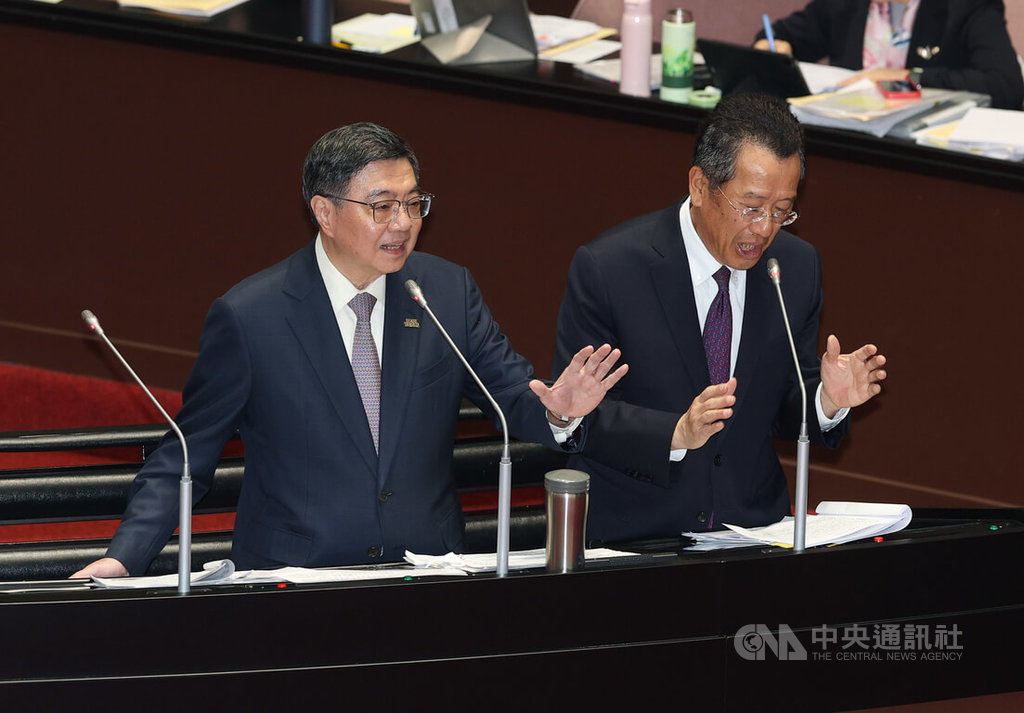
(CNA, Taipei, June 19, by reporter Tseng Yi-ning) DPP Legislator Lo Mei-ling pointed out today that in the past, budgets for military purchases were often allocated when the U.S. side expressed its willingness to sell, with the Letter of Offer and Acceptance (LOA) being signed subsequently. Minister of National Defense Wellington Koo stated that this is "how it has always been," and that waiting for the LOA to be issued before allocating the budget would not align with the planning and budgeting system. This afternoon, the Legislative Yuan invited Premier Cho Jung-tai and relevant ministry heads to present a special report on the preparation of the special budget for the first batch of LOA procurements under the plan to defend national security and strengthen asymmetric warfare capabilities. During questioning, DPP Legislator Lo Mei-ling noted that the arms procurement process can be divided into four stages: buyer's inquiry for price, procurement coordination, congressional notification, and signing the LOA, with the procurement phase only beginning at the fourth stage. According to media reports, budgets have historically been allocated and submitted for review when the U.S. side indicates its intent to sell. Lo said that the opposition party insists on receiving the LOA before a budget can be allocated and reviewed, but to her knowledge, the time between the third and fourth stages is very tight, only 45 days. She worried that if all future U.S. arms sales require an LOA before budgeting, the entire procurement case could change under time pressure. Minister of National Defense Wellington Koo responded that according to the "Planning, Programming, and Budgeting System" (PPBS), a budget plan should indeed be prepared after the intent to sell is expressed and sent to the Legislative Yuan for thorough review by its members to understand the U.S. sales intent and Taiwan's purchasing intent. If the budget proposal has not yet been notified to Congress, it is handled as a classified budget; if it has been notified, it becomes public. In response, Lo asked if the so-called "past" includes the time when the KMT was in power. Koo replied, "It has always been this way." He added that it is a resolution of the Legislative Yuan that the budget must be passed before the LOA can be signed; this is why special authorization from the Legislative Yuan was needed to sign a previous LOA, because even the special act had not yet been passed. Koo pointed out that if one has to wait for the LOA to be issued, it is completely inconsistent with the PPBS. Furthermore, during the congressional notification process, the U.S. commitment is already stated, "so I've never really understood why we must wait for the LOA to arrive at this point." Premier Cho Jung-tai also said that the Legislative Yuan's agenda of inviting the Executive Yuan for a special report today, and then asking the Executive Yuan to submit the special budget tomorrow and report on its preparation for interpellation, "should actually be reversed." Lo also expressed concern about whether the first installment payment of about NT$800 million for the HIMARS, due on May 31, could be paid in time. Koo said that if the budget has not been passed by then, he will invoke the Budget Act
FACT BOX
- Source: CNA (Central News Agency)
- Category: 政策