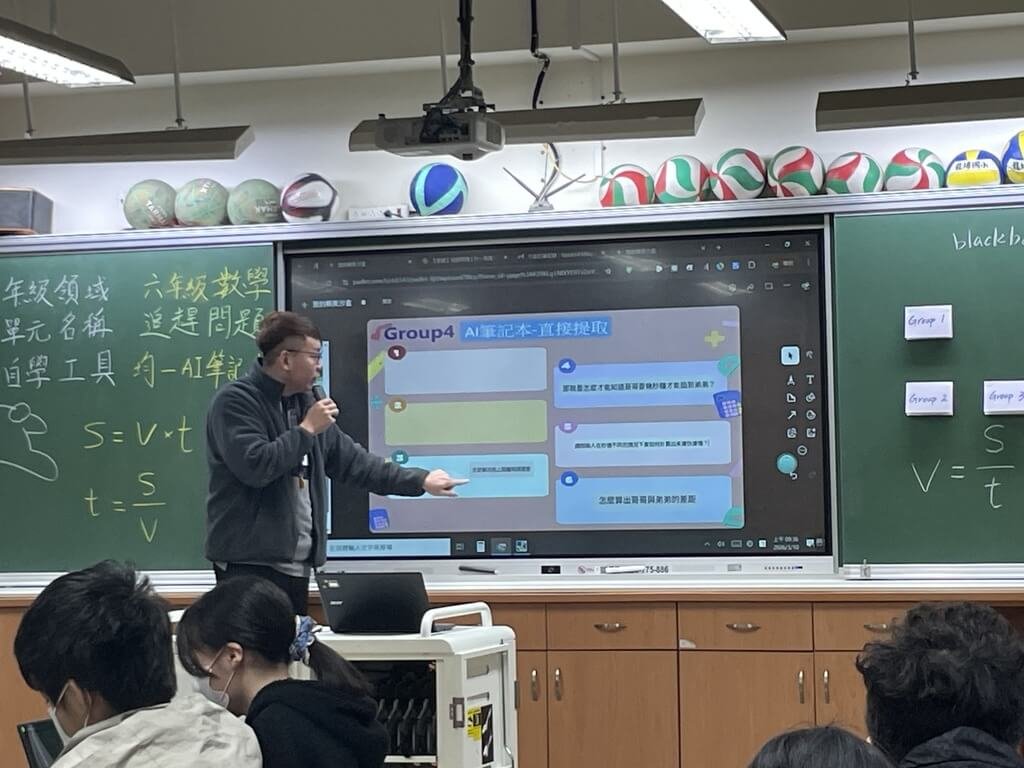
(CNA, by reporter Chen Chih-chung, Taipei, 20th) The National Academy for Educational Research (NAER) and the Junyi Academy Education Platform have collaborated to launch a research project on AI (Artificial Intelligence) differentiated math instruction at Longpu Elementary School in New Taipei City. The project focuses on teaching students "how to ask" and enabling teachers to see "who needs help," rather than pursuing quick answers. NAER issued a press release today introducing the "Generative AI Education Research Project," implemented in sixth-grade mathematics classes at Longpu Elementary School since November 2025. The project has already accumulated over 6,000 anonymized AI questions and more than 30,000 classroom learning records. Students use the Junyi Education Platform to complete tasks assigned by teachers, including videos, exercises, and an AI notebook. When encountering difficulties in understanding problems, clarifying concepts, or developing solving strategies, they attempt to ask questions in the AI notebook. Teachers, through classroom guidance and backend data, help students formulate their questions more clearly. "In this math class, no child is a guest," said Chang Po-chiang, principal of Longpu Elementary School. With AI assistance, students can pause to ask questions, review key points, or practice again according to their own level of understanding. Teachers can also adjust the pace based on the class situation, allowing upper-grade students to stay on the learning track even when facing more difficult math, turning "the ability to ask good questions" into a fundamental skill for the AI era. During the implementation, the team also discovered that having AI does not automatically lead to better learning. The key is the ability to ask meaningful questions, understand AI responses, and judge which content needs further verification or correction. By reviewing their own question history, students can check how they asked, how they thought, and what they still don't understand, turning AI into a tool that accompanies their thinking process rather than a shortcut that replaces it. NAER hopes that through this collaboration, it can gradually develop an AI-integrated teaching model that is easy for teachers to adopt, understandable for students, and reassuring for parents, serving as an important reference for promoting future generative AI education policies. (Editor: Kuan Chung-wei) 1150520
FACT BOX
- Source: CNA (Central News Agency)
- Category: 政策
- Dates in source: 1150520