Dry, gritty eyes are a hallmark of dry eye syndrome, a condition often called a modern-day ailment. A new study from Chang Gung Memorial Hospital has discovered that dry eye syndrome can harbor warning signs for 10 different autoimmune diseases, appearing on average three years before a formal diagnosis. If you experience persistent dryness that doesn't improve with treatment, beware it could be a distress signal from your immune system.
The ophthalmology department at Keelung Chang Gung Memorial Hospital and a team from the National Health Research Institutes conducted a 10-year follow-up study using the National Health Insurance database, tracking over 67,000 patients with autoimmune diseases. The results showed that dry eye is often the first manifestation of a systemic inflammatory response, preceding an autoimmune disease diagnosis by approximately 3 to 3.7 years. This major finding was published in the internationally renowned medical journal JAMA Network Open in February 2026.
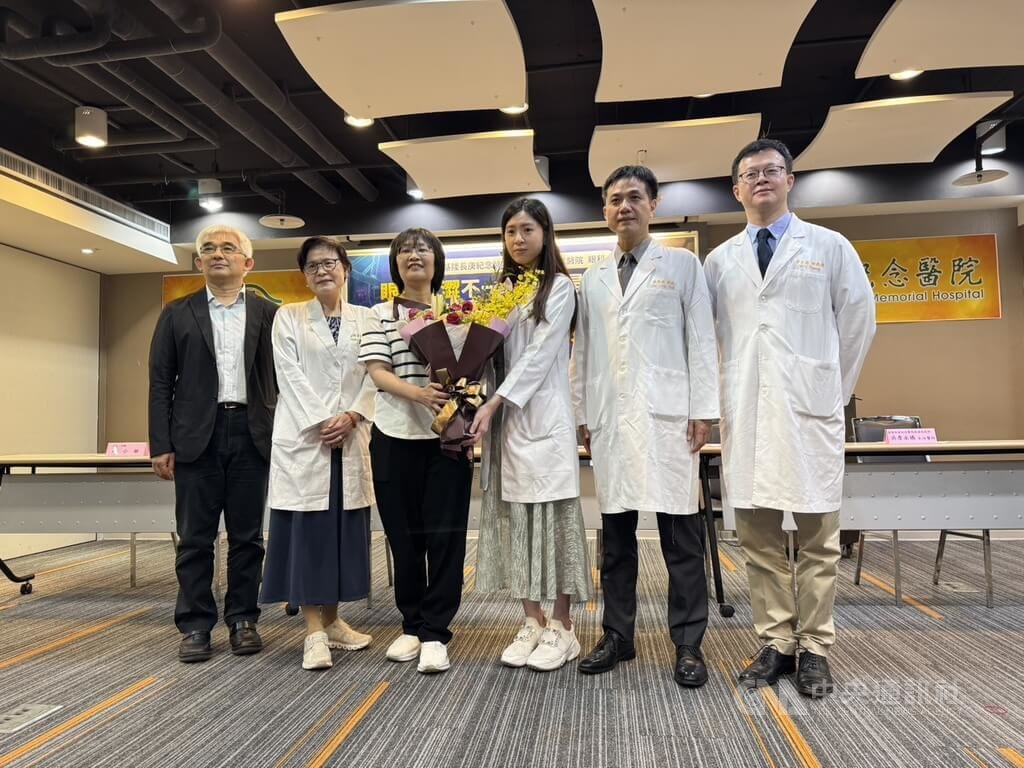
Dr. Chen Nan-ni, an ophthalmologist at Chiayi Chang Gung Memorial Hospital, explained at a press conference today that while the prevalence of dry eye in Taiwanese adults over 40 is about 5% to 40%, this rate skyrockets among autoimmune disease patients, with nearly one in two (47.14%) suffering from the condition.
Among the 10 major autoimmune diseases, Sjögren's syndrome had the highest prevalence of dry eye at 81.3%, with other conditions like rheumatoid arthritis (39.3%) and lupus (38.1%) also showing very high rates.
Dr. Chen explained that the link between autoimmune diseases and dry eye involves T-cells. A group of T-cells called "Th17" becomes overactive in autoimmune conditions or situations of chronic damage, secreting inflammatory substances that attack the ocular surface tissue and lacrimal glands, and can even block the oil-secreting meibomian glands.
Notably, Dr. Chen stated that while patients with vasculitis do not have the highest prevalence of dry eye, they face the highest risk of it progressing to keratitis (27.6%) or corneal ulcers (10.6%), indicating the most severe ocular inflammation, which can lead to blindness. Additionally, across all analyzed disease categories, the proportion of women with dry eye was higher than that of men.
A patient in her 40s, surnamed Chiu, visited an ophthalmologist for her child's laser eye surgery consultation. Thinking she might as well ask about her own eye soreness and fatigue that hadn't improved with artificial tears over the past few months, she was surprised when the doctor saw something amiss and immediately referred her to a rheumatologist. She was diagnosed with Sjögren's syndrome, an autoimmune disease commonly known as "dryness syndrome."
"When I heard 'dryness syndrome,' I just wondered what kind of disease that was," Ms. Chiu shared. Hearing the doctor mention applying for a major illness card felt like her world was collapsing. She was still young; how could she have a major illness? Fortunately, the early detection led to significant improvement after treatment, markedly enhancing her quality of life.
Sun Chi-chin, Vice Superintendent of Keelung Chang Gung Memorial Hospital, pointed out the significant predictive value of this research. If people experience a persistent foreign body sensation, burning, light sensitivity, or blurred vision that is not relieved by artificial tears, it should not be treated as a simple eye problem. It could be a distress signal from the body's autoimmune system.
Doctors advise that in addition to medical management, dry eye patients should maintain a regular daily routine, avoid staying up late and smoking, and can use warm compresses and maintain eyelid hygiene to promote tear secretion. Early identification of potential underlying immune diseases is key to preventing serious complications like corneal ulcers.
FACT BOX
- Source: CNA (Central News Agency)
- Category: 事件
- Organizations: JAMA Network Open