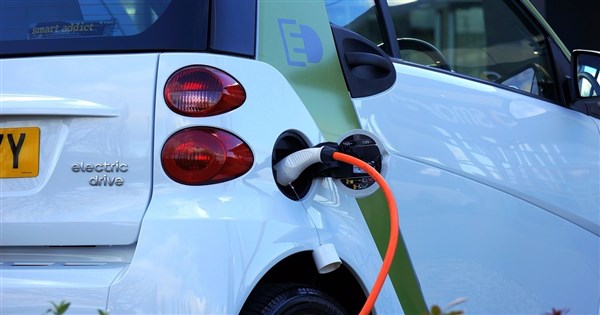
Amid soaring fuel prices caused by the Iran war, demand for electric vehicles (EVs) in Europe has surged, reversing last year's weak performance, with some industry players believing the auto market has reached a turning point. UK Prime Minister Keir Starmer recently relaxed sanctions on the import of Russian aviation fuel and diesel to cope with skyrocketing oil prices.
● European EV Sales Soar as Iran War Creates Turning Point in Public Acceptance
Data from UK research firm New Automotive and European industry group E-Mobility Europe shows that new EV registrations in 16 European markets grew by 34% year-on-year in April. These markets account for over 80% of total car sales in the European Union (EU) and the European Free Trade Association (EFTA).
The data also indicates that in addition to strong growth in markets with already high acceptance like Denmark and the Netherlands, EV sales saw significant increases in slower-adopting markets such as Italy.
Searches for new and used EVs on European vehicle trading websites have also seen significant growth, with a particularly notable increase in demand for more affordably priced Chinese brands.
● War Pushes Up Oil Prices; UK Relaxes Sanctions on Russian Aviation Fuel and Diesel
As the Middle East war drives up oil prices, Prime Minister Keir Starmer today defended his controversial decision to relax sanctions on imports of Russian aviation fuel and diesel. The trade permit allows the UK to import Russian crude oil refined in third countries like India but has drawn strong criticism from opposition parties.
Last October, the UK announced it would ban products derived from Russian crude oil to cut off a source of revenue funding the war in Ukraine. However, Starmer stated the government issued "two targeted, time-limited permits to allow for the orderly implementation of new sanctions and to protect UK consumers." He added, "This is in no way a lifting of any existing sanctions, and we will continue to work with our allies on more sanctions packages."
● Germany Restarts EV Subsidies as Hormuz Strait Crisis Drives Market Shift
This week, the German government officially restarted its EV purchase subsidy program, with applicants eligible for up to €6,000 (approx. NT$220,000). As the Iran war pushes up international oil prices and the Hormuz Strait crisis intensifies energy anxiety, German consumer interest in EVs has grown. The International Energy Agency notes that Germany has become one of Europe's fastest-growing EV markets.
Germany's official EV purchase subsidy platform went live today. Under the new system, families purchasing pure EVs can receive subsidies ranging from €3,000 to €6,000, depending on income and number of children, while plug-in hybrids are eligible for up to €1,500.
Germany's auto club ADAC pointed out that Germans' searches for EV information have rapidly increased recently, with many people recalculating fuel prices, taxes, and car ownership costs. Bavarian car dealer Tobias Sirch told the Süddeutsche Zeitung (SZ) that since the war began, EV demand has skyrocketed, with EVs now accounting for over two-thirds of his monthly sales, up from just one-third previously.
● Middle East Turmoil, Slump in Chinese Tourists Lead to 5.5% YoY Drop in Foreign Visitors to Japan in April
The Japan National Tourism Organization released estimates today indicating that foreign visitors to Japan in April decreased by 5.5% year-on-year. Turmoil in the Middle East, leading to flight cancellations and higher ticket prices, is cited as one possible reason. The slump in Chinese tourists due to deteriorating Sino-Japanese relations also persists.
Kyodo News reported that the tourism agency also noted that visitors from the UK fell 13.8% to 59,900 in April, with many European countries showing a downward trend. Visitors from the Middle East region decreased by 21.4%.
● Iran War Pushes Up Inflation; Fed Minutes Show More Officials Lean Towards Rate Hikes
U.S. Federal Reserve officials are increasingly concerned about the Iran war driving up inflation, with a growing number accepting the possibility that an interest rate hike may be necessary. This indicates that incoming Chair Walsh will inherit an increasingly hawkish central bank policymaking team.
According to the minutes of the April 28-29 meeting released today, Reuters reported that a majority of Fed policymakers believe that "some degree of policy tightening might become appropriate" if inflation remains persistently above the central bank's 2% target.
The minutes noted, "In response to this possibility, many participants indicated they would favor removing some language from the post-meeting statement that suggested a dovish tilt in the Fed's future interest rate decisions."
FACT BOX
- Source: CNA (Central News Agency)
- Category: 國際
- Organizations: New Automotive / E-Mobility Europe