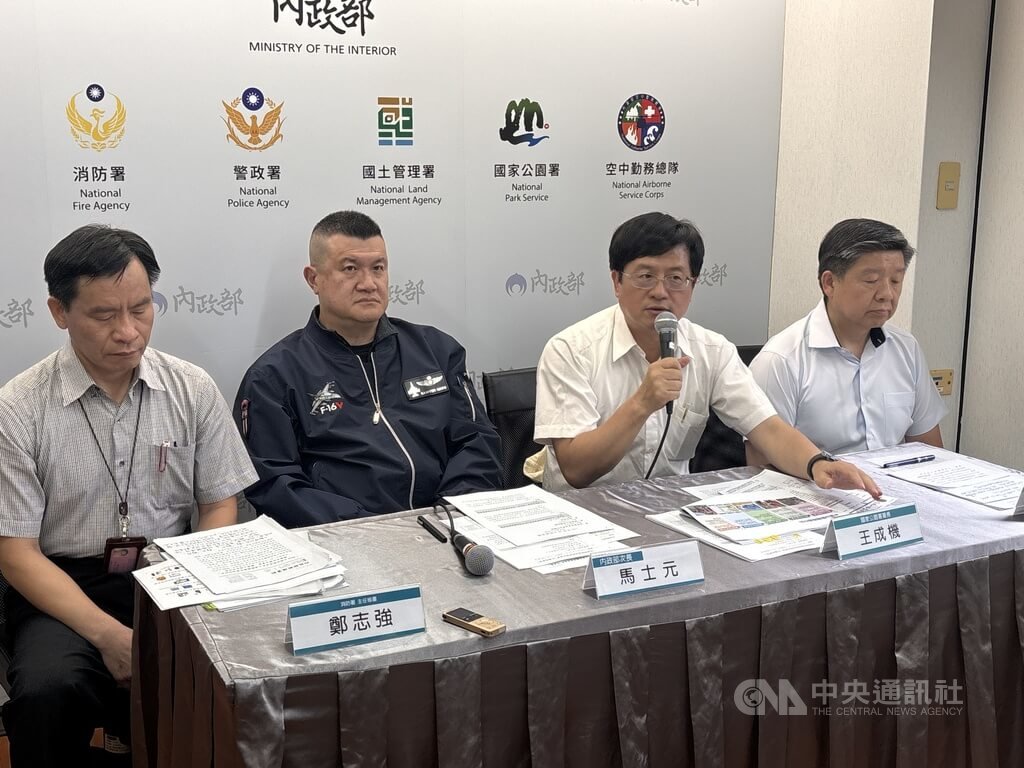
(CNA, Taipei, 21st) The Ministry of the Interior (MOI) said today that to enhance talent recruitment and retention, it is currently seeking approval from the Executive Yuan to increase bonuses for pilots of the National Airborne Service Corps (NASC), hoping to align their salaries with the private sector. It is also seeking to raise work bonuses for some personnel in immigration agencies to further care for its staff. The MOI previously stated that training one NASC captain costs over NT$100 million. Currently, with a pilot establishment of 100, there is a shortage of 20 pilots, mostly due to them leaving for private airlines for better pay. A request has been made to the Executive Yuan's Directorate-General of Personnel Administration to increase salaries and allowances. The MOI held a post-meeting press conference today after its departmental affairs meeting to explain 'Improvements in National Park Mountaineering Management and Mountain Rescue.' Lin Kuo-chiang, Deputy Director-General of the NASC, stated that since the Executive Yuan promoted the 'open mountain policy' in October 2019, the pressure on the NASC for mountain rescues has significantly increased, with flight frequencies hitting new highs. Last year alone, 200 people were rescued in mountain accidents, a historical peak. Furthermore, NASC crew members face high risks during rescues; if there is an issue with the aircraft, they must assess whether the terrain and obstacles allow for a safe escape. Regarding the pay raise for NASC pilots, Lin said it is currently being processed by the Directorate-General of Personnel Administration and requires discussions with relevant agencies. He hopes it can be approved soon. As for whether it could be secured by the end of the year, he expressed optimism but noted it still depends on government policy. MOI Political Deputy Minister Ma Shih-yuan added that in recent years, besides the opening of mountain forests, Taiwan's aviation industry and private helicopter companies have developed rapidly, leading to labor shortages everywhere. He hopes that pilots trained by the military over long periods and at great expense will choose the MOI's NASC as their second career after leaving military life, rather than going to private enterprises. Ma said that compared to the private sector, the NASC's salaries are less competitive. Therefore, to retain talent, it is necessary to 'substantially increase' the salaries of NASC pilots to match private sector levels. He stressed that without competitiveness, it's impossible to attract talent, which will lead to difficulties in maintaining the fleet and providing emergency assistance for mountain and sea rescues in the future—a very realistic problem. Ma stated that besides seeking a bonus increase for the NASC, the MOI is also pushing for an increase in work bonuses for some personnel in immigration agencies, hoping to strengthen talent recruitment and retention.
FACT BOX
- Source: CNA (Central News Agency)
- Category: 政策