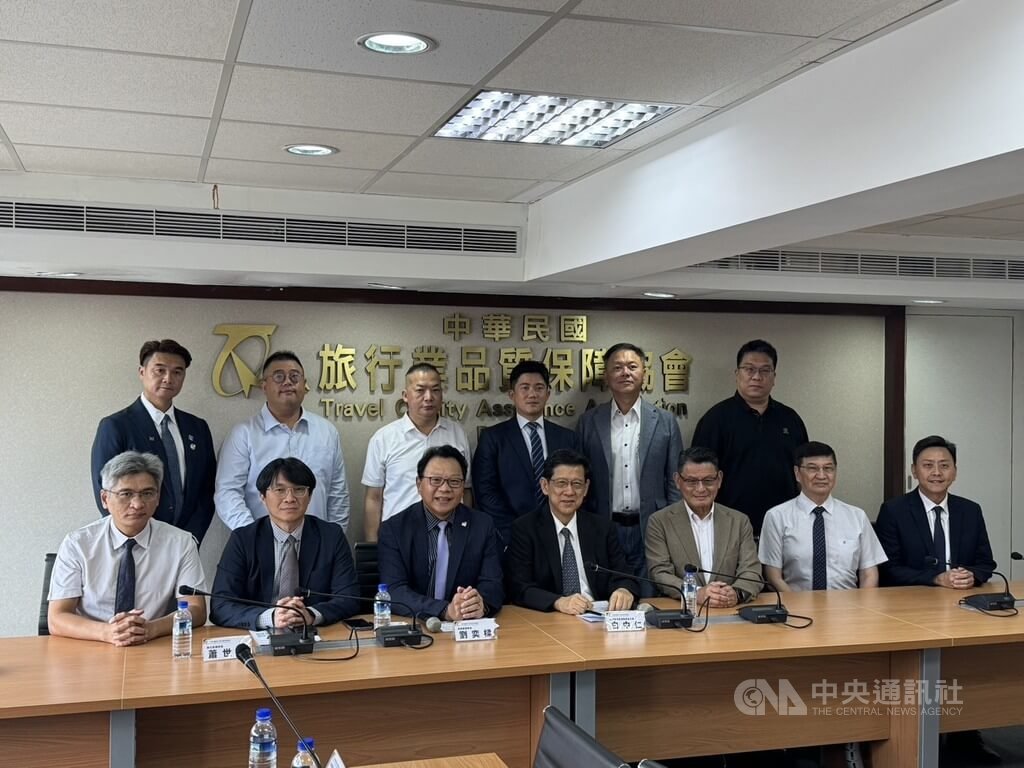
The Travel Quality Assurance Association (TQAA) stated that for Japan, the most beloved destination for Taiwanese travelers, tour prices for the summer holidays will not be raised compared to the same period last year, as operators are absorbing increased costs such as fuel surcharges and higher tourism taxes. Additionally, changes to Thailand's visa-free policy will not affect group tour passengers.
The Republic of China Travel Quality Assurance Association held a press conference today to announce reasonable prices for various tour routes from July to September this year. At the event, Pai Chung-jen, chairman of the TQAA's Tour Price Reference Committee, said that based on the number of travelers so far, it is estimated that the total number of outbound tourists this year could exceed 20 million.
Regarding Japan, the top choice for Taiwanese tourists, Japan route committee member Liao Pei-yuan stated that costs for operators have increased by approximately NT$3,000 to NT$4,000 due to factors like rising airfares driven by fuel costs, increased prices for hotels and buses in Japan, and the hike in Japan's departure tax from 1,000 yen (about NT$198) to 3,000 yen (about NT$595) starting July 1st.
However, Liao pointed out that because operators are packaging tours with lower profit margins by using business-style boutique hotels and increasing the number of self-catered meals, summer tour prices for Japan have not increased compared to the same period last year. For a 5-day trip, summer tour prices for Kyushu are between NT$33,900 and NT$48,900; Tokyo tours are between NT$35,900 and NT$57,900; and Kyoto-Osaka-Kobe tours are between NT$35,900 and NT$52,900.
In the South Korean travel market, Korea route committee member Chen Tung-lung said that tour prices from July to September are flat compared to last year. This is mainly because an increase in flight availability has offset rising labor costs, and a favorable exchange rate has stabilized related costs. Tour prices for various regions in the third quarter range from about NT$14,800 to NT$36,000.
For Southeast Asia, including Malaysia, Singapore, Thailand, the Philippines, and Indonesia, committee member Ling Jung-chun noted that due to an increase in the aviation fuel surcharge, airfares to most countries have risen by about 5% to 10%. Although Thailand will adjust its visa-free days, it will have no impact as group tours are typically 5 to 7 days long.
Regarding Vietnam, Indochina Peninsula committee member Tsai Cheng-ting said that prices for Northern Vietnam are flat compared to the same period last year, while prices for Central Vietnam have decreased by about 5% to 10%. For the popular Phu Quoc Island, four-star tour packages have seen a price drop of about 20%, and five-star packages have been reduced by 5%.
Long-haul destinations such as the United States and Europe have all seen tour price increases compared to the same period last year due to factors like rising fuel costs, the World Cup, and the Middle East conflict.
Americas route committee member Lee Ying-ming said that with the World Cup starting at the end of June, prices already began to rise at the end of the second quarter. Combined with increased fuel, hotel, and bus costs, tour prices have surged by 8% to 10%. Europe route committee member Chen Jung-hsin said that Europe has been affected by exchange rate fluctuations and rising local costs for hotels, dining, and transportation, leading to significantly higher costs than in previous years and an overall tour price increase of 5% to 8% compared to last year.
The TQAA pointed out that tours to Central Asia and Africa have increased by 2% to 23% compared to the same period last year. Tours to Australia and New Zealand have also seen prices rise by over 10% due to adjustments in airfare structures and a spillover effect from Eurasian routes.
For domestic travel, domestic travel committee member Chen Shih-ting said that due to increases in accommodation, tour bus, and personnel costs, overall tour prices have grown by 3% compared to last year.
Additionally, with several Chinese airlines soon to launch routes such as Taichung-Chengdu and Taichung-Qingdao, TQAA Standing Vice Chairman Liu Yi-liang said that he not only looks forward to the new routes but, given the growth in the cross-strait travel market, also hopes the ban on group tours can be lifted to allow for group travel exchanges.
FACT BOX
- Source: CNA (Central News Agency)
- Category: 產業