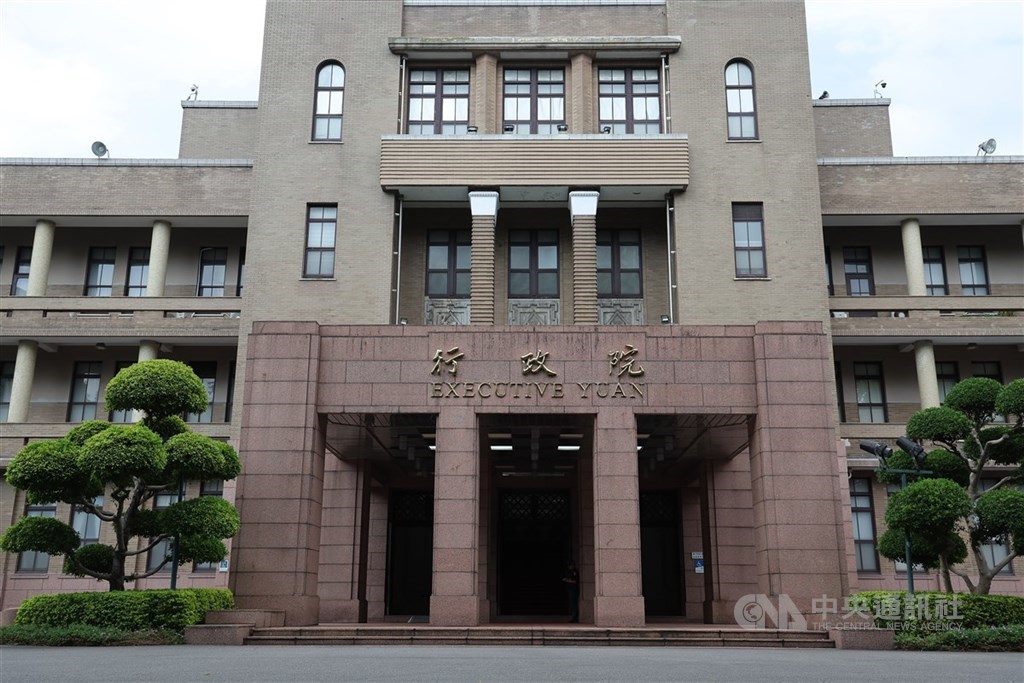
To implement the Artificial Intelligence Basic Law, Premier Cho Jung-tai announced today that the Executive Yuan will establish a "National Artificial Intelligence Strategy Special Committee." He will serve as the convener to comprehensively coordinate, promote, and supervise national artificial intelligence affairs. The National Science and Technology Council (NSTC) will be responsible for drafting the "National Artificial Intelligence Development Guidelines" and submitting them to the strategy committee for review.
To establish the basic principles for AI research and development, application, and government governance in Taiwan, and to ensure that AI applications also consider the physical and mental development and human rights of children and adolescents, the Artificial Intelligence Basic Law was promulgated and implemented in January. Today, at a meeting of the Executive Yuan, Premier Cho Jung-tai was briefed on reports regarding the implementation plan for the Artificial Intelligence Basic Law, the AI Talent Ark Project, and the AI Industry Talent Certification Guidelines 3.0.
Executive Yuan Spokesperson Li Hui-chih, relaying the Premier's message at a press conference after the meeting, stated that Premier Cho said Taiwan must not only pursue technological innovation but also ensure industrial development, social welfare, and the protection of human rights. Therefore, the Executive Yuan will formally establish the National Artificial Intelligence Strategy Special Committee, with himself as the convener, to comprehensively coordinate, promote, and supervise national artificial intelligence affairs. The NSTC will then take charge of drafting Taiwan's first "National Artificial Intelligence Development Guidelines" and submit them to the strategy committee for deliberation.
Premier Cho also issued reminders: 1. All levels of government agencies should complete a risk assessment for the official use of AI by July and establish internal control and management regulations within one year. 2. Promote cross-ministerial efforts on common issues such as AI education, talent, and infrastructure, with the Ministry of Digital Affairs (MODA) leading the promotion of an AI risk classification framework, validation tools, and sound data governance legislation. 3. All competent authorities for specific industries must establish management regulations and industry guidelines for AI application risks in their respective fields before January 2028, and complete regulatory adjustments or improvements to administrative measures.
Regarding the AI Industry Talent Certification Guidelines 3.0, Premier Cho stated that the government is proactively establishing a common, cross-industry talent guide to help enterprises accurately define the AI competency needs of the new era. Version 3.0 will incorporate "AI governance literacy" and "AI collaboration and development" as competency items to cultivate talent's ability to identify risks in AI applications and to enhance their practical skills in collaborating with and developing AI tools. He asked ministries to continue monitoring AI development and applications and to update the guidelines' content as needed to align with the legal environment and industry demands.
Furthermore, to implement AI talent training and development in the public sector, Premier Cho said that the Directorate-General of Personnel Administration and MODA are collaborating on planning the "AI Public Servant Talent Certification Guidelines," which are expected to be officially released in June. He urged for active promotion according to procedure to complete the release on schedule.
As for the AI Talent Ark Project, Premier Cho stated that its focus is on three major aspects: constructing an AI learning environment, cultivating interdisciplinary AI teaching talent, and strengthening data-driven decision-making capabilities. The project aims to enhance the professional knowledge and skills of primary and secondary school teachers in applying AI in teaching, improve student learning outcomes, and strengthen "AI literacy" to cultivate students' ability to "use AI responsibly." He asked the Ministry of Education to inventory AI application scenarios and their potential risks, and to conduct a comprehensive review and plan for teacher professional training and talent retention.
FACT BOX
- Source: CNA (Central News Agency)
- Category: 政策