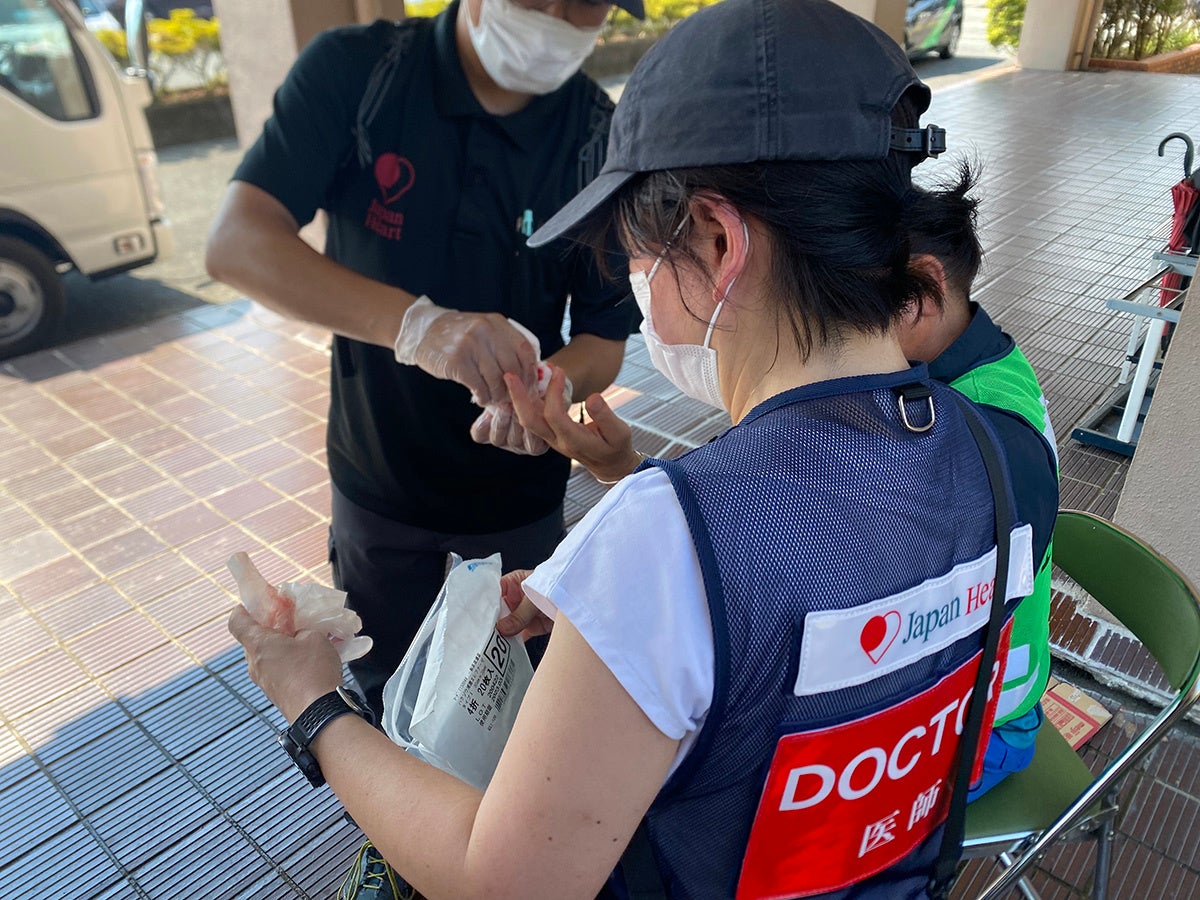
Doctor working under extreme heat (photo taken August 3)
Japan Heart, a Japan-originated international medical NGO (based in Taito-ku, Tokyo; President: Yoshioka Haruna), announces the summary of its medical support activities and observed health challenges in evacuation centers in Yatsushiro City—one of the hardest-hit areas in Kumamoto Prefecture—approaching one month after the Reiwa 8 Kumamoto Earthquake on July 28, 2026, and ahead of September 1, 'Disaster Prevention Day'.
Japan Heart began on-site assessment on the day of the disaster, entered the field the next day under its disaster agreement with Kumamoto Prefecture, and continues to support various evacuation centers in Yatsushiro City.
Having been stationed at evacuation centers for nearly a month, conducting over 800 medical interventions and daily communication with evacuees, the team has observed that the impact on survivors' health stems not only from the disaster itself but also from the prolonged evacuation life.
Current Situation in the Disaster Zone and Summer-Specific Health Risks
The earthquake, with its epicenter in Kumamoto Prefecture, struck at 16:27 on July 28, registering a maximum seismic intensity of 7. At the two evacuation centers in Yatsushiro City where Japan Heart continues on-site support, approximately 160 people (as of August 26) still live in evacuation conditions. While lifelines and local functions are gradually recovering, concerns remain about the health impacts of prolonged evacuation.
Especially this time, due to the evacuation occurring during the peak of summer heat, risks such as heatstroke, dehydration, and infectious diseases—season-specific health threats—have significantly increased.
Medical consultation booth operations inside evacuation centers (photo taken August 3)
Japan Heart's On-Site Support Activities Since the Day After the Disaster
Japan Heart began local assessment on the day of the disaster, entered the field the next day under its disaster agreement with Kumamoto Prefecture, and launched support operations in severely affected Yatsushiro City. In addition to donating supplies to evacuation centers, medical support teams composed of doctors and nurses have been stationed at each center. They conduct daily visits to evacuees and those living in vehicles, providing medical consultations and health management support at specially set-up consultation booths.
Beyond medical care, the team also supports evacuation center operations by assisting with living area organization, toilets, bathing, and laundry—areas that overwhelmed local authorities could not fully address post-disaster.
As the local situation evolves, Japan Heart continues its on-site presence to ensure evacuees' peace of mind, maintaining health consultations, living environment improvements, and evacuation center operational support as part of ongoing health management.
[Support Achievements (as of August 25)]
- Activity Period: July 28, 2026 – ongoing
- Staff Deployed: 43 (doctors, nurses, coordinators)
- Medical Consultations: 858 cases involving 169 individuals (combined visits to on-site medical booths and mobile rounds)
- Other Activities: On-site support at 2 evacuation centers; outreach clinics and nurse visits to other evacuation centers and home-based evacuees (12 cases, upon municipal request)
- Supply Support: 5 locations (water, food, daily necessities, clothing, etc.)
Five Health Risks of Summer Evacuation Life, as Observed by Medical Staff
Through nearly a month of support, the medical team encountered various health issues among evacuees. Below are five major risks—particularly relevant during summer—along with real cases and countermeasures:
① Heatstroke and Dehydration
Nurse speaking to residents outdoors during daytime (photo taken August 3)
- Real Cases:
- Immediately after the disaster, poor toilet hygiene led some to avoid using toilets, resulting in dehydration from withholding water intake.
- Despite air-conditioned evacuation centers, some evacuees returning during the day to clean earthquake-damaged homes (without power or functional AC) showed signs of suspected heatstroke.
- Elderly individuals, less aware of thirst, developed severe dehydration; one such case required hospitalization after being seen by Japan Heart.
- Key Countermeasures: Frequent hydration (especially during the day and before bed—small amounts frequently, not large volumes at once), salt intake, and avoiding outdoor activities during peak heat hours.
② Deep Vein Thrombosis (Economy Class Syndrome)
- Real Cases:
- Reports from other institutions confirmed blood clots in some evacuees. With evacuation life extending, continued vigilance is required.
- Key Countermeasures: Avoid prolonged immobility, perform ankle exercises, maintain moderate hydration. *Particularly important for those sleeping in vehicles.
③ Infectious Diseases and Food Poisoning
Wound treatment after disaster-related injury (photo taken July 31)
- Real Cases:
- Individuals with injuries from the earthquake, unable to clean wounds due to water shortages, self-treated with wet wipes, leading to infection and pus due to sweat and unhygienic conditions.
- Some evacuees stored communal meals for long periods in evacuation centers, increasing food poisoning risk; staff provided risk education.
- Key Countermeasures:
- Handwashing and hand sanitizing; clean wounds with clean running water or drinkable water, not just wipes; take only what can be consumed immediately from non-preserved food; maintain toilet hygiene to prevent fecal-oral infections like norovirus.
④ Worsening of Chronic Conditions and Medication Interruption
- Real Cases:
- Ready-made breads and meals from relief kitchens often high in salt led to rising blood pressure among evacuees, not just those with hypertension.
- An asthma patient, living in a shelter where outdoor shoes were near living spaces and air conditioning was inadequate, suffered an attack requiring emergency transport.
- Key Countermeasures:
- Carry a medication record book; include essential medications in disaster kits; prepare emergency food suitable for chronic conditions (e.g., low-salt for hypertension); for respiratory conditions: ensure regular ventilation, clean living areas, wear masks, and use portable beds to elevate sleeping position.
⑤ Mental and Physical Distress (Insomnia, Stress)
Regular medical team visits to evacuation centers for health concerns and mental care (photo taken August 2)
- Real Cases:
- In the immediate aftermath, most expressed relief at surviving, with few complaints. But after about a week, increasing anxiety over uncertain futures and life reconstruction led to emotional instability and numerous insomnia reports.
- Key Countermeasures:
- Avoid isolation; take time for walks or other mood-changing activities; include stress-reducing items like eye masks and earplugs in disaster kits; create opportunities for social interaction.
Future Outlook
Japan Heart’s disaster medical support team plans to adapt its activities according to evolving phases and on-site needs, ensuring that individuals requiring medical and welfare support can live securely in evacuation centers until they transition to temporary housing, even as centers consolidate.
Comment from the Project Lead:
[Ms. Takahashi Mariko, Section Chief, Disaster Support and Response, Japan Heart]
Takahashi listening to evacuees (photo taken August 4)
One month after the disaster, while infrastructure is gradually recovering and some are returning home, approximately 900 households/1,400 people (as of August 26) in Yatsushiro City still live in evacuation centers. Local medical facilities have mostly resumed operations
FACT BOX
- Source: PR TIMES
- Category: News