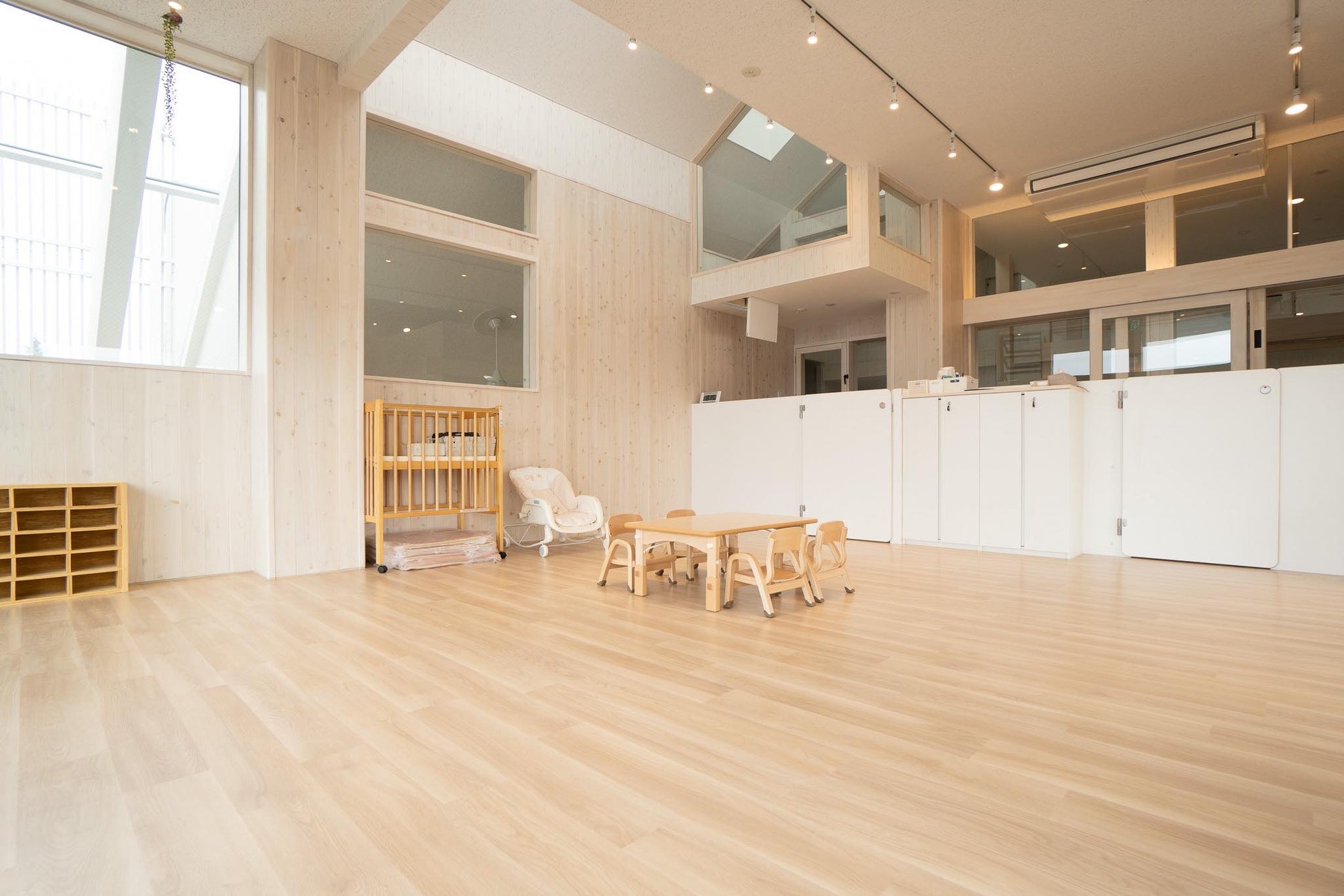
The "Children for Anyone Daycare System" (Child and Family Agency), which allows all children to utilize regular daycare services at childcare facilities regardless of parental employment status, will be fully launched nationwide from April 2026. Pico Nursery Kugayama Station Front (Suginami Ward, Tokyo), a certified nursery school operated by the Social Welfare Corporation Kazenomori, has been piloting this system since 2024, accepting 30 children to date. This release introduces the specific usage realities and on-site challenges encountered during the pilot implementation. Pico Nursery Kugayama Station Front Pico room
Pilot Implementation Data for the "Children for Anyone Daycare System" at Kazenomori Pico Nursery Kugayama Station Front Item / Fiscal Year FY2024 FY2025 Number of Applications / Capacity 31 applicants / 15 capacity 30 applicants / 15 capacity Usage Frequency Once a week Once a week
In FY2025, the number of applications was approximately double the capacity, highlighting the high demand for this system. ◆ Parent Feedback "I'm on childcare leave and can't use regular daycare, but I had my second child and wanted to spend time with each child, so I've been using this service frequently. It's a great help."
Merits and Demerits Revealed Through Actual Operation On the other hand, actual operations have also brought to light challenges that are only visible from the front lines. The significance of this system lies in its ability to support local families raising children, not just those already enrolled. By regularly using nursery schools, it is expected that children will develop social skills through diverse interactions, and parents will gain peace of mind and alleviate isolation.
However, the introduction of the system has undoubtedly increased the burden on nursery schools and childcare workers. Under the current subsidy system, for example, the rate for infants is 1300 yen per hour. There is no mechanism to cover fixed costs, and in actual operations, the burden of personnel costs becomes significant. Securing sufficient staff is difficult, and the frank feeling from the field is that "the more we care for, the greater the burden." For the sustainable operation of the system, system design and support review based on on-site realities are essential.
Merits Children gain social skills through experiencing group life Understanding of each child's characteristics and development Reduction of childcare burden and resolution of isolated parenting Provides peace of mind for parents or expectant parents, leading to the choice to have children ■ Demerits Increased burden on childcare sites (safety risks, parent communication, complex administrative tasks...) Risk of reduced quality of care for currently enrolled children and potential neglect of regular childcare Worsening shortage of childcare workers (schools are responsible for securing staff) Difficulty in utilization due to regional disparities in capacity, causing anxiety among parents
◆ Voices from On-site Childcare Workers "I feel that regular use makes it easier to build relationships with children and parents, leading to more attentive support. However, without adequate facilities (classrooms and staff), it's difficult to provide detailed interaction and realize the benefits. The national system is complex, and the administrative workload, including explaining to parents, takes up time that could be spent interacting with children." About the "Children for Anyone Daycare System" The "Children for Anyone Daycare System" is a new daycare system that allows children under three years old to flexibly use services on an hourly basis within a certain monthly limit, regardless of employment requirements. It was established with the aim of supporting the growth of all children, providing a high-quality developmental environment, and strengthening support for families raising children in a way that is independent of diverse working styles and lifestyles.
Excerpted and partially modified from Child and Family Agency's "About the Children for Anyone Daycare System" ~ Basic Data Collection ~ (Red dashed line portion)
It began as a trial project in FY2024, with 17 facilities participating. However, due to numerous challenges, only our facility in Suginami Ward, Tokyo, was able to implement it. To implement the system, our facility has made preparations such as facility expansion and securing childcare staff. ◆ System Positioning and Future Outlook The system began as a trial in FY2024 and will be institutionalized as a regional child and childcare support project under the Child and Childcare Support Act in FY2025. From FY2026, it will be implemented nationwide by local governments as a new benefit. ◆ Current Situation in the Field While this system is drawing attention as a potential use of the Child and Childcare Support Fund, there is high demand from parents, yet in some regions, there are no participating facilities. The system is still in its developmental stages.
In practice, there is ongoing trial and error between the system's intended purpose and the operational burden.
Significance of Expanding Regional Childcare Support Providing a Secure Environment to Support Regional Childcare We feel the demand for the "Children for Anyone Daycare System" is extremely high. This system aligns with our desire to support regional childcare by allowing us to interact with many parents, not just those with enrolled children. Through this system, we aim to create a society where having and raising children brings happiness.
However, with the childcare industry as a whole facing a chronic shortage of childcare workers, the nationwide implementation of this system will put immense pressure on childcare workers, making the situation even more difficult for childcare sites. From the perspective of childcare providers, the demerits seem to outweigh the merits, and there is no doubt that this poses a barrier to widespread adoption.
This is a critical juncture for nursery schools. Securing childcare workers is an urgent task, and to achieve this, improvements in childcare worker compensation are necessary, which means an increase in subsidies from the government. We must reduce the number of situations where people "want to do it but can't" for the system itself to be viable.
We sincerely hope that by covering this system and the on-site realities, you can help us convey the importance of improving childcare worker compensation to a wider audience.
Social Welfare Corporation Kazenomori Miki Nogami, Director
Achieved an 18x application rate by doubling childcare staff. Addresses system operation from both on-site and management perspectives.
FACT BOX
- Source: PR TIMES
- Category: Survey