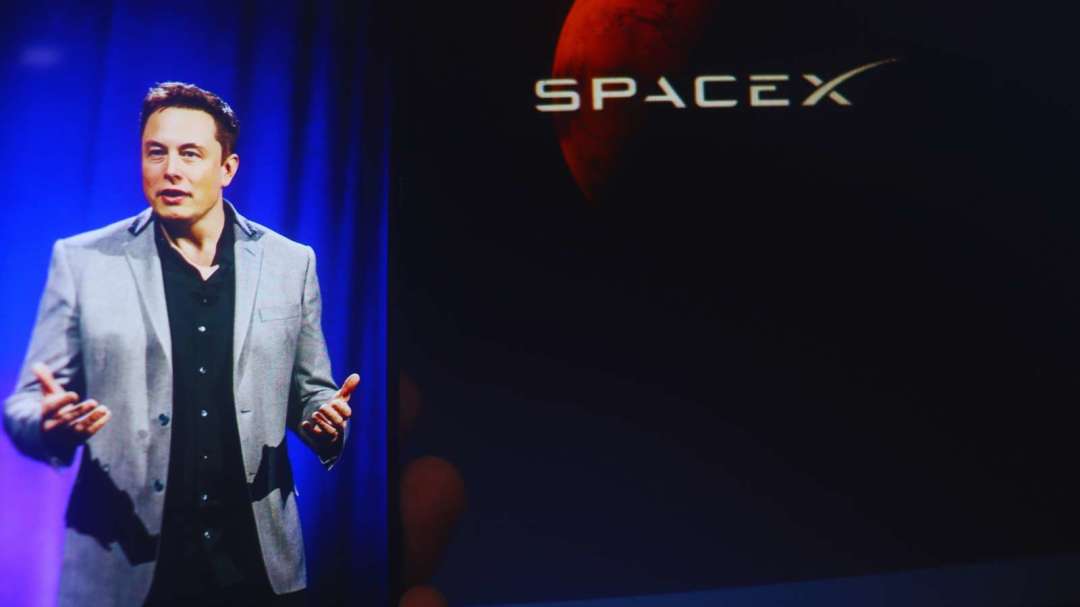
SpaceX, the aerospace leader led by Elon Musk, was officially added to the Nasdaq 100 index on Tuesday (July 7), just 15 trading days after its June 12 listing—setting the fastest inclusion record in the index’s history. However, this milestone failed to counter market selling pressure, and the stock moved inversely, closing down 6.83% at $149.47, below its $150 IPO price, marking a new all-time low since going public.
Markets had anticipated that index inclusion would trigger mandatory buying from ETFs and funds tracking the index, potentially bringing in around $4.3 billion in passive capital. However, U.S. tech stocks weakened broadly that day, with the Nasdaq Composite falling 1.16% and the Philadelphia Semiconductor Index plunging 4.65%.
With only about 4.3% of SpaceX’s shares in free float, ownership is highly concentrated. Amid capital rotation out of AI computing and semiconductor sectors, SpaceX became a prime target for short-term speculative investors to exit positions, amplifying price volatility.
Beyond macro factors, SpaceX faces concrete operational challenges. Environmental groups have filed a lawsuit demanding the shutdown of the Colossus 2 data center, which supports large-scale AI computing, citing that its power infrastructure lacks full regulatory approval. This legal action threatens SpaceX’s $45 billion long-term contract with AI unicorn Anthropic.
Legal experts note that if compute delivery is interrupted, Anthropic holds a 90-day early termination right, which could undermine Wall Street’s confidence in SpaceX’s AI business valuation.
Despite short-term price pressure, most Wall Street investment banks maintain bullish outlooks. Morgan Stanley issued an “Overweight” rating with a $300 price target, citing SpaceX’s potential to scale AI computing. Goldman Sachs also sees multi-trillion-dollar opportunities in space connectivity and AI. However, firms like CFRA maintain “Sell” ratings, warning investors about profitability risks and massive capital expenditures.
On the operational front, SpaceX filed with the FCC this week to deploy a third-generation Starlink constellation of up to 100,000 satellites, aiming to build a global AI communications backbone network that delivers ultra-low latency connectivity for autonomous vehicles and large language models.
Morgan Stanley projects that if successful, SpaceX’s revenue could exceed $3.3 trillion by 2040, but warns of high dependence on founder Elon Musk and significant future funding needs.
FACT BOX
- Source: PR Times
- Category: News
- Organizations: Anthropic / Morgan Stanley / Goldman Sachs