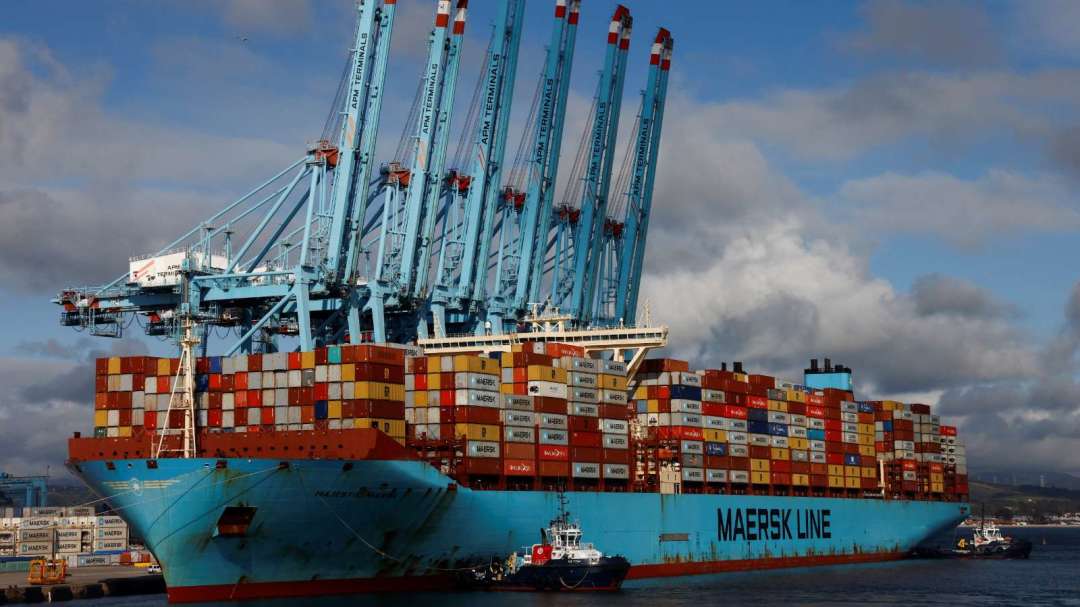
Danish shipping giant Maersk announced on Thursday (9th) that it will resume its Middle East to U.S. East Coast route via the Suez Canal, further advancing the return to Red Sea shipping and indicating that the global shipping industry is gradually restoring this crucial trade route, which had been interrupted for an extended period due to security risks.
After Yemen's Houthi rebels repeatedly attacked commercial vessels in the Red Sea, most shipping companies abandoned the traditional Asia-Europe route through the Red Sea and Suez Canal, opting instead to reroute around Africa's Cape of Good Hope. This detour significantly extended voyage times and increased transportation costs. As regional security conditions have improved, some carriers have recently begun assessing a phased return to Red Sea routes.
Maersk stated that rerouting its Middle East—U.S. East Coast (MECL) service back through the Suez Canal will significantly shorten transit times. Westbound voyages can be shortened by an average of 7 days, while eastbound trips can be reduced by up to 14 days, helping to improve overall transport efficiency and service competitiveness.
In fact, earlier this Monday, Maersk announced that its Gemini alliance network, operated jointly with German carrier Hapag-Lloyd, would resume partial Suez Canal transit services, indicating the company is gradually rebuilding its Red Sea shipping operations.
However, Maersk continues to face challenges from the Middle East situation. During the Iran conflict, some vessels were unable to enter or exit the Persian Gulf due to security concerns, disrupting operations on certain routes. The market will continue to monitor whether tensions in the Middle East further ease and whether more carriers follow suit in restoring Red Sea and Suez Canal routes.
FACT BOX
- Source: PR Times
- Category: News
- Organizations: Maersk / Hapag-Lloyd