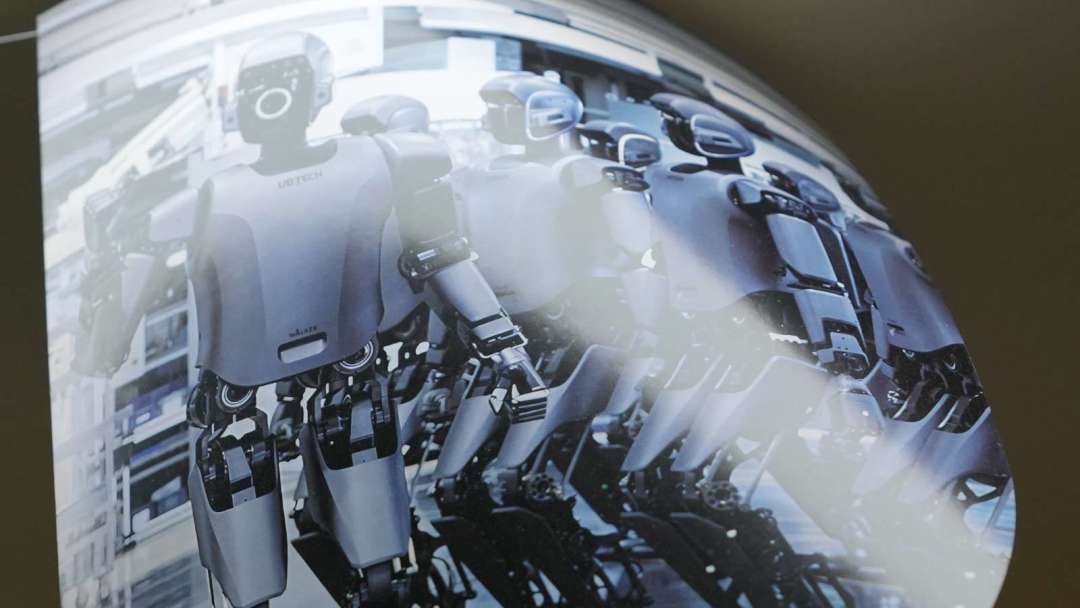
Citi Research's annual Robotics and Physical AI Leadership Summit concluded on Tuesday (7th), bringing together founders, investors, operators, and industry executives from the robotics field to examine the current state of 'Physical AI'.
Citi analyst Heath Terry noted in a post-event report that the industry is transitioning from proof-of-concept to commercial deployment, but scaling still faces significant challenges. Data scarcity was unanimously identified by participants as the core limiting factor.
Terry wrote: 'Labor shortages, manufacturing reshoring, and favorable regulatory environments are accelerating enterprise demand, but data scarcity, talent bottlenecks, battery life limitations, and high deployment costs remain major friction points.'
Instawork emphasized during the summit that even if the entire industry collects tens of millions of hours of real-world data this year, it represents only 'basis points'—not 'percentage points'—of the total data volume required for high-level robot performance.
Unlike digital AI's large language models (LLMs), which can be rapidly replicated and deployed, the core value of Physical AI lies in proprietary data collected from real-world environments, specialized hardware, and safety certifications—meaning nearly every new scenario requires starting data accumulation from scratch.
Moreover, most existing semiconductor platforms are designed for data center workloads and are not optimized for real-time edge inference on mobile platforms. Power supply and chip architecture also remain critical bottlenecks.
The summit revealed that the fastest-commercializing companies—whether in humanoid robots, warehouse autonomous mobile robots (AMRs), self-driving trucks, or construction robots—all follow a similar path: targeting specific high-pain-point applications, adopting the 'Robotics as a Service' (RaaS) model to lower customer entry barriers, and prioritizing safety over model complexity.
Terry believes that recent returns on investment are being driven not by highly publicized general-purpose humanoid robots, but by specialized AMRs and dedicated systems like those from Locus Robotics and Dexterity.
Over the past two years, the Physical AI sector has attracted approximately $20 billion in cumulative investment. Logistics, warehousing, and automotive manufacturing have become core battlegrounds for automation adoption due to their high-frequency repetitive tasks.
Recently, BMW also disclosed that its humanoid robots have begun operations at its factory in South Carolina.
The RaaS model, which converts one-time capital expenditures into usage-based operational expenses, is seen as key to unlocking the SME market.
Terry specifically highlighted Symbotic's 'warehouse-as-a-service' offering, stating this model helps extend automated solutions to a broader customer base.
Terry ultimately concluded that Physical AI is a 'decade-level marathon' that won't explode as quickly as chatbots. Long-term value will accrue to companies that master the data flywheel, solve real-world deployment challenges, and achieve the highest safety standards.
FACT BOX
- Source: PR Times
- Category: Survey
- Organizations: Instawork / Locus Robotics / Dexterity