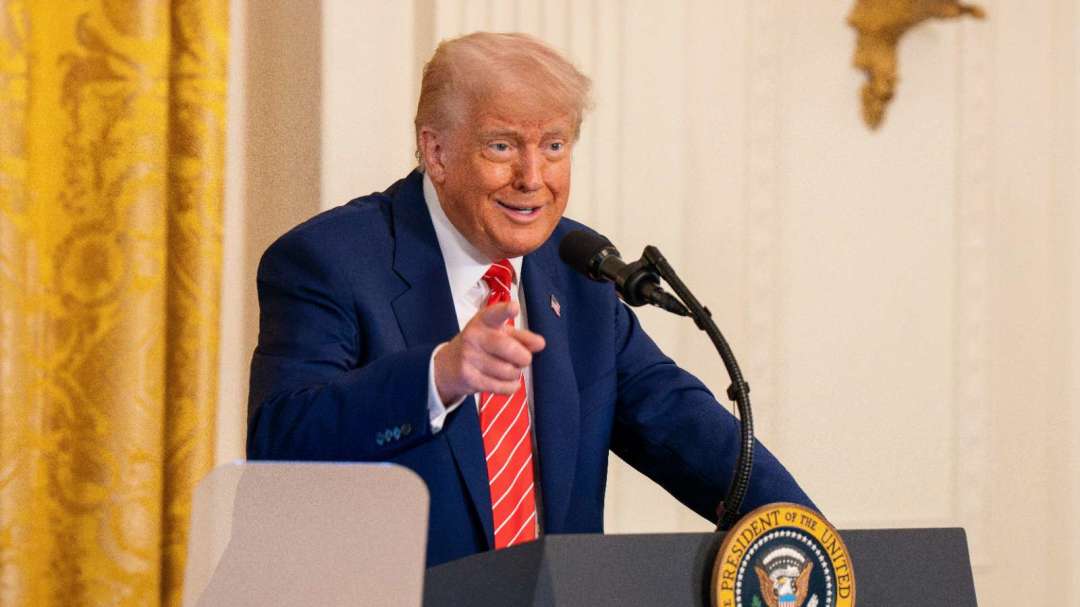
President Donald Trump signed an announcement on Thursday (9th), invoking Section 232 of the Trade Expansion Act of 1962, directing the U.S. Department of Commerce and the Office of the United States Trade Representative (USTR) to initiate negotiations with trade partners to address national security threats posed by imports of commercial aircraft, jet engines, and related components, while reserving the right to impose further import restrictions or tariffs in the future.
According to the 'Fact Sheet' released by the White House, the Trump administration has instructed the Department of Commerce and USTR to jointly negotiate with foreign governments, focusing on the impact of imported products on the healthy development of the U.S. commercial aerospace industry.
The announcement requires the Secretary of Commerce to continue reporting to the President on the progress. If no agreement is reached within 180 days of the announcement, if an agreement is not implemented, or if national security risks are not effectively mitigated, President Trump may take further action under Section 232, including imposing new tariffs or other import restrictions on commercial aircraft, jet engines, and related components.
The White House stated that commercial aircraft, aviation engines, and related parts are vital to both the U.S. economy and national security. The U.S. government relies on large commercial aircraft to carry out critical missions such as military operations, emergency relief, official transport, and the movement of troops and cargo, making the maintenance of a complete commercial aerospace industrial chain strategically essential.
The White House noted that the U.S. aerospace industry has recently faced long-term market intervention by foreign governments, leading to erosion of U.S. manufacturers' global market share, weakening domestic manufacturing capacity, loss of skilled labor, industry consolidation, and rising production costs.
It warned that if the U.S. fails to maintain a healthy commercial aerospace ecosystem, it will increase costs and supply uncertainty in the defense industry supply chain, and prolong the delivery timelines for military aircraft, engines, and components.
The Trump administration emphasized that the U.S. commercial aircraft manufacturing sector and its supply chain are not only a cornerstone of high-value-added industries but also a key driver of industrial innovation, wage growth, and high-quality job creation.
President Trump has consistently argued that U.S. national security and economic strength are built on a strong manufacturing base. During his first term, he used Section 232 to impose tariffs on steel and aluminum, believing this would help reverse the negative impacts of long-term globalization policies on critical U.S. industries.
The White House stated that since Trump's return to office, Section 232 measures have been progressively applied to products such as steel, aluminum, copper, trucks, automobiles, lumber, and pharmaceuticals, continuously strengthening U.S. manufacturing competitiveness. The administration claims that through negotiations with trade partners and tariff policies, trillions of dollars in private and foreign investment have flowed back into the U.S., driving manufacturing reshoring, promoting supply chain diversification, and reducing dependence on rival nations.
FACT BOX
- Source: PR Times
- Category: News