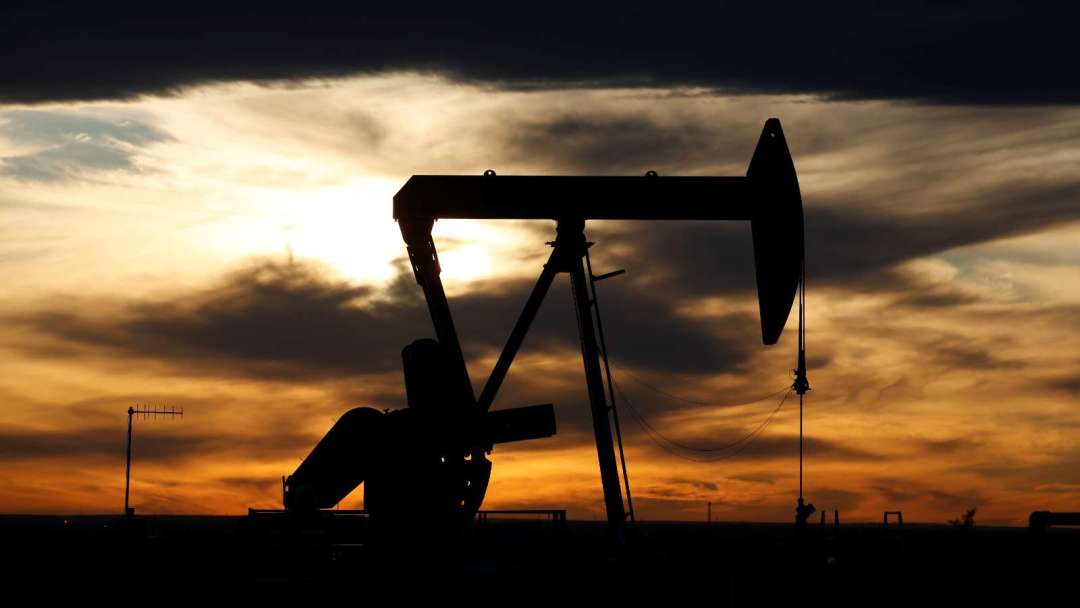
International oil prices closed down about 2% on Thursday (10th). Although markets continued to monitor the delayed full reopening of the Strait of Hormuz due to U.S.-Iran tensions and ongoing pressure on global crude supply, investors were more concerned about rising global inflation and slowing economic growth potentially weakening energy demand, which dragged prices lower.
London Brent crude for September delivery fell $1.72, or 2.2%, to settle at $76.30 per barrel. U.S. West Texas Intermediate (WTI) crude for August delivery dropped $1.44, or 2%, to $72.08 per barrel.
The previous day, Brent crude had closed at its highest level since June 19, while WTI reached its highest since June 22.
Middle East tensions remain high. Following U.S. airstrikes on southern coastal and eastern regions of Iran, Iran's armed forces launched attacks on U.S. military facilities in Persian Gulf nations on Thursday, putting renewed pressure on a ceasefire agreement that had held for about three weeks.
On the same day, Iran held a funeral ceremony for Supreme Leader Khamenei, who died on the first day of war, February 28, at the holy shrine in Mashhad, concluding a week-long series of large-scale mourning events and rallies. Explosions were also reported in multiple locations, including Bushehr, home to Iran's nuclear power plant.
Macquarie Group stated that the latest U.S.-Iran tensions are expected to be short-lived, as both sides face economic and political constraints that make unlimited escalation unlikely.
Qatar called for an end to attacks on commercial shipping and a return to diplomatic negotiations. Meanwhile, the foreign ministers of Turkey and Oman separately spoke with Iranian Foreign Minister Araghchi, emphasizing the need to avoid further military escalation.
Mizuho Securities noted that after two consecutive days of military actions, Iran appears to be seeking to de-escalate hostilities through diplomatic channels and may return to negotiations.
The Iranian Revolutionary Guard Navy claimed that U.S. military intervention and the rerouting of shipping back through the Strait of Hormuz are disrupting the gradual normalization of operations on this critical global energy waterway.
The Strait of Hormuz previously carried about 20% of the world's crude oil supply, making it one of the most strategically important energy routes in the global energy market.
Goldman Sachs' latest report indicated that in the first 10 days after the Strait of Hormuz reopened, crude shipments recovered to over 80% of pre-war levels as numerous stranded tankers rushed to leave the Persian Gulf. However, recent tanker attacks have reduced shipping volumes back to just over 70% of normal levels.
On the economic front, the latest U.S. data showed a decline in the number of people filing for initial unemployment benefits last week, supporting the view that the labor market remains in a state of "slow hiring, slow layoffs."
Minutes from the Federal Reserve's (Fed) meeting on June 16–17 revealed that policymakers heightened their concerns about inflation last month and generally expected the labor market to remain stable, with the unemployment rate staying around current levels.
New York Federal Reserve President Williams stated that despite ongoing Middle East tensions, he does not expect energy prices to rise significantly for the remainder of the year. He did not disclose his voting stance ahead of the upcoming rate decision meeting at the end of the month.
Markets widely believe that if the Fed maintains high interest rates or raises them further to curb inflation, it could suppress economic growth and reduce crude oil demand.
In China, the world's second-largest economy, the June Producer Price Index (PPI) rose to a four-year high, indicating continued upward pressure on upstream costs. However, weak domestic demand limits companies' ability to raise prices, further squeezing manufacturing profit margins.
In Europe, Ukraine's military reported that drones launched another nighttime attack on approximately 12 Russian oil tankers in the Sea of Azov, continuing efforts to weaken Russian forces by targeting fuel supplies and logistics, further isolating Crimea under Russian control.
Russia's recent announcement of a diesel export ban sparked market concerns over supply shortages, causing U.S. diesel futures to register their largest single-day gain in nearly four years on Wednesday. With uncertainty still surrounding Middle East crude shipments, markets are increasingly sensitive to refined product supply risks.
Russia countered that the U.S. belief that deep strikes into Russian territory would end the war—now in its fourth year—is a mistaken judgment, and such actions could instead prolong the conflict.
Analysts pointed out that if a peace agreement is reached in the Russia-Ukraine war, some Western sanctions on Russia could be lifted, enabling Russia to increase crude oil exports. According to U.S. energy statistics, Russia is projected to be the world's third-largest crude oil producer in 2025, behind only the United States and Saudi Arabia.
FACT BOX
- Source: PR Times
- Category: News