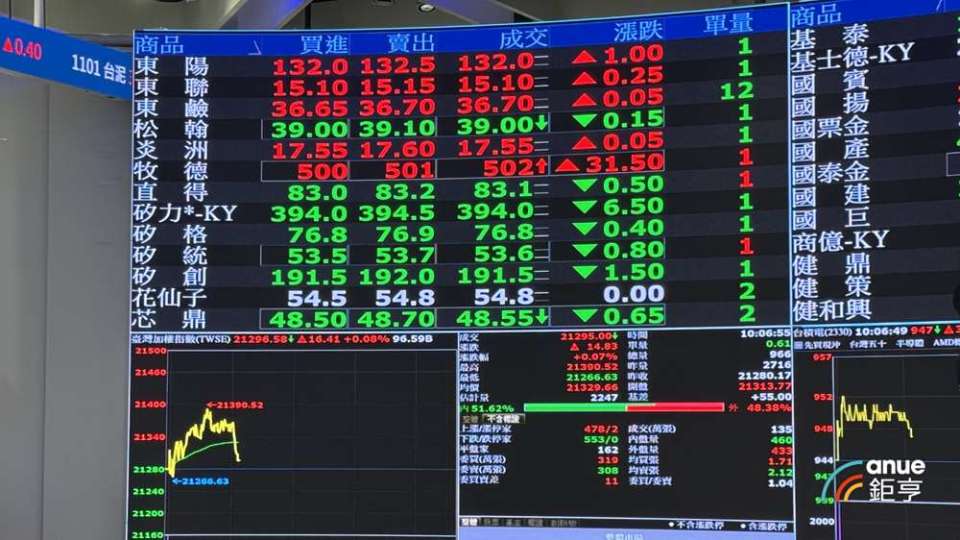
The Taiwan Stock Exchange is proposing three major institutional reforms: advancing intraday odd-lot trading to open at 9:00 AM by the end of the year, shortening odd-lot trade matching intervals to one second by July 2025, and changing the price tick size for high-priced stocks ("thousand-dollar stocks") from NT$5 to NT$1. In response, the FSC's Securities and Futures Bureau stated on the 9th that these three proposals are currently under review or in discussion. To ensure broker systems can handle increased trading loads after the reforms, the FSC has directed the exchange to include system optimization in routine cybersecurity audits starting September, aiming to strengthen financial resilience and prevent system outages or crashes.
Huang Chao-pang, head of the Brokerage Management Division at the Securities and Futures Bureau, emphasized that changes to trading systems significantly impact market operations and require consensus among market participants. According to sources, these reforms were proposed by the Securities Dealers Association after discussions and consensus-building among its members.
To allow market participants sufficient time for system preparation, the exchange will, as usual, conduct market-wide testing before system rollout, including connectivity verification and operational drills.
Huang revealed that the proposal to advance intraday odd-lot trading by 10 minutes to 9:00 AM was submitted to the Bureau in June 2024 and is currently under review. The FSC will continue assessing whether supporting measures are complete and work with the exchange to address any gaps.
As for the proposal to change the price tick size for high-priced stocks from NT$5 to NT$1, the exchange has not yet formally submitted it to the Bureau. The FSC will conduct deeper discussions with the exchange on its potential impacts on the market, investors, and brokers once the proposal is received.
Given that institutional changes and shortened matching times will challenge broker information systems, media also inquired whether trading system lags or outages could be avoided in the second half of the year. Huang stressed that system optimization is a shared goal between the FSC and brokers, with strong consensus and concrete actions already underway.
The FSC previously supervised the exchange in convening two meetings on April 30 and June 18, 2024, to enhance the stability of broker trading systems. These meetings gathered the GreTai Securities Market, the Securities Dealers Association, brokers, and IT vendors to discuss responses to recent cybersecurity incidents.
Three key resolutions were reached:
1. Strengthening system load monitoring and early warnings: Brokers are required to install software to monitor system resources such as memory. If resources approach full capacity, immediate traffic diversion or system switching must be performed.
2. Promoting multi-layered backup architectures.
3. Conducting regular business continuity drills, including enhanced stress testing during market tests to ensure stable system operations.
Huang noted that, considering brokers need time to adjust hardware and software, the exchange has planned to incorporate assessments of these three improvement areas into routine cybersecurity audits starting September to enhance financial cybersecurity resilience.
He added that audits and monitoring are not limited to September; if significant cybersecurity incidents occur, the exchange will immediately dispatch personnel to investigate and respond. Currently, all brokers must continuously report their progress on improvements to the exchange. The FSC also holds monthly cybersecurity working group meetings to review broker optimization reports and will implement necessary enhanced supervisory measures based on the severity of any incidents.
FACT BOX
- Source: PR Times
- Category: News