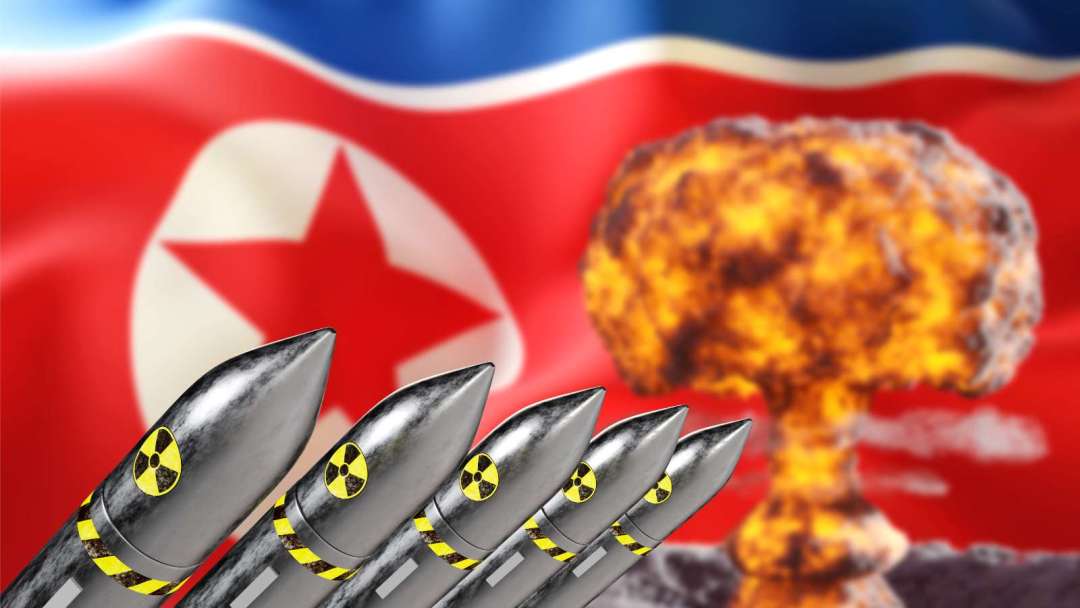
North Korea's state-run media, KCNA, reported on the 11th that Supreme Leader Kim Jong-un chaired an enlarged meeting of the Central Military Commission of the Workers' Party, deciding to take measures to further expand the country's nuclear forces in both 'quantity' and 'quality.' The meeting also advanced military modernization, accelerating upgrades to combat systems, intelligence capabilities, and naval infrastructure. Analysts say this is the latest step in North Korea's ongoing policy to strengthen its nuclear and naval capabilities, further heightening security tensions on the Korean Peninsula and in Northeast Asia.
According to KCNA, the enlarged meeting was held on the 10th and chaired by Kim Jong-un. Kim stated that North Korea's security and true peace can only be guaranteed by building a powerful military capable of controlling all threats, emphasizing the need to continuously advance military modernization.
The meeting approved multiple military development plans, including upgrading the technological infrastructure of various combat systems, expanding and strengthening nuclear forces, and promoting standardized, professional, and modern construction of military bases. It also called for expanding the functions of North Korea's military intelligence agency, the Reconnaissance General Bureau, to enhance strategic reconnaissance and intelligence collection capabilities.
Additionally, the meeting discussed the construction of modern naval bases and increasing shipyard production capacity. KCNA noted that these plans reflect a significant shift in the status and role of North Korea's navy, which will become a key pillar of military development in the future.
This announcement continues North Korea's recent policy direction of steadily advancing nuclear and naval construction. Recently, Kim Jong-un inspected weapons tests on the newly repaired 5,000-ton destroyer 'Kang Kon,' personally overseeing tests of nuclear-capable cruise missiles, naval guns, automatic cannons, and electronic warfare systems, and ordered the ship to enter active service within two months.
In June, North Korea formally commissioned its first 5,000-ton destroyer, the 'Choe Hyon,' and announced plans to build two such vessels annually. It also revealed plans to develop 10,000-ton large destroyers and naval forces with nuclear strike capabilities, indicating Pyongyang's gradual shift of nuclear deployment from land-based missiles to sea-based platforms.
In addition to naval development, Kim Jong-un has repeatedly called for a significant increase in nuclear capabilities in recent months. At a plenary meeting of the Workers' Party Central Committee in June, he demanded further expansion of the nuclear arsenal, even proposing to continuously increase nuclear assets with the goal of 'surpassing the world,' describing nuclear forces as the core pillar of national military sovereignty and strategic deterrence.
Meanwhile, North Korea reiterated earlier this month that its status as a nuclear-armed state is 'irreversible,' rejecting U.S., Japanese, and South Korean demands for denuclearization. It criticized ongoing military cooperation among the U.S., Japan, and South Korea, accusing them of deepening regional confrontation.
International security analysts point out that North Korea's recent military development has evolved beyond simply enhancing ballistic missile capabilities. It now includes building a navy capable of carrying nuclear weapons, expanding nuclear material production, strengthening military intelligence systems, and improving military base infrastructure—forming a more comprehensive nuclear deterrence system. As nuclear capabilities, naval strength, and intelligence operations advance simultaneously, military competition and security risks in the Korean Peninsula and Northeast Asia are likely to continue rising.
FACT BOX
- Source: PR Times
- Category: News