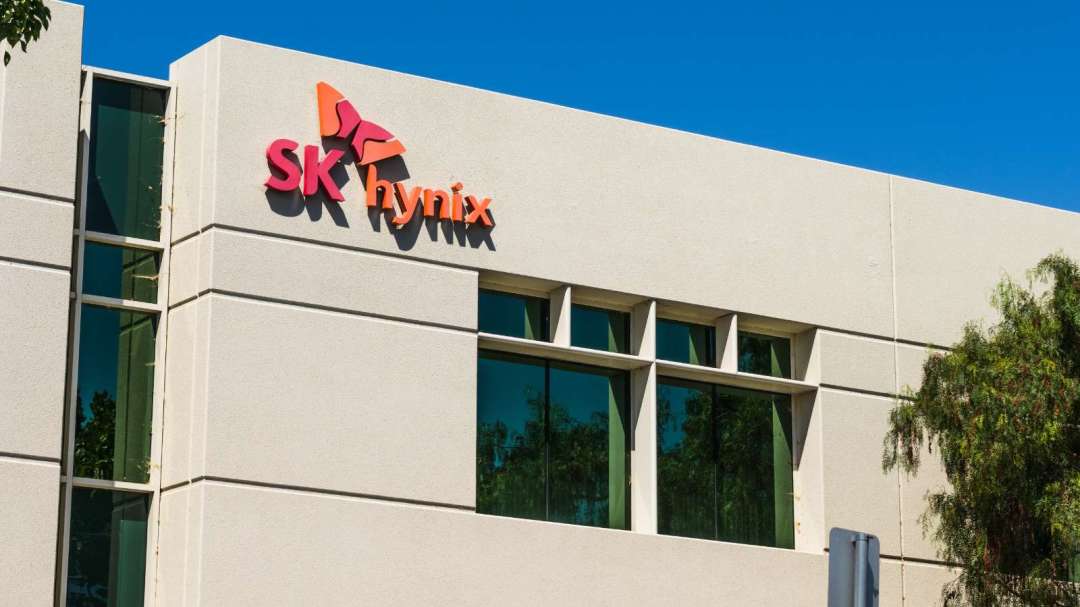
With the continuous surge in demand for AI memory, South Korean memory giant SK Hynix (000660-KR) is set to list on the Nasdaq Global Select Market on July 10. Its American Depositary Receipt (ADR) issuance case has been met with enthusiastic market support, receiving over 7 times oversubscription.
Despite the recent significant decline in global semiconductor stocks, investment enthusiasm for AI memory leaders remains undiminished.
This ADR issuance is expected to raise approximately $28 billion, making it the second-largest in global history, second only to SpaceX's recent $85.7 billion stock issuance. It also surpasses large-scale fundraising records of Saudi Aramco and Alibaba (BABA-US). SK Hynix will issue 17.79 million new shares, with each ADR unit representing one-tenth of a common share. The reference price is 242.5 million Korean won per share, with the official listing on Nasdaq expected at 7:00 AM Eastern Time on July 10.
According to informed sources, the main drivers of this oversubscription demand are global long-term funds, technology funds, sovereign wealth funds, and Asian-themed investment funds. Among them, renowned investment institutions such as Baillie Gifford, Coatue Management, and Situational Awareness Partners have collectively expressed a subscription intention of up to approximately $7 billion. Individual order sizes range from $2 billion to over $10 billion, demonstrating the high confidence of large institutions in the prospects of the AI memory industry.
Notably, this subscription frenzy occurs amid the recent correction of global AI concept stocks. SK Hynix's Korean stock price recently experienced a two-day consecutive sharp decline, primarily due to selling pressure from the AI semiconductor group and heightened geopolitical risks in the Middle East. However, analysts point out that part of the domestic market's decline is due to technical factors such as leverage ETF position adjustments, not necessarily a deterioration of the company's fundamentals. U.S. institutional investors continue to actively position themselves.
The market generally believes that the strong demand for this ADR is an important reason why U.S. investors have long lacked direct investment channels for South Korean memory leaders. As one of the leading global suppliers of high-bandwidth memory (HBM), SK Hynix is also a crucial supplier for AI platforms such as NVIDIA (NVDA-US) and Alphabet (GOOGL-US)'s Google. Post-ADR listing is expected to enhance the convenience of stockholding for U.S. investors and help narrow the valuation gap with U.S. peers. Some analysts point out that due to restrictions on converting Korean stocks to ADRs, there may even be premium trading after the new ADR listing.
On the fundamentals side, AI servers continue to drive the high-speed growth of HBM demand. Market research institutions and analysts point out that SK Hynix's HBM orders are already booked until the second half of 2027, with production capacity continuously at full load. Counterpoint Research also estimates that the DRAM price increase in the third quarter may rise from the originally expected 5% to 10% to 10% to 20%, mainly benefiting from cloud service providers and AI customers locking in supplies in advance.
The raised funds will primarily be used to expand the production capacity of SK Hynix's wafer fabrication plants in Korea and to purchase extreme ultraviolet (EUV) lithography equipment from ASML (ASML-US) to meet the continuously rising demand for HBM from AI data centers. Analysts point out that SK Hynix has surpassed Samsung Electronics in the HBM market in recent years, becoming one of the main suppliers for NVIDIA's AI accelerators. This U.S. fundraising will help consolidate its global leadership position.
However, the market reminds us that the performance on the IPO's first day does not necessarily represent the medium- to long-term trend. Charu Chanana, Chief Investment Strategist at Saxo Markets, states that SK Hynix's listing coincides with the market's reassessment of whether AI infrastructure investment is overheating. Large-scale new stock supply may increase short-term volatility. Additionally, the company's future expansion may cause the memory market to gradually shift from supply shortages to supply-demand balance. Investors still need to be aware of the risk of valuation adjustments.
Despite this, the fact that this ADR received over 7 times oversubscription still reflects the strong demand for the allocation of global funds to the AI hardware supply chain. Analysts believe that compared to some AI software companies that are still in the commercial model verification stage, AI memory manufacturers with profitability, supply chain position, and order visibility remain important targets for large institutional funds to position in the AI industry.
Four Major Investment Strategies
This time, SK Hynix's ADR receiving over 7 times oversubscription not only reflects the market's high interest in AI memory leaders but also reveals the four major important strategies in current AI investment.
First, in the short term, there may be a "scarcity premium" during the initial period of ADR listing. Since U.S. investors have long found it difficult to directly invest in Korean stocks and ADR supply is limited, there is an opportunity to enjoy a trading premium higher than the theoretical price during the listing period.
Second, from a long-term perspective, market funds are gradually focusing on AI hardware supply chains such as HBM that have actual demand support, rather than simply chasing AI concept stocks. This shows that the investment focus has shifted to companies with high order visibility and clear profitability.
Additionally, the recent decline in SK Hynix's Korean stocks is partly seen as being caused by technical factors such as leverage ETF adjustments, not necessarily a weakening of fundamentals. Therefore, it also provides some long-term investors with an opportunity to position themselves at lower prices. However, investors still need to be aware of the risk of "all good news being priced in" after the IPO listing. Since oversubscription, index inclusion, and passive fund buying may be reflected in advance, if the stock price rises too much in the short term, there may still be a valuation adjustment afterwards. Therefore, the risk of chasing prices should not be ignored.
FACT BOX
- Source: PR Times
- Category: Funding
- Organizations: Baillie Gifford / Coatue Management / Situational Awareness Partners
- Products / services: ADR