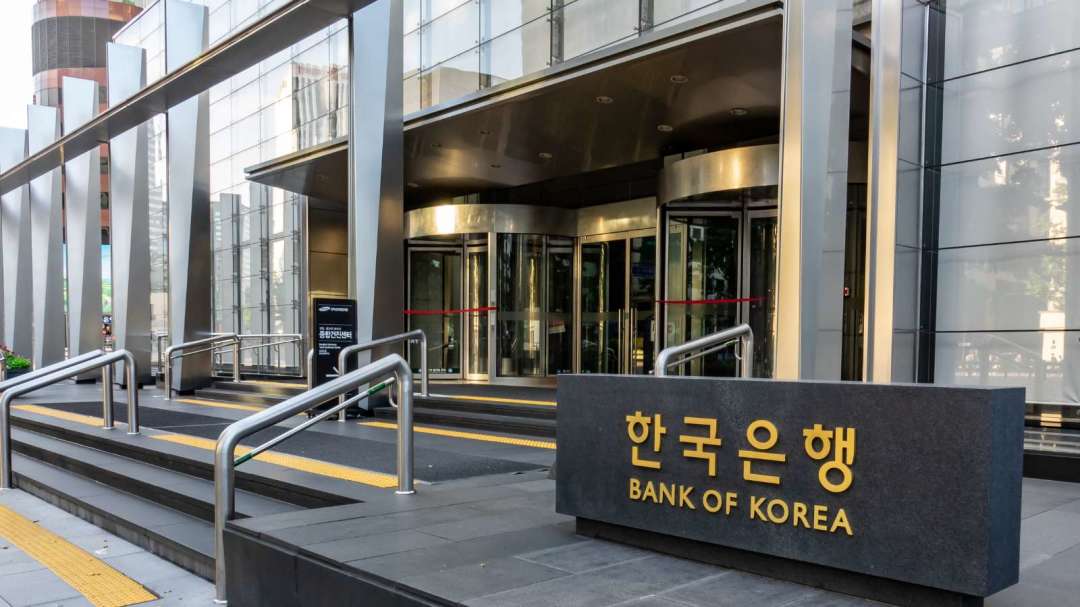
The Bank of Korea (BOK) will announce its latest interest rate decision next Thursday (the 16th). The market widely expects a rate hike of 1 percentage point to 2.75%, the first tightening since August 2021. As the Korean stock market has fallen by more than 20% from its June high and entered a technical bear market, combined with foreign capital outflows of 148 trillion won in the first half of the year and the impact of leveraged ETFs triggering rebalancing selling pressure, the BOK's initiation of a tightening cycle is also putting the Korean capital market to a severe test.
BOK Governor Rhee Chang-yong clearly stated during a parliamentary hearing in South Korea on Thursday (the 9th) that, considering the three factors of excessive inflation, improved economic growth, and increased financial stability risks, "it is necessary to raise the benchmark interest rate at an appropriate time."
Data shows that South Korea's June Consumer Price Index (CPI) rose 3.2% year-on-year, far exceeding the central bank's 2% target, and the cost of living index rose even higher to 3.4%. In response, Rhee Chang-yong stated that inflation in the first half of this year was driven by supply-side shocks due to geopolitical factors in the Middle East, but the driving force is undergoing a structural transformation. Samsung Electronics and SK Hynix issued huge performance bonuses, and the surge in KOSPI expanded residents' assets, "the inflation rate is expected to remain high for a considerable period of time." Even if energy prices fall, demand-side consumption will continue to support inflation.
Citigroup economist Jin-Wook Kim expects a rate hike of 1 percentage point next Thursday, followed by another rate hike in October, and additional hikes in January and April 2027, opening a gradual tightening cycle. This path means that this rate hike is not an isolated event and will continue to put downward revaluation pressure on the already pressured stock market.
Experts point out that the South Korean market is facing a triple crisis of simultaneous brewing of foreign capital outflows, leveraged ETFs, and index concentration risks.
KOSPI has been experiencing significant volatility recently, triggering circuit breakers multiple times. Foreign capital is the primary source of selling pressure. In the first half of this year, foreign capital net sold 148 trillion won, and recently, the daily net selling exceeded 1.3 trillion won, focusing on selling Samsung Electronics and SK Hynix. The South Korean won to US dollar exchange rate has also depreciated from approximately 1200 at the beginning of this year to a 16-year low of 1566, exacerbating the incentive for dollar-denominated profit-taking.
The second risk comes from single-stock 2x leveraged ETFs. 14 leveraged ETFs tracking Samsung and SK Hynix were listed at the end of May. On Tuesday (the 7th), all ETFs plummeted by 12-13%, with 13 ETFs falling below the 20,000 won issue price. On that day, the total trading volume of 16 single-stock leveraged and inverse ETFs reached 13.1 trillion won, accounting for more than one-third of the entire market ETF trading volume.
Due to the need for daily rebalancing by buying and selling the underlying stocks for hedging, when stock prices fall, it triggers a "buy more underlying stocks" mechanism, amplifying the selling pressure on Samsung and Hynix.
What is most confusing to the market is the deep divergence between fundamentals and stock prices. Samsung Electronics' Q2 operating profit reached 8.94 trillion won, and SK Hynix also reported strong profits in the same period. However, the two benchmark stocks led the market decline, with this "giant performance surge but bloodbath" being called the "semiconductor paradox" by analysts.
Global AI infrastructure investment has driven the semiconductor cycle upward, but tightening expectations, currency depreciation, and structural selling pressure from leveraged products are simultaneously crushing local stock prices.
The South Korean government has established a stock market stabilization fund of approximately 10 trillion won, which is significantly smaller compared to the scale of foreign capital selling in the first half of the year.
South Korean Deputy Prime Minister Koo Yoon-kyo said that relevant departments are discussing measures to reduce volatility, and the Financial Services Commission is evaluating tightening the trading requirements for leveraged ETFs, but no decision has been made yet.
The BOK's rate hike next week is a market consensus, but the real variable lies in whether the Korean won can stabilize after the tightening cycle begins, when foreign capital selling pressure will stop, and whether leveraged ETFs will trigger a chain of liquidations. The answers to these three questions will determine whether the Korean stock market will find support from the bear market or further test the downside.
FACT BOX
- Source: PR Times
- Category: News
- Products / services: ETF