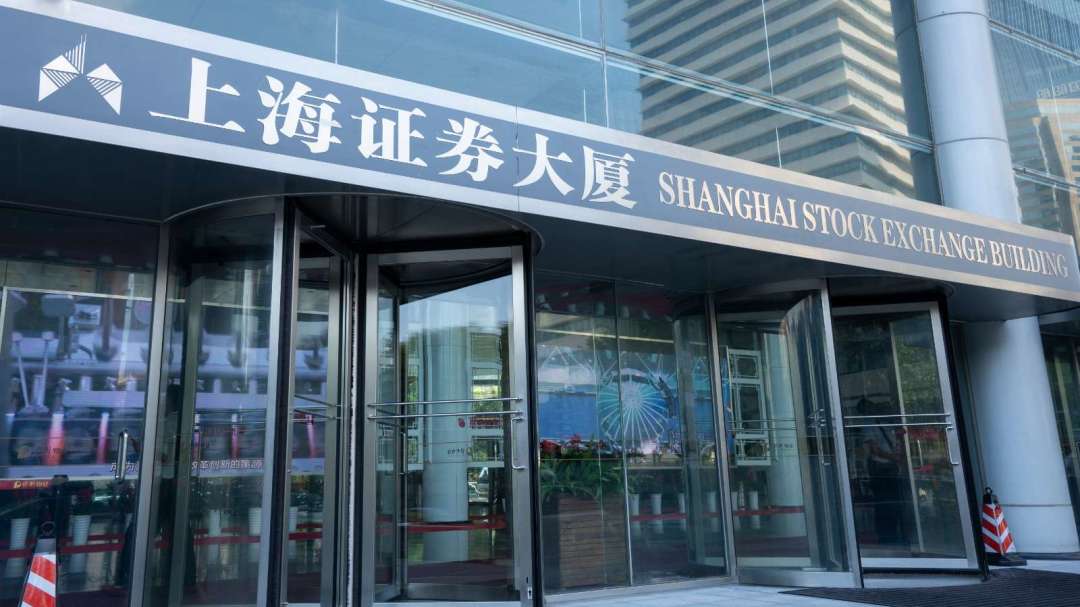
China's three major A-share indices declined in unison on Friday (10th), with the Shanghai Composite Index (SSEC) losing the 4,000-point threshold and closing below this key level for the second time this week, resulting in a weekly decline of 1.2%.
On Friday, the Shanghai Index closed down 1% at 3,996.16 points, the Shenzhen Component Index (SZI) fell 2.29% to 15,046.67 points, and the ChiNext Index dropped 4.37% to 3,842.73 points. Trading volume in the Shanghai and Shenzhen markets reached RMB 3.39 trillion, an increase of RMB 474.8 billion compared to the previous trading day.
In terms of sector performance, semiconductors, electronic chemicals, energy metals, securities, rare earths, batteries, advanced packaging, and glass substrate concepts led the declines. Huaya Intelligence hit the daily trading limit down, Haibosi Chuang fell over 12%, Rongjie Stock recorded three consecutive daily limit-downs, and Zhongchuan Special Gas plunged more than 19%. Huatai Securities, Changjiang Securities, and CITIC Construction Investment each fell over 6%.
On the upside, innovation pharmaceutical stocks showed relative strength, with Lifang Pharmaceutical posting two consecutive daily limit-ups, and Changshan Pharma, Shuanglu Pharma, Lianhuan Pharma, Hayao Shares, Zhongsheng Pharma, and Zhaoyan New Medicine all hitting the daily limit-up. The humanoid robotics sector was active, with Riying Electronics, Jintuo Shares, and Zhongding Shares reaching the daily limit-up. AI application stocks also performed strongly, with Skyworth Digital and Huanrui Century hitting the daily limit-up four times in seven trading days, along with Fushi Holdings. The commercial aerospace sector surged in the afternoon on news developments, with Hangtian Huanyu, China Satellite, and Zhongtian Rocket among multiple stocks hitting the daily limit-up.
According to Wind statistics, 3,770 stocks rose across the Shanghai, Shenzhen, and Beijing exchanges, 1,672 declined, and 80 closed flat. Per Dazhihui VIP data, 149 stocks across the three markets gained over 9%, while 83 stocks fell over 9%.
Guosheng Securities stated that, looking ahead to the second half of the year, earnings contribution expectations remain weak. On macro liquidity, China's easing stance continues, but external variables are more significant. The Federal Reserve Chair Walsh's debut has concluded, with short-term policy signals leaning hawkish. The policy framework is undergoing reform, which will be key to judging future Fed policy direction. Continued retail investor inflows remain the main source of market liquidity, with leverage funding ratios still rising. Private and public institutional markets also show signs of recovery. AI technology, security and controllability, industrial overseas expansion, and dividend investing remain structurally sound for the medium to long term, but short-term focus should be on the first two narratives.
CaiXin Securities believes investors can increase risk appetite to participate in short-term market rebound rallies. Mid-term, July represents a transitional phase for the market, with expectations of high volatility, suggesting a balanced portfolio approach.
China Merchants Securities noted that the current A-share market is in a phase of存量博弈 (existing capital game), with limited net incremental capital. Margin trading activity has declined, and ETFs have shifted from net outflows to net inflows. In Q2 2024, foreign capital net inflows into A-shares amounted to approximately RMB 223 billion, with both allocation intent and trading activity rising simultaneously. Baocheng Futures, in its latest research report, pointed out that escalating Middle East tensions and corrections by overseas semiconductor leaders are suppressing risk appetite. The market is currently in a structural rotation phase, with logic shifting toward earnings realization as mid-year reports approach, maintaining a short-term range-bound outlook.
BOC Securities stated that A-share style volatility is expected to increase over the next month, possibly leading to a temporary style balancing. Large-cap, high-profitability stocks remain the main theme, with high-earning yet moderately valued leaders as the primary diffusion direction. Investors should watch the ChiNext Index, CSI 1000, and CSI A500. Since Q2 2024, rising PPI in China has driven profit recovery, with the large-cap factor continuing to strengthen.
FACT BOX
- Source: PR Times
- Category: News