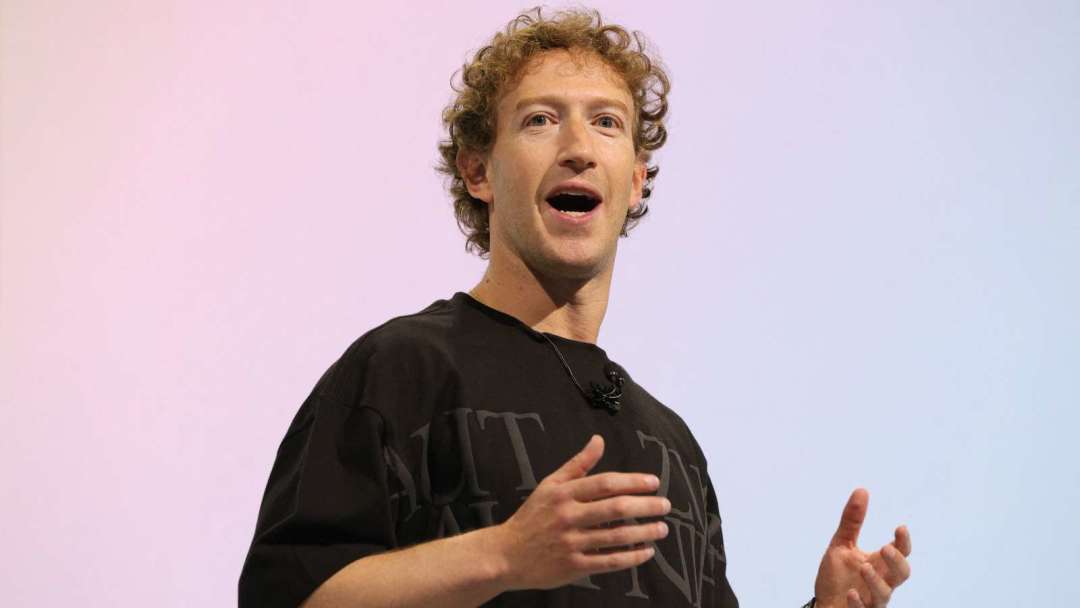
Meta (META-US) CEO Mark Zuckerberg returned to X after three years—not to discuss the metaverse, but to sell APIs.
Meta has launched its latest AI model, Muse Spark 1.1, marking the company’s first AI model offered to developers on a paid basis.
In Silicon Valley’s AI battleground, Meta has finally decided to stop “doing charity.” If you haven’t been scrolling X this week, you may have missed the most intense 48 hours in AI release history.
July 8: Grok 4.5 (xAI) launched
July 9: Muse Spark 1.1 (Meta) launched
July 9: GPT-5.6 (OpenAI) launched
Alexandr Wang, Head of Meta AI, posted six threads introducing Muse Spark 1.1, describing it as a “workhorse.” It’s not the smartest or flashiest model, but the most capable at getting work done—and the cheapest.
Key Specifications:
- 1 million token context window - Maximum output of 256K tokens - Supports parallel sub-agents, enabling task splitting across multiple agents for concurrent execution - Achieved 53.3 on DeepSWE 1.1 leaderboard, on par with GPT-5.4 and Claude Sonnet 5 - API pricing: $1.25 per million input tokens, $4.25 per million output tokens—about one-quarter the price of OpenAI and Anthropic’s top-tier models
Meta repeatedly emphasized one keyword in its official posts: “Agentic.” This is an AI that truly performs tasks for users—writing code, debugging, cross-application operations, and processing long documents.
Vals AI Evaluation:
- Ranked 4th on Vals Index - Fastest among top 10 models, with average latency of ~388 seconds—about three times faster than the average of the top 3 - Jumped 36 spots on Vibe Code Bench, a 52.5 percentage point improvement—significant leap from Muse Spark 1.0 - Scored 53.3 on DeepSWE, on par with Claude Sonnet 5 and GPT-5.4 - In agent capability benchmarks, now competitive with GPT-5.5 and Opus-4.8
Muse Spark 1.1 isn’t designed to outperform competitors across all capabilities. Instead, it’s positioned as a cost-effective, high-performance agent model.
Meta has chosen to avoid a direct “arms race” with OpenAI, instead using high cost-efficiency as its market entry point.
It’s not about IQ—it’s about hourly cost. Meta offers input pricing nearly at cost, while keeping output rates relatively low.
For applications requiring long document processing, coding, or agent workloads, Muse Spark’s cost could be just one-third of Claude or GPT.
The Meta API is now in public preview, with early partners including:
- Replit - Box - Cline
Alexandr Wang’s six posts convey one clear message: Meta is no longer chasing peak performance, but building a complete ecosystem.
Alexandr Wang’s Six Key Points:
1. “Muse Spark 1.1 is a competitively capable agent and programming model. In many agent capability benchmarks, it matches GPT-5.5 and Opus-4.8.”
2. “Agent capabilities and tool usage are our most competitive areas. Muse Spark 1.1 excels in long-running agent tasks, with a 1 million token context window, active context management, and the ability to delegate work to parallel sub-agents.”
3. “For computer operation, it can control desktops, browsers, and mobile devices. Muse Spark 1.1 is trained to decide when to automate and when to directly interact with interfaces. When scripting is more efficient, it auto-generates scripts; when clicking is faster, it directly operates—and integrates multiple actions into single steps whenever possible.”
4. “Muse Spark 1.1 represents a major leap in handling real-world tasks on large, complex codebases. We trained it on current mainstream agent-based programming environments. Benchmark results show we’re now on par with, and even leading in some areas, the best models on the market.”
5. “The Meta Model API is now in public preview. Developers can now directly use Meta’s most powerful models. Muse Spark delivers high-quality performance at low cost, ideal for agentic, programming, and multimodal workloads. Partners like Replit, Box, and Cline have already begun integration.”
6. “Special thanks to the team for their outstanding speed in product development. Muse Spark, Muse Image, 1.1, API… and much more is coming.”
Meta’s Hidden Safety ‘Clause’
Meta completed the iteration from Muse Spark 1.0 to 1.1 in just 90 days, launched Muse Image and Muse Video, and officially opened its API.
However, in its safety assessment report, Meta included a telling statement.
Nathaniel Li, Head of Safety, said: “We’ve released the evaluation report for Muse Spark 1.1! We’ve significantly improved Muse’s robustness and cybersecurity defenses, as we cannot rule out the possibility that it has reached our internal ‘high’ capability threshold in cybersecurity.”
In other words: Meta believes the model is safe in most scenarios, but if it unexpectedly demonstrates capabilities beyond expectations in untested situations, “don’t say we didn’t warn you.”
In contrast, OpenAI and Anthropic typically use a more mature “Red Team + Staged Release” process when launching cutting-edge models.
Meta, however, published its safety disclaimer alongside the model launch.
Product launch and marketing go hand-in-hand—with responsibility and risk shared simultaneously.
The 48-Hour AI Arms Race
If you haven’t been on X this week, you may have missed the most intense 48 hours in AI development history.
- July 8: Grok 4.5 (xAI) - July 9: Muse Spark 1.1 (Meta) - July 9: GPT-5.6 (OpenAI)
Add to that Anthropic’s Claude Fable 5 released the previous week, and all four AI giants launched flagship models within just seven days.
A tech insider perfectly summarized the current AI landscape on X: “Agents are now standard. The war is about cost and scale, not capability.”
Now that all major AI players are developing agent models, benchmark scores are losing their differentiating value.
The real competition now boils down to a few key questions: Who’s cheaper? Who can deploy to more devices? Who has the most stable API? And who can build deeper ecosystem stickiness?
FACT BOX
- Source: PR Times
- Category: New Product
- Organizations: Meta / xAI / OpenAI
- Products / services: Muse Spark 1.1 / Meta Model API