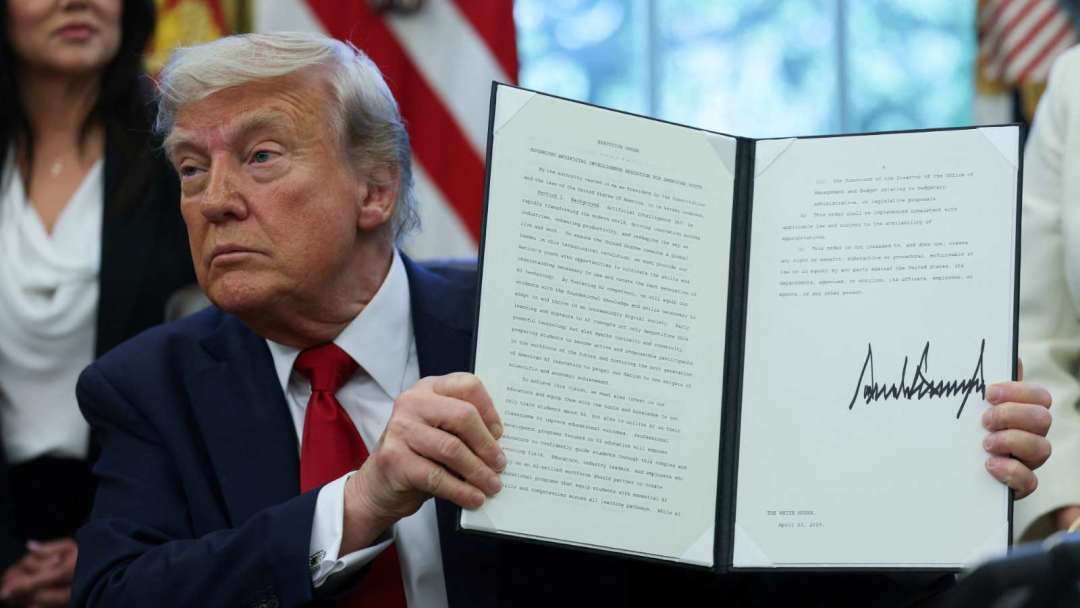
U.S. President Donald Trump said Friday (the 10th) that he will not sign the bipartisan housing bill passed by Congress last month, in protest of Republicans' failure to advance the controversial election bill. However, since the housing bill has received overwhelming support from both chambers of Congress, it will automatically take effect on Saturday (the 11th) if Trump does not formally exercise his veto power.
The housing bill, titled the '21st Century ROAD to Housing Act,' was sent to the White House by House Republicans on June 29, initiating a 10-day presidential review period excluding Sundays. Under U.S. law, the president may either sign or veto the bill; if neither action is taken, the bill automatically becomes law.
Trump posted on social media Friday: 'I will not sign the housing bill that has been fully approved by Congress and sent to the White House, in protest of the U.S. Senate's failure to pass the SAVE America Act.'
Trump has consistently urged his Republican allies to prioritize the passage of the 'SAVE America Act' before the November midterm elections. The bill aims to strengthen voter identification requirements to prevent non-citizens from voting, although non-citizen voting in federal elections is already illegal and extremely rare in practice.
In June, Trump abruptly canceled a planned signing ceremony for the housing bill to pressure Senate Republicans to change procedural rules and pass the voter ID bill. However, Senate Republican leaders have acknowledged they currently lack sufficient support to amend rules or pass the bill.
The housing bill aims to increase housing supply and alleviate America's housing affordability crisis. It includes measures to restrict large institutional investors from holding single-family homes, streamline regulations for factory-built homes, and encourage local governments to remove barriers to housing construction.
One of the most impactful and controversial provisions bans institutional investors owning more than 350 homes from purchasing additional single-family homes. Senator Tim Scott (R-SC), chairman of the Senate Banking Committee, said including this provision was key to securing White House support.
However, industry experts expect the bill's short-term impact to be limited, as increasing housing supply takes time. U.S. home prices have surged dramatically since the pandemic, and despite mortgage rates more than doubling in recent years, housing costs remain high. Affordability has become a central issue ahead of the November midterm elections. Democrats have recently gained advantages in several key elections by focusing on cost-of-living issues such as housing, healthcare, utilities, and food, while Republicans face a tough challenge in maintaining control of Congress.
FACT BOX
- Source: PR Times
- Category: News