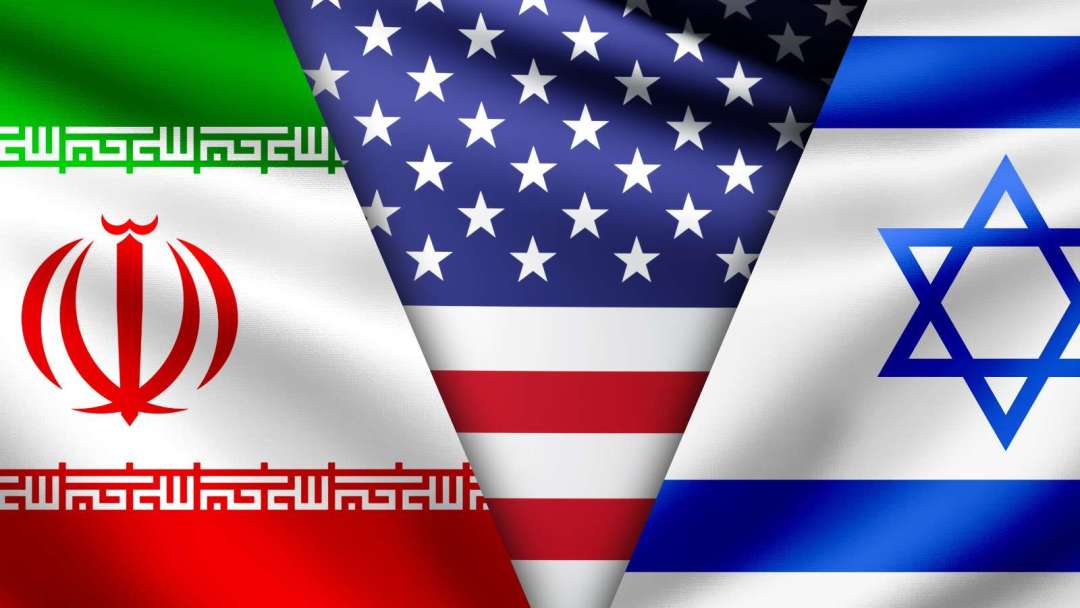
Three U.S. and Israeli officials revealed that the Trump administration has notified Israel of plans to deploy dozens of aerial refueling aircraft to the country ahead of a potential expansion of military operations against Iran.
According to Axios, sources said President Trump received briefings on several new military options during a Tuesday meeting in the White House 'Situation Room,' and is now considering a large-scale offensive against Iran that would far exceed current operations around the Strait of Hormuz.
Options currently on the table include bombing Iranian infrastructure such as power plants, further strikes on nuclear facilities to push uranium enrichment deeper underground, and attacks on the suspected underground 'Pickaxe Mountain' facility under construction.
Trump has not yet made a final decision, but is reportedly willing to escalate the conflict, hoping that inflicting sufficient damage will force the Iranian regime to open the Strait of Hormuz and accept U.S. nuclear negotiation terms.
U.S. and Israeli officials say Trump could order the escalation within the coming days.
The U.S. military conducted airstrikes against Iranian targets for the fifth consecutive day on Thursday (16th), with attacks spanning the Strait of Hormuz and southern coastal regions of Iran.
One U.S. official said American forces bombed at least seven bridges near the southern port city of Bandar Abbas. The port is considered a key hub for the Iranian Revolutionary Guard Corps (IRGC) in conducting military operations in the Strait of Hormuz.
The official noted that ammunition, supplies, and reinforcements are all transported through Bandar Abbas to other areas around the Strait.
Meanwhile, Iran has escalated its attacks on U.S. forces, targeting American military bases in Jordan, Qatar, Bahrain, Iraq, and Kuwait.
The Iranian Revolutionary Guard claimed it attacked a U.S. base in Syria, though in reality, U.S. forces had already withdrawn from that base months earlier.
Refueling aircraft deployment to return to initial war levels
Currently, the U.S. military has about 30 aerial refueling aircraft deployed at Ben Gurion International Airport near Tel Aviv, and another 30 at Ramon Airport in southern Israel.
Israeli officials say the U.S. hopes to deploy dozens more refueling aircraft in the coming days, restoring the total number to the level seen at the beginning of the current conflict.
Israeli officials noted that the U.S. military prefers to station refueling aircraft at Ben Gurion International Airport because other regional air bases are more vulnerable to Iranian attacks and pose greater risks to U.S. aircraft.
Iran has not yet directly attacked Israel, primarily out of concern that such action would trigger a massive Israeli military retaliation.
Israeli Prime Minister Benjamin Netanyahu warned Iran's leadership in a Tuesday speech: 'I just want to say one thing: if you attack us, don’t think things will end quietly.'
He added: 'Don’t expect history to repeat itself. Because it won’t just be a repeat. The last retaliation was very strong, and the next one will be a completely different event—much more powerful.'
Notably, the deployment of U.S. refueling aircraft has already become a political controversy within Israel. The dozens of aircraft stationed at Ben Gurion International Airport for months have nearly filled the airport’s capacity. Adding more could force the cancellation of numerous civilian flights, posing a significant political blow to Netanyahu’s governing coalition.
However, the Trump administration has requested that the Israeli government accommodate the additional aircraft, with the final decision resting in Netanyahu’s hands.
FACT BOX
- Source: PR Times
- Category: News