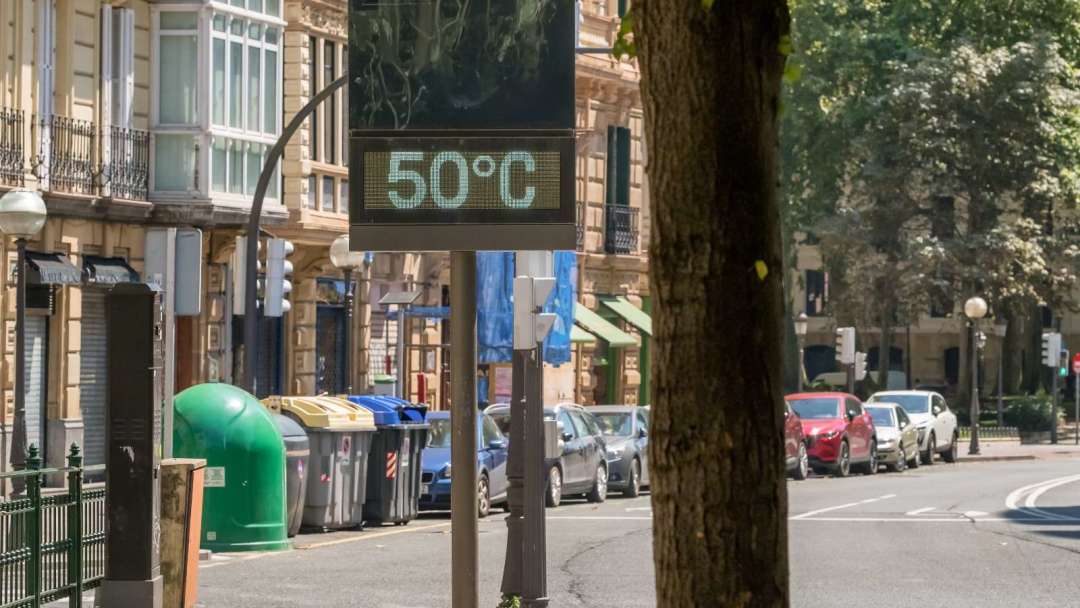
Europe has been gripped by an unprecedented heatwave since June, with extreme temperatures persisting to this day. According to data released by the European Mortality Monitoring Network EuroMOMO, excess deaths across 27 European countries surpassed 10,650 in just one week during the peak of the heatwave from June 22 to 28. Over 90% of the victims were aged 65 and above.
Since June, temperatures in France, Spain, Germany, and other regions have repeatedly exceeded 40°C, breaking century-old heat records. Air conditioners have become nearly impossible to find on the market.
Yet even amid a surge in consumer purchases, the deadly threat of extreme heat remains difficult to mitigate. This disaster-level heatwave has prompted renewed scrutiny of Europe’s structural vulnerabilities in meteorology, building design, and social safety nets.
Experts attribute the direct cause of this heatwave to a 'heat dome'—a persistent high-pressure system. A strong high-pressure zone has blocked the usual westerly winds, acting like a sealed lid over Western Europe.
Sinking air continuously compresses and heats the atmosphere while drawing hot, dry air from the Sahara Desert northward. Combined with long-term above-average sea surface temperatures in the Mediterranean, daytime heat accumulates with little dissipation. Nighttime lows remain above 23°C, creating a deadly 'tropical night' phenomenon that leaves the human body almost no chance to cool down, significantly increasing the risk of cardiovascular and cerebrovascular diseases.
The World Meteorological Organization (WMO) has explicitly stated that Europe is warming faster than any other continent, at two to three times the global average rate.
In fact, Europe experienced major heatwaves in 2003 and 2022, both of which resulted in tens of thousands of deaths. However, compared to those events, this year’s heatwave has been more prolonged and widespread.
Climate scientists emphasize that global warming is not merely a slight rise in average temperatures but leads to exponential increases in the frequency and intensity of extreme heat events. Heatwaves that once occurred once every few decades now recur every one or two years. Short-term atmospheric anomalies are merely triggers; long-term climate imbalance is the root cause.
Regarding air conditioning installation, the reality is that household cooling device penetration in Europe is only about 20%. In the UK, it’s around 5%, and in Germany, as low as 3%. Local infrastructure has long been designed for mild, cool climates and is now completely unprepared for extreme heatwaves.
Over half of Europe’s residential buildings were constructed before the 1970s, primarily designed for winter insulation, with thick walls and poor ventilation. During heatwaves, indoor spaces become like steam rooms. In some historic districts, drilling holes in exterior walls to install outdoor units is prohibited, and AC installation requires multi-layer approval from property management and municipal authorities, a process that can take months.
Even setting aside administrative hurdles, the installation cost itself is a burden for average households. The total cost of an air conditioner, including labor and modifications, typically exceeds 2,000 euros. Combined with Europe’s persistently high electricity prices, long-term usage costs are substantial.
Moreover, a complete household air conditioning supply chain is lacking locally, with significant production gaps. Imported units are constrained by EU quotas on environmentally friendly refrigerants, leading to supply shortages.
When heatwaves strike, air conditioners in retail stores across countries sell out almost instantly. Even if consumers manage to purchase units, certified installers are in short supply, making timely installation impossible. Many elderly people are thus trapped in sweltering homes with no relief.
Among the over 10,000 excess deaths, 90% were elderly. Europe’s advanced aging population has undoubtedly amplified the heatwave’s lethality.
Many elderly individuals suffer from chronic cardiovascular or respiratory diseases, have weaker thermoregulation, and often live alone without nearby family care. When high temperatures trigger acute episodes of pre-existing conditions, timely rescue is often impossible.
Meanwhile, cooling systems in elderly care facilities are generally inadequate, and there are gaps between community heat warning systems and home visit care mechanisms. By the time many elderly people show symptoms of heatstroke, the golden window for medical intervention has already passed.
The urban heat island effect further worsens the situation. Extensive asphalt and concrete paving in major European cities continuously absorbs heat during the day. With insufficient green spaces and shading structures, surface temperatures have exceeded 60°C, and city center temperatures can be over 5°C higher than in suburban areas.
Compared to community cooling centers or outdoor misting systems common in some Asian cities, European cities clearly lack heat mitigation hardware. Residents can only seek relief by going to riversides or parks, while public healthcare systems remain overloaded during heatwaves, indirectly contributing to higher overall mortality.
Analysts point out that this heatwave, which claimed over 10,000 lives in just one week, is not just a European crisis but a global wake-up call for climate adaptation.
Europe has long relied on its mild climate and invested little in heat protection infrastructure. Now, with extreme weather becoming increasingly routine, building codes, public support systems, and emergency response frameworks face unprecedented challenges.
The current surge in air conditioner purchases across countries highlights that traditional cooling methods can no longer keep pace with climate change. Simply adding more cooling devices may only offer temporary relief, not a fundamental solution.
Experts recommend that only through optimizing building ventilation and heat dissipation design, improving community cooling infrastructure, establishing care mechanisms for high-risk elderly populations, and globally reducing carbon emissions to slow warming can the threat of extreme heat to human lives be truly mitigated.
FACT BOX
- Source: PR Times
- Category: News