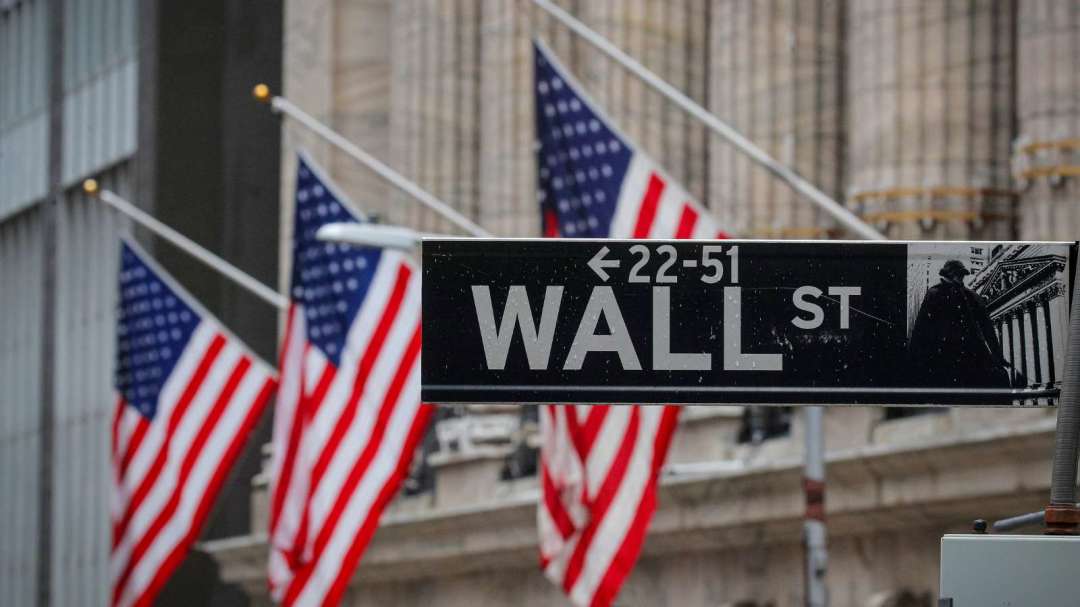
The second-quarter earnings season for U.S. equities is entering its peak phase, with investor attention focused not only on whether corporate profits will continue strong growth but also on whether the artificial intelligence (AI) boom can sustain the rally in stock markets. Key heavyweights including Alphabet (GOOGL-US), Intel (INTC-US), Texas Instruments (TXN-US), and Tesla (TSLA-US) will report earnings next week, potentially influencing the trajectory of AI-related stocks and determining whether the S&P 500 can maintain its record highs.
At the intersection of corporate earnings and Federal Reserve interest rate policy, and with ongoing uncertainties in U.S.-Iran relations, the market is entering one of the most important observation periods of the year.
Market Watch This Week (0720–0724)
Will AI Investment Cool Down? Alphabet's Earnings Are the Market's Top Focus
Market consensus holds that Alphabet will deliver the most anticipated earnings report this week.
With a market capitalization of approximately $4.3 trillion, Alphabet is the third-largest publicly traded company in the U.S. and a core member of the 'Magnificent Seven' tech giants. It has also been a leading investor in AI infrastructure, with billions of dollars allocated to data centers and AI infrastructure—fueling the surge in AI-related stocks this year.
Investors are less concerned with quarterly profits and more focused on whether management will maintain its massive capital expenditure plans for AI.
Kevin Mahn, Chief Investment Officer at Hennion & Walsh Asset Management, noted that any signal from Alphabet indicating reduced AI investment or downward revisions to capital spending could trigger a chain reaction across the entire AI ecosystem—impacting chipmakers, server suppliers, and data center-related stocks, all of which could face repricing.
On the other hand, the market also hopes to see AI investments begin translating into tangible revenue and profit growth, which would help justify the currently elevated valuations of tech stocks.
High Expectations for Chip Stocks: Intel and Texas Instruments Face Earnings Tests
Beyond Alphabet, earnings reports from Intel and Texas Instruments are also under close scrutiny.
Year-to-date, the Philadelphia Semiconductor Index (SOX) has surged approximately 68%. Although recent gains have slightly cooled, AI-driven demand remains a key support for chip stocks. Intel's stock has soared over 160% this year, while Texas Instruments has gained nearly 70%.
However, such strong price performance reflects already optimistic market expectations.
After Samsung Electronics and TSMC recently reported strong earnings, market reactions were relatively muted—indicating that investor expectations for the semiconductor sector have risen to very high levels. Even better-than-expected results may no longer be enough to push stock prices to new highs.
Analysts point out that semiconductor stocks have become pivotal in driving broader market movements. With significant capital flowing into leveraged ETFs, any positive or negative news could amplify market volatility, making chip stocks a central force influencing the direction of U.S. equities.
Earnings Season Heats Up: Fed and Middle East Tensions Remain Wildcards
In addition to AI and chip stocks, over 80 S&P 500 companies—including Tesla, American Express (AXP-US), Philip Morris (PM-US), and Raytheon Technologies (RTX-US)—will report earnings, marking the official peak of the second-quarter earnings season.
Corporate earnings remain a key pillar supporting U.S. equities. According to LSEG IBES, analysts expect S&P 500 companies to report a 25.7% year-over-year increase in second-quarter earnings. If this target is met, it could help sustain the market at elevated levels.
Michael Arone, Chief Investment Strategist at State Street Investment Management, stated, 'While the market is constantly buffeted by geopolitical and macroeconomic news, the real drivers behind the continuous new highs are solid corporate fundamentals and consistently better-than-expected earnings performance.'
Nonetheless, two major risks remain.
First, ongoing U.S.-Iran tensions raise concerns that a renewed escalation in the Middle East could push oil prices back to the highs seen at the start of the conflict, reigniting inflation.
Second, the Federal Reserve will hold its rate-setting meeting at the end of July. Although last week's U.S. Consumer Price Index (CPI) and Producer Price Index (PPI) came in below expectations—temporarily easing concerns about a rate hike this month—interest rate futures still reflect market expectations of potential rate hikes in the coming months to contain inflation, which remains above the 2% target.
Eric Kuby, Chief Investment Officer at North Star Investment Management, said, 'Recent macroeconomic data shows the U.S. economy remains robust, and inflationary pressures are showing signs of improvement. However, whether corporate earnings can demonstrate that AI investments are creating sustained value, along with the Fed's latest stance on inflation, will jointly determine whether U.S. equities can continue their upward momentum this year.'
FACT BOX
- Source: PR Times
- Category: News
- Organizations: Alphabet / Intel / Texas Instruments
- Dates in source: 0720-0724