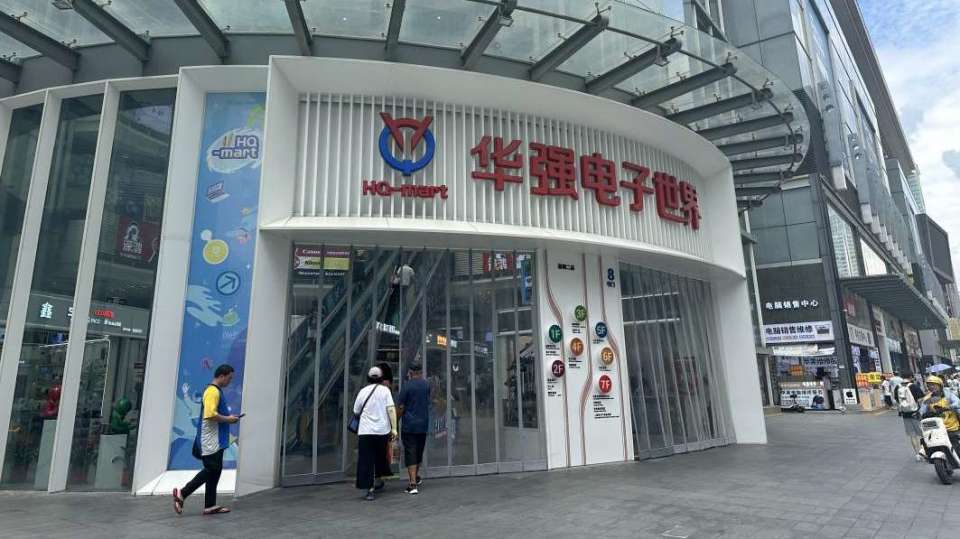
According to a report by the Science and Technology Innovation Board Daily on the 19th (Sunday), the surge in memory chip prices, triggered by artificial intelligence (AI) demand, continues to spread and is now impacting Huaqiangbei, China's consumer electronics distribution hub.
"Computers are the most affected. A memory module that used to cost 300 RMB now sells for 1,000 RMB. We haven't seen such a price increase in over a decade," said the owner of a stall on the third floor of Shenzhen's Huaqiangbei SEG Electronics Market, which specializes in memory and SSD wholesale, pointing to a Kingston 16GB DDR4 memory stick on the shelf.
At a secondhand memory recycling shop on the second floor of Huaqiang Electronics World, an employee sorting through newly acquired old memory modules said, "DDR4/DDR5 recycling is going well. Many people are selling or upgrading their old memory. They're removing memory from old machines to sell at high prices and using the money to fund new builds."
Fueled by explosive global AI demand, memory chip supply has tightened, and upstream material price fluctuations are rapidly passing through to downstream end markets. A price surge triggered by memory chips is sweeping across smartphones, computers, cameras, and even AI glasses.
End brands such as Apple, Huawei, and Xiaomi have all raised prices to varying degrees, with computers seeing the largest increases. This has directly led to increasingly cautious consumer sentiment in physical stores.
An Apple flagship store salesperson in Huaqiangbei said that prices were adjusted in June alongside the official website. After factoring in some promotional offers, MacBook Neo, MacBook Air, and MacBook Pro models with different storage capacities and chip types have seen average price increases of around 500 RMB, 1,500 RMB, and 3,000 RMB, respectively.
Since it is not yet the peak season for new graduates purchasing new devices, most in-store inquiries come from non-essential buyers.
"Many people ask, but few actually buy. Most feel the current price hikes are too steep. A small number of new product enthusiasts and graduating students have also inquired. This group is more likely to buy, as their need is essential. Given how high chip prices have risen, they won't drop anytime soon, so those who need them will still buy," the salesperson said.
At the Huawei flagship store, Windows-based laptops are temporarily out of stock, with only HarmonyOS laptops available. However, the top-tier HarmonyOS models can cost up to 20,000 RMB. Xiaomi laptops have seen slight price increases, but entry-level models remain around the 6,000 RMB mark.
A tech enthusiast who previously worked as a Genius at an Apple store said he spent 14,000 RMB last year during the '6·18' shopping festival to build a high-end gaming PC, which he recently sold at the original price.
"I still remember when domestic storage makers drove SSD prices down to 'cabbage prices' three years ago—1TB drives cost just over 300 RMB. I regret not stocking up more back then."
He recently discovered the staggering price hikes while helping a friend assemble a new PC: "My old computer still has a 2TB mechanical hard drive. I'm barely getting by, so I had to take it out and reuse it. At current prices, we definitely won't be buying new ones."
FACT BOX
- Source: PR Times
- Category: News