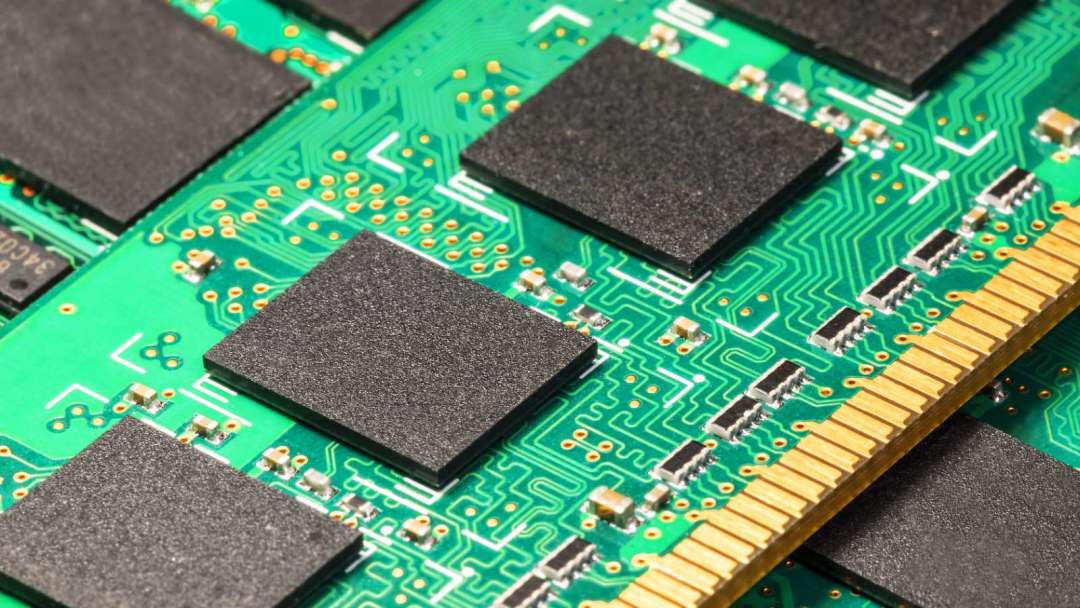
According to the latest research report released by Meritz Securities in South Korea, the memory market is undergoing structural transformation. Sovereign AI investment entities from the Middle East, led by Saudi Arabia, have formally entered the market and begun intensive negotiations with South Korean memory giants Samsung Electronics and SK Hynix on long-term storage product procurement plans. This move is not only reshaping global supply-demand dynamics but also directly accelerating the rise in server DRAM prices.
Sovereign Funds Driving the Market
Meritz analysis points out that the core motivation for Middle Eastern countries' AI investments lies in national security and data sovereignty, aiming to build data centers within their own territories and operate AI systems using autonomous data. Currently, AI data center construction is highly concentrated, with over 70% of memory manufacturers' revenue coming from large customers, causing market pricing power to tilt toward a few buyers.
Unlike the decentralized procurement of the PC or smartphone era, the entry of a single sovereign-level buyer today can shift market demand fulfillment rates by 3 to 5 percentage points, enough to trigger a significant price surge. Currently, the spot price of 64GB DDR5 server DRAM has surged to between $3,100 and $3,400, approximately 146% higher than the contract price of around $1,380 at the end of June.
Supply Shortages Spreading
The report emphasizes that memory shortages are no longer limited to data centers and have begun spreading to the consumer electronics sector. Apple and Chinese smartphone manufacturers have already experienced production plan gaps in the fourth quarter due to insufficient memory procurement.
Experts believe the fundamental issue in today's market is 'volume allocation' rather than a simple price issue—that is, there simply aren't enough goods in the market to meet all demand. Server DRAM contract prices in Q3 2026 are expected to rise at a quarterly rate exceeding the market's anticipated 15%.
Kimi K3 Is Not a Shock
Regarding the recently热议ed Moonshot AI model Kimi K3, Meritz offers an interpretation different from market concerns. The research report states that the release of Kimi K3 should be seen as a mid-term positive for AI hardware demand, not a demand-reducing shock.
The analysis distinguishes K3 from last year's low-cost training model DeepSeek: running K3 requires a large cluster of at least 64 high-performance chips, and its single-task processing cost ($0.95) is on par with GPT-5.6, far higher than DeepSeek V4 Pro's $0.04. This means K3 still heavily relies on large amounts of expensive hardware.
Based on this analysis, Meritz recommends investors buy semiconductor and memory component companies while reducing holdings in large tech stocks such as Google and Microsoft, believing hardware manufacturers will be the biggest beneficiaries of the AI ecosystem's expansion.
FACT BOX
- Source: PR Times
- Category: Survey
- Organizations: Meritz Securities / Samsung Electronics / SK Hynix