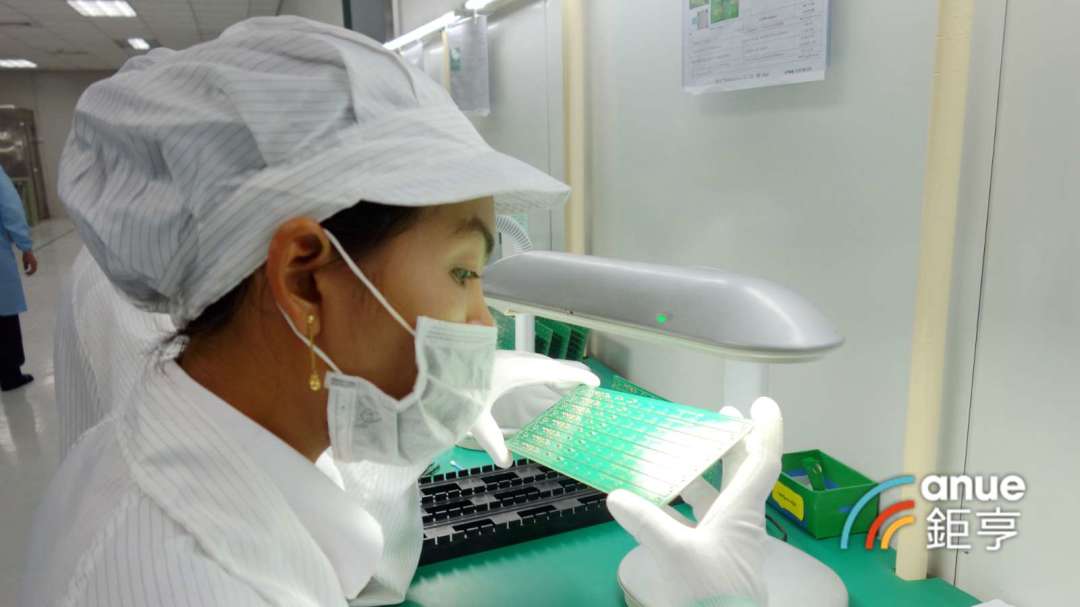
Driven by demand from high-value applications such as AI servers, high-speed communications, and satellite communications, the Taiwan Printed Circuit Board Association (TPCA) indicates that Thailand, Vietnam, and Malaysia in Southeast Asia are accelerating their transformation from traditional consumer electronics manufacturing bases into a regionally complementary ecosystem supporting the development of high-end PCBs and substrates.
According to TPCA statistics, Southeast Asia currently accounts for approximately 12.3% of global PCB output value, with its industrial standing gradually rising. However, regional growth momentum remains highly dependent on foreign investments from Taiwan, China, Japan, South Korea, Europe, and the United States expanding production capacity. Local manufacturers' output value accounts for only about 1% of the global total. Therefore, for Southeast Asia to further evolve from a 'production base' into a 'global PCB industry center' with autonomous competitiveness, the key lies in the speed at which materials, equipment, specialized talent, and local supply chains mature.
Thailand is currently the largest PCB production base in Southeast Asia, with a PCB output value of USD 5.06 billion in 2025, representing a year-on-year increase of 22.4% and accounting for approximately 5.4% of global output. The growth momentum primarily stems from new production capacity coming online at factories funded by Taiwanese and Chinese capital, rapidly increasing the production share of high-end applications such as AI servers, high-speed communications, and satellite communications in Thailand. With continued demand for AI infrastructure, increased investment in data centers and cloud services, and the global trend toward diversified supply chain layouts, Thailand's PCB output value is projected to grow further to USD 6.09 billion in 2026, a year-on-year increase of 20.4%.
On the policy front, the Thai government continues to optimize the investment environment through the Board of Investment (BOI). In the first quarter of 2026, BOI application amounts have already exceeded USD 31.8 billion, with major highlights including large-scale data centers and cloud infrastructure investments by tech giants such as Google and Microsoft. Additionally, the Stock Exchange of Thailand (SET) is considering relaxing listing and financing mechanisms, aiming to attract more high-tech enterprises to establish operations in Thailand and further deepen cross-border cooperation in upstream semiconductor, materials, and PCB supply chains.
Vietnam has long been a key manufacturing base for global electronics such as smartphones and laptops, and its PCB industry has also shown impressive growth in recent years. In 2025, Vietnam's PCB output value reached USD 4.15 billion, a year-on-year increase of 33.9%, accounting for approximately 4.4% of global output. It is projected to grow further to USD 4.9 billion in 2026, a year-on-year increase of 18.1%. The primary growth driver is the rapid rise in demand for AI and high-performance computing, which simultaneously expands demand for high-end multilayer boards, HDI, and substrates.
TPCA points out that from an investment structure perspective, Vietnam's PCB industry is gradually shifting from past support for end-product assembly toward high-end technology and semiconductor supply chain extension. Investments from Taiwanese, Japanese, and South Korean capital continue to increase, covering areas such as AI servers, high-end HDI, ABF substrates, and semiconductor packaging and testing, indicating that Vietnam is evolving beyond an electronics contract manufacturing base into a supplier of high-value-added PCBs and advanced packaging peripheral supply chains. On the policy side, the Vietnamese government has listed AI, cloud computing, and semiconductors as national strategic technologies and is prioritizing support through the National Science and Technology Development Fund with USD 110 million. Key companies such as Qualcomm and Foxconn continue to expand their AI R&D and smart manufacturing operations locally.
Malaysia holds a 13% global market share in semiconductor packaging and testing, forming a semiconductor supply chain cluster with Singapore. In 2025, its local PCB output value reached USD 2.09 billion. It is expected to grow by 15.3% to USD 2.41 billion in 2026, supported by capacity expansion and AI infrastructure development. Industry investment dynamics are closely tied to the AI supply chain. For example, Austrian substrate manufacturer AT&S announced this year an investment of up to EUR 2 billion to expand its Kulim plant, seizing business opportunities in high-end AI substrates. Taiwanese company Tripod Technology is mass-producing AI server boards at its Penang plant through 'Singapore-Malaysia division of labor'.
TPCA observes that global AI infrastructure investment has become a key locomotive driving the transformation and upgrading of Southeast Asia's PCB industry. As Google and Microsoft increase investments in cloud infrastructure in Thailand, Vietnam designates AI, cloud computing, and 5G/6G as national strategic technologies attracting Qualcomm to establish an R&D center in Hanoi, and Malaysia's Johor AI data center cluster rapidly takes shape, Southeast Asia is gradually transforming from an electronics manufacturing hinterland into a critical node for high-end servers, AI infrastructure, and semiconductor supply chains.
TPCA believes that in the face of global supply chain restructuring and expanding AI computing power demand, Taiwan's PCB industry must not only continue to deepen high-end manufacturing, R&D, and key supply chain collaboration domestically but also carefully plan strategic expansion into the Southeast Asian market. Although Southeast Asia has emerged as a key region for global PCB capacity deployment, the mass production and implementation of high-end products still highly depend on technical management, key material and equipment support, talent cultivation, and customer certification. For Taiwan's PCB industry, the key to success will no longer be merely simple overseas capacity expansion but rather enhancing global delivery capability and supply chain resilience through a 'Taiwan R&D, overseas manufacturing' dual-axis resource allocation.
TPCA states that it will continue to deepen its linkage with the Southeast Asian market. In addition to continuously collecting information on investment, capacity, and supply chain changes in the Southeast Asian PCB industry to help members grasp market dynamics, it will also strengthen connections with local industries and organizations through participation in international exhibitions and exchange forums in Southeast Asia. Furthermore, to address the talent shortage faced by enterprises expanding overseas, TPCA is actively promoting the 'Thailand Circuit Board Academy' training program and will host an 'International Talent Matching Event' during the TPCA Show on October 21, hoping to further enhance the visibility of Taiwan's PCB industry in the Southeast Asian market and strengthen cooperation foundations through substantive cross-border talent cultivation and industry-academia alignment.
FACT BOX
- Source: PR Times
- Category: Survey
- Organizations: Google / Microsoft / AT&S