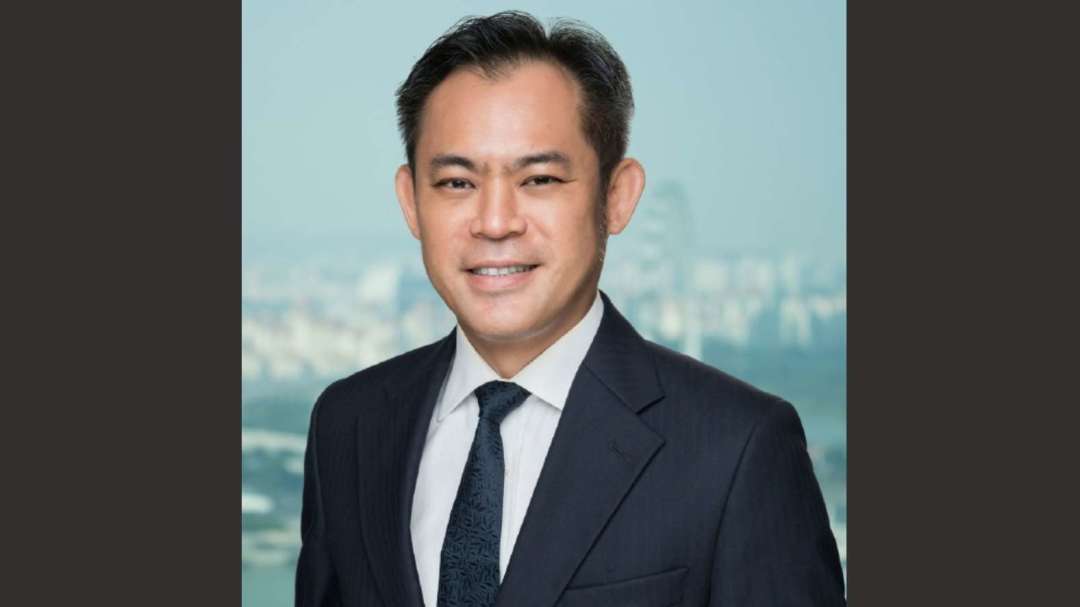
As Intel's former CEO Pat Gelsinger recently raised concerns about the stability of Taiwan's semiconductor supply chain, Standard Chartered Group has presented a contrasting view, sending a vote of confidence in Taiwan's technological capabilities. Yeh Fu-Heng, Senior Investment Strategist at Standard Chartered's Wealth Solutions CIO Office, stated that despite ongoing geopolitical risks and industry competition, Taiwan plays an irreplaceable role in the global supply chain, based on global semiconductor capacity distribution and AI capital expenditure trends. Over 90% of the world's high-end semiconductor chips, especially those using 7nm and below advanced processes, are manufactured in Taiwan, and AI continues to hold strong long-term investment potential.
Yeh Fu-Heng referenced a classic scene from the movie 'Armageddon,' where a space shuttle malfunctions and a Russian astronaut complains that all the parts are 'Made in Taiwan'—a moment that ironically mirrors Taiwan's current monopoly in the global high-end semiconductor industry. Today, over 90% of the world's high-end semiconductor chips, particularly those using 7nm and below advanced processes, are produced in Taiwan.
Yeh explained that Taiwan's deep competitive advantage stems from the government's strategic R&D push in the 1980s, which successfully established the 'pure-play foundry' model, separating chip design from manufacturing and creating strong economies of scale.
Yeh analyzed that this highly integrated semiconductor ecosystem—encompassing upstream suppliers, packaging and testing, and specialized talent—has created deep, interdependent relationships between Taiwan's foundry operators and global fabless chip design companies. Customers face extremely high switching costs if they attempt to change suppliers, forming Taiwan's most difficult-to-replicate 'moat.' Regarding external concerns over supply chain risks, he believes that long-standing deep collaboration with Taiwan's foundry operators makes their position difficult to displace.
Looking ahead to future growth drivers, Yeh emphasized that as enterprises and governments continue to adopt AI technologies, global AI infrastructure investment will maintain robust growth. It is estimated that from 2025 to 2030, the global AI capital expenditure compound annual growth rate (CAGR) will reach 32%, serving as the most direct support for the semiconductor industry.
Yeh further observed that although the Taiwan stock market has recently pulled back slightly from its highs due to increased new share supply in global markets and profit-taking pressures, the upcoming Q2 earnings reports are expected to reaffirm the corporate earnings growth story. According to Bloomberg estimates, total corporate earnings for Taiwan-listed companies in 2026 and 2027 are projected to grow by 51% and 28%, respectively.
On the much-discussed 'AI bubble' issue, Yeh cited observations from Standard Chartered's Global Chief Investment Office, noting that the current 'AI bubble indicator' has been upgraded from 'Good' to 'Better,' with risk-reward assessments turning positive. This is primarily due to supply chain survey results consistently exceeding expectations, large tech firms maintaining strong commitments to AI investment, and visible improvements in AI commercialization progress—indicating no bubble currently exists in the market.
In conclusion, Yeh stated that while global economic slowdowns or geopolitical challenges may bring volatility, these risks do not alter Taiwan's central position in the global technology landscape. For investors seeking to participate in global AI and technology growth trends, Taiwan's stock market remains one of the most attractive investment destinations in the world.
FACT BOX
- Source: PR Times
- Category: Survey
- Organizations: Intel