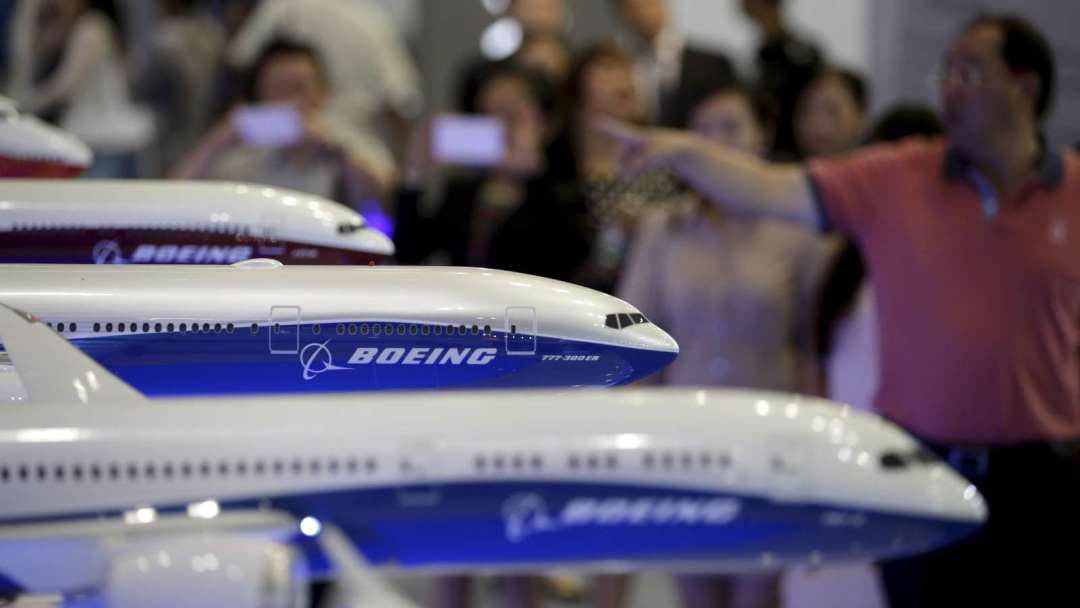
The Farnborough Airshow in the UK opened on Monday (20th), refocusing market attention on the world's two major aircraft manufacturers, Boeing (BA-US) and Airbus. Analysts believe that for Boeing, the key at this year's airshow is no longer how many new orders it can secure, but whether it can demonstrate to the market that its production capacity and supply chain are steadily improving—this will be a crucial factor influencing its stock price.
Ahead of the airshow, Boeing received two positive developments. According to Bloomberg, the U.S. Federal Aviation Administration (FAA) has allowed Boeing to resume self-certifying the delivery of its 737 and 787 passenger jets, symbolizing the company's gradual rebuilding of trust with regulators following the two 737 MAX crashes. Boeing stated it will continue producing commercial aircraft that meet flight safety and airworthiness standards under FAA oversight.
Additionally, Reuters reported that the next-generation U.S. presidential aircraft, Air Force One, is still expected to be delivered by 2028. Although the project has led Boeing to recognize billions of dollars in losses due to rising costs in recent years, there have been no new major delays in the delivery timeline.
However, analysts note that these developments largely align with market expectations. The real factor moving investor sentiment is whether Boeing can increase its production output. Currently, Boeing and Airbus together have around 15,000 undelivered aircraft on order—equivalent to over 10 years of production at current rates. Boeing forecasts that global passenger demand will double over the next 20 years, driving demand for nearly 44,000 new commercial aircraft.
More than new orders, the market is watching whether supply chain bottlenecks continue to ease and whether aircraft delivery speeds can improve. Recently, Riyadh Air, SMBC Aviation Capital, and Philippine Airlines have all announced new Boeing orders or converted options into firm orders, helping improve order visibility. However, given the massive backlog, the impact of new orders on stock price has become relatively limited.
Boeing’s stock has fluctuated this year, briefly rising above $250 and falling below $190, with volatility amplified by rising oil prices due to Middle East tensions. As of Monday’s opening, Boeing’s stock had declined about 6% since the Iran conflict escalated, down roughly 1% year-to-date and about 7% over the past year. The market widely believes that only with further improvements in production rhythm and supply chain issues will investors regain confidence in Boeing.
FACT BOX
- Source: PR Times
- Category: Event
- Organizations: Airbus / Riyadh Air / SMBC Aviation Capital
- Products / services: Boeing 737 / Boeing 787