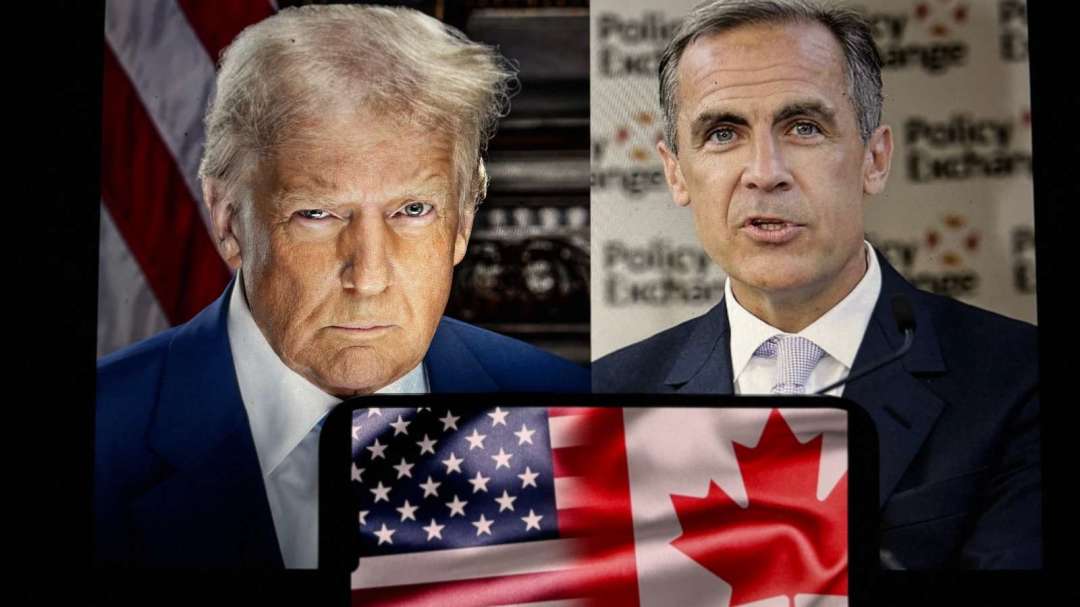
The Trump administration announced on Monday (20th) that it will impose a new 50% tariff on certain Canadian goods, citing 'unfair treatment' of U.S. alcohol, automobiles, and dairy products by Canada. This move signals a significant escalation in tensions between the two closely linked trading partners.
According to estimates by the Office of the United States Trade Representative (USTR), the total value of affected imported goods is approximately $20 billion, accounting for about 5% of Canada's total exports to the U.S. last year. The tariff list includes milk, hockey equipment, beer, and plywood.
However, key resources such as energy, potash, and critical minerals, as well as the automotive and steel industries already subject to tariffs, will be exempted. These tariffs will not fall under the exemption rules of the United States-Mexico-Canada Agreement (USMCA).
U.S. Trade Representative Jamieson Greer stated that this action stems from Canada's unfair restrictions on American businesses, including certain provinces removing U.S. alcoholic beverages from shelves, granting European Union dairy products better market access, and limiting automobile exports from companies returning to the U.S.
The U.S. has unusually invoked Section 338 of the 1930 Tariff Act, a provision that authorizes the president to impose tariffs of up to 50% on countries discriminating against American commerce. Officials say this is the first time the clause has ever been used in history.
Following the announcement, the Canadian dollar fell to a one-week low of 1.4085 against the U.S. dollar before recovering some ground in London.
Canadian Prime Minister Mark Carney issued a statement criticizing the move as 'violating USMCA' and pointed out that Canada's previous measures were merely equivalent responses to U.S. tariffs on Canadian automobiles. Nevertheless, Carney emphasized that Canada is ready to continue detailed consultations with the U.S. to resolve the dispute.
The tariffs are expected to take effect within 30 days. International trade lawyer William Pellerin noted that this reflects the possibility that trade relations between the two countries could deteriorate further before improving.
Further complicating trade relations, the U.S. earlier this month refused to extend USMCA, which could lead to intense negotiations lasting several years. In January, Trump threatened to impose a 100% tariff on Canadian goods and services if Canada reached a trade deal with China, but this threat was ultimately not carried out.
FACT BOX
- Source: PR Times
- Category: News