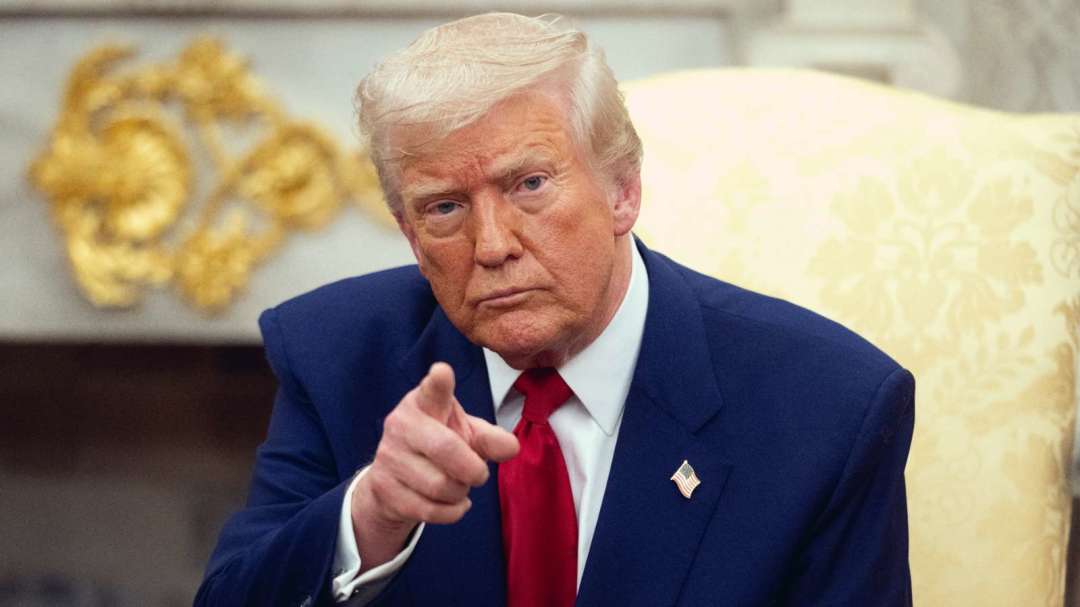
According to CNBC, U.S. President Trump stated on Wednesday (22nd) that if Iran fires upon ships in the Strait of Hormuz, the United States will destroy Iranian bridges or power plants, including facilities located in the capital, Tehran.
The threat was announced via a post by Trump on the social media platform Truth Social, further escalating already tense U.S.-Iran relations following the collapse of a ceasefire. Three U.S. military personnel had recently been killed, and Trump attended a ceremony later that day to welcome their remains back to the country.
In his post, Trump wrote, "From now on, if the Islamic Republic of Iran attacks ships in the Strait of Hormuz with missiles, rockets, drones, or any other device or weapon, the United States will bomb and destroy a bridge or a power plant."
He further specified that targets could include "facilities within or near the capital city of Tehran."
Iran responded swiftly, warning that if Washington carries out Trump’s threat, Iran will attack infrastructure and energy facilities in the Middle East linked to U.S. interests.
Iran’s state-affiliated Tasnim News Agency cited an anonymous military source on Telegram, stating, "If the U.S. attacks Iranian bridges or power plants, Iran will retaliate by attacking infrastructure, bridges, and energy facilities in the region where the U.S. holds interests."
The source also emphasized Iran’s determination to control passage through the Strait of Hormuz, asserting that vessels can only pass safely if they coordinate in advance with Tehran and follow Iranian navigation arrangements.
Earlier that day, U.S. Secretary of State Marco Rubio accused Iran of not being "serious" about reaching an agreement with the U.S., while reaffirming Washington’s commitment to a diplomatic resolution of the Middle East conflict.
His remarks came as U.S. Central Command launched attacks on Iranian-linked targets for the 11th consecutive night, aiming to secure the Strait of Hormuz, a critical global oil shipping route.
U.S. Central Command stated the attacks targeted military command centers, drone storage facilities, and military logistics infrastructure.
Speaking at the ASEAN Foreign Ministers’ Meeting in the Philippines, Rubio highlighted a key point of contention in U.S.-Iran negotiations: Iran’s demand for control over shipping in the Strait of Hormuz—a right not recognized under international law.
He warned, "If we set a precedent in the Middle East allowing a country to unilaterally control international waterways, charge tolls, and blow up ships that don’t pay, that would be an extremely dangerous precedent, and it would be replicated elsewhere in the world, including in Asia."
Rubio appeared to allude to China, stating, "If there’s one region in the world where I don’t need to explain the importance of freedom of navigation in international waterways, it’s this region." This is widely interpreted as a veiled reference to China’s sovereignty claims in the South China Sea.
Later, Rubio reiterated that the U.S. still hopes for a diplomatic end to the conflict. "If possible, the United States very much wants to reach an agreement through diplomacy, hoping to find common ground with Iran… such as Iran committing to no longer support terrorism, and to cease seeking nuclear weapons or developing the capability to produce them."
However, he added, "At this point, it appears Iran is not serious about reaching an agreement." Rubio noted that Tehran had made commitments in a memorandum of cooperation last month but violated its terms within less than two weeks.
FACT BOX
- Source: PR Times
- Category: News